Regional museum of natural sciences

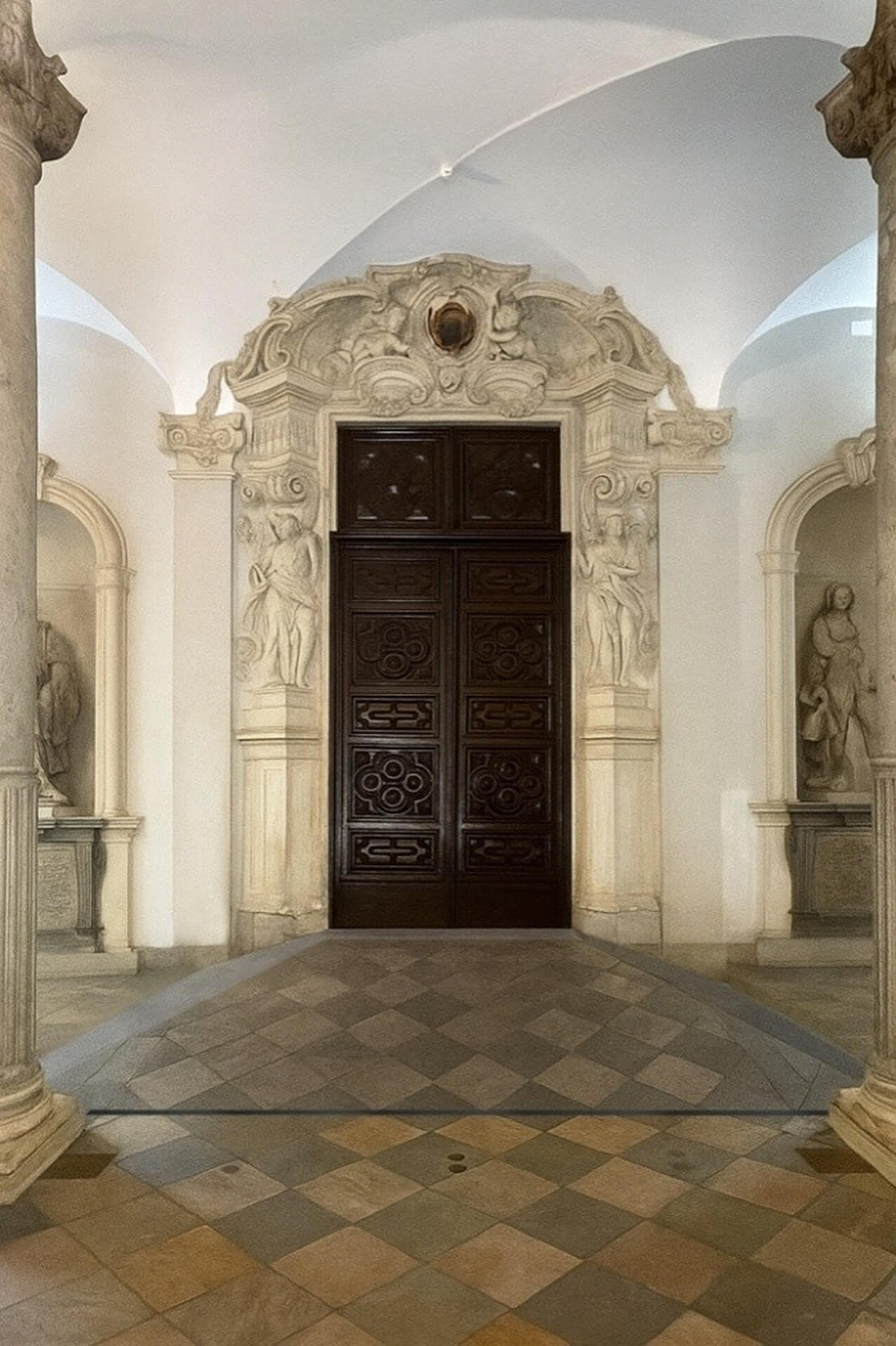
L'immagine mostra un ambiente ricco di dettagli architettonici barocchi. Ecco alcune caratteristiche chiave: Porta ornamentale: La porta in legno scuro al centro è finemente decorata con un design geometrico, che richiama l'arte barocca. La cornice della porta è altrettanto decorata con sculture e motivi floreali, un tratto distintivo dello stile. Architettura barocca: Le colonne e gli archi, insieme alla stuccatura dettagliata, sono tipici del periodo barocco. Le sculture nelle nicchie laterali sembrano rappresentare figure umane, anch'esse con un tocco di eleganza barocca, raffigurando probabilmente figure allegoriche o mitologiche. Pavimentazione in pietra: Il pavimento è caratterizzato da piastrelle disposte in un motivo a rombi, con diverse tonalità di pietra che creano un effetto visivo raffinato. Illuminazione e spaziosità: L'illuminazione naturale proveniente dalle finestre non visibili nell'immagine contribuisce a evidenziare le texture e i dettagli architettonici, dando un'atmosfera serena e maestosa. Questa immagine cattura la bellezza e la grandiosità tipiche di un edificio progettato in stile barocco, dove ogni elemento architettonico ha una forte componente decorativa e simbolica.

Regional museum of natural sciences

The project involves the comprehensive reorganization of the reception areas, ancillary services, and courtyards of the Regional Museum of Natural Sciences of Turin, aiming to improve spatial functionality, enhance the visitor experience, and ensure architectural coherence with the building’s historical value. The project is carried out in an integrated manner across various areas: from the entrance and galleries—redesigned for accessibility, safety, and a renewed aesthetic identity—to the spaces dedicated to public activities, such as the bookshop, cafeteria, and classrooms, which are being redistributed and equipped with new furnishings and technical equipment.

SEE MORE

Turin – 2025 – Works in progress
Client: Regione Piemonte
Value of works: € 3.000.000
Architectural project: Giovanni Durbaino and Negozio Blu Architetti Associati
Structural and building services engineering: MCM Ingegneria Srl
Building subject to protection under Legislative Decree no. 42/2004
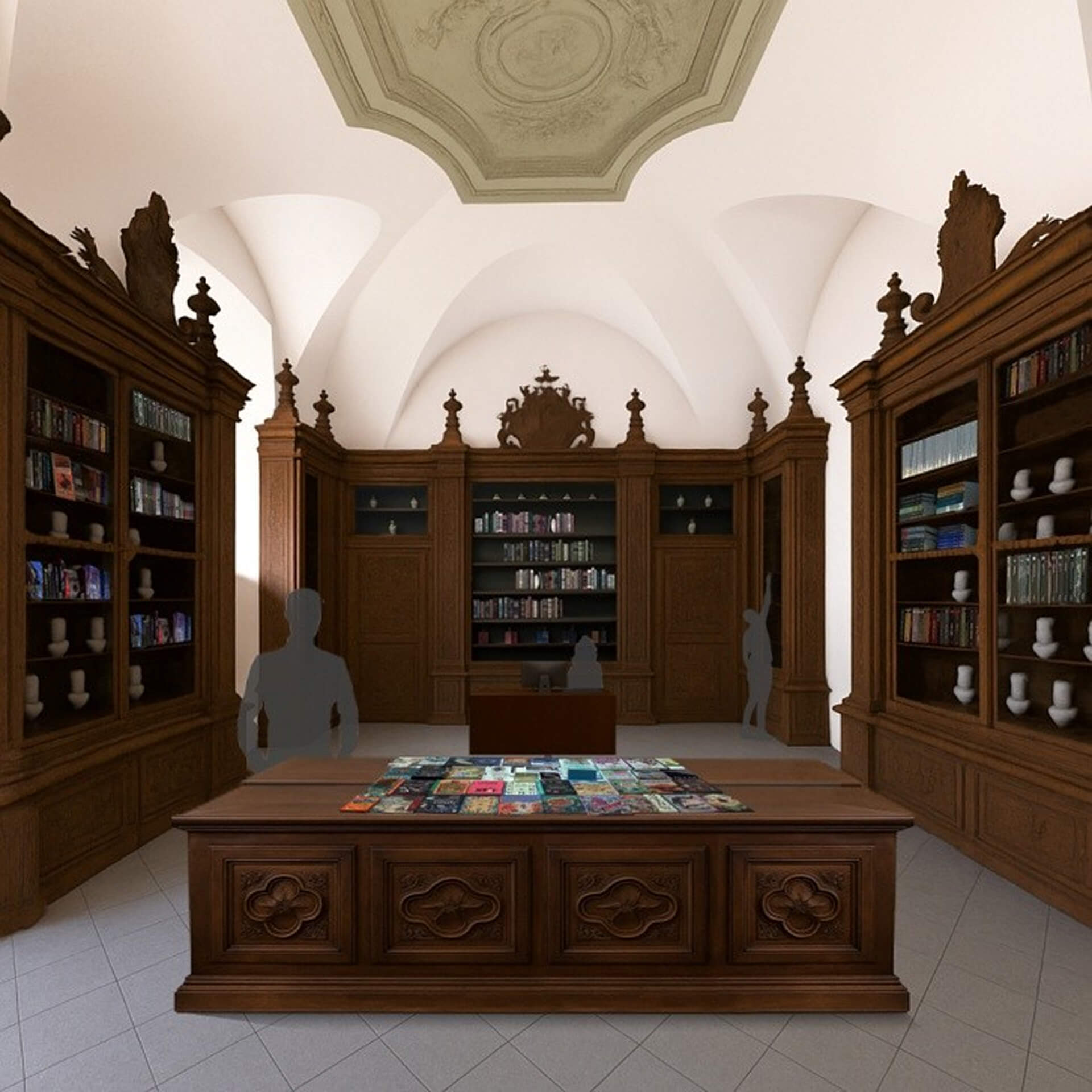
The image depicts an elegant space, likely a library or reading room, with architecture evoking a classic and refined style. Here are some key features: Wooden furnishings: The dark wood side shelves, with elegant carved details, are typical of the Baroque or Renaissance style. The presence of books and decorative objects, such as amphorae on the shelves, enhances the classical atmosphere. Arch and frescoed ceiling: The vaulted ceiling with decorative frescoes is another hallmark of a historic space, where art and architecture intertwine to create an imposing atmosphere. Central furnishings: The table in the center, with open books above it, suggests the space is used as a reading or study area. The arrangement of books and visible materials creates a sense of order and culture. Natural lighting and spaciousness: The light coming in from the windows, invisible but implicit in the room's lighting, creates a serene and welcoming atmosphere, accentuating the beauty of the furnishings and architectural details. Stylized human silhouettes: The stylized figures of people within the room suggest the active use of this space, perhaps as a library or cultural gathering place. Overall, the image conveys a sense of timeless elegance, combining classical architectural tradition with modern design to create a functional and refined environment.

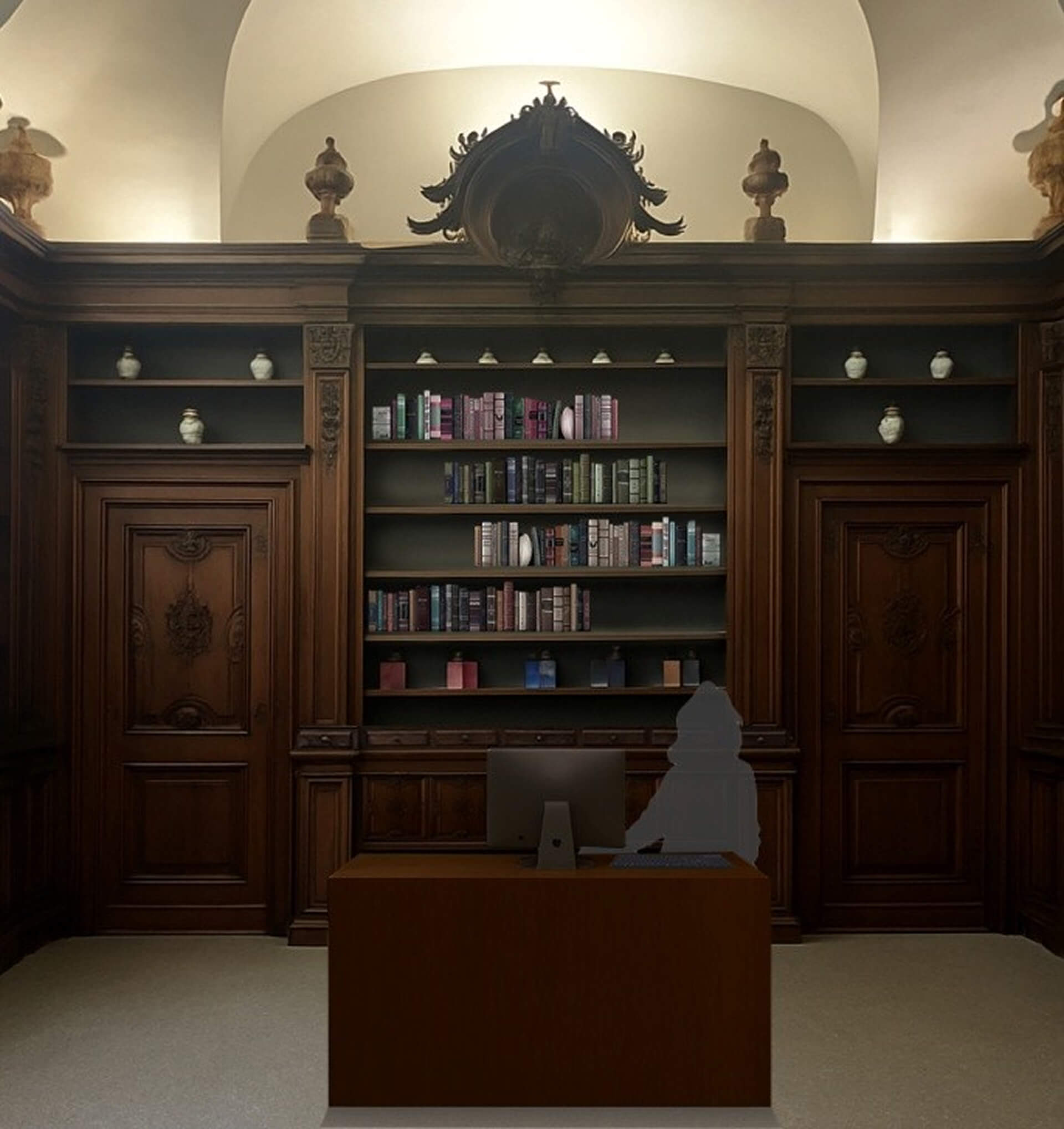
The image depicts an elegant study or office, evoking a refined, historic atmosphere. Here are some notable details: Dark wood furniture: The solid wood bookcases and doors, with ornamental carvings and detailed finishes, indicate a classic, refined design, likely inspired by the Baroque or Rococo style. These elements contribute to an air of nobility and prestige. Bookcases filled with books and ornaments: The shelves filled with well-arranged books, in a variety of colors ranging from blue to pink, create an elegant contrast with the dark wood. Decorative objects, such as amphorae on the upper shelves, also add an artistic touch. Elegant ceiling and discreet lighting: The vaulted ceiling with a rich finish and the light filtering from above suggest a spacious, well-appointed space. The lighting is subtle, yet creates a warm and welcoming feeling. Modern desk: Despite the historic ambience, the modern desk with a computer and chair suggests the space is intended for active use, perhaps as an office for a professional or a private study. This contrast between ancient and modern creates an interesting fusion of past and present. Serene and functional atmosphere: The clean lines and orderly arrangement of the bookshelves and decorative objects lend the space a sense of tranquility and serenity, making it perfect for reading, studying, or working. Overall, the space represents an elegant fusion of historical and modern elements, creating a perfect place for reflection and intellectual work in a setting steeped in tradition.

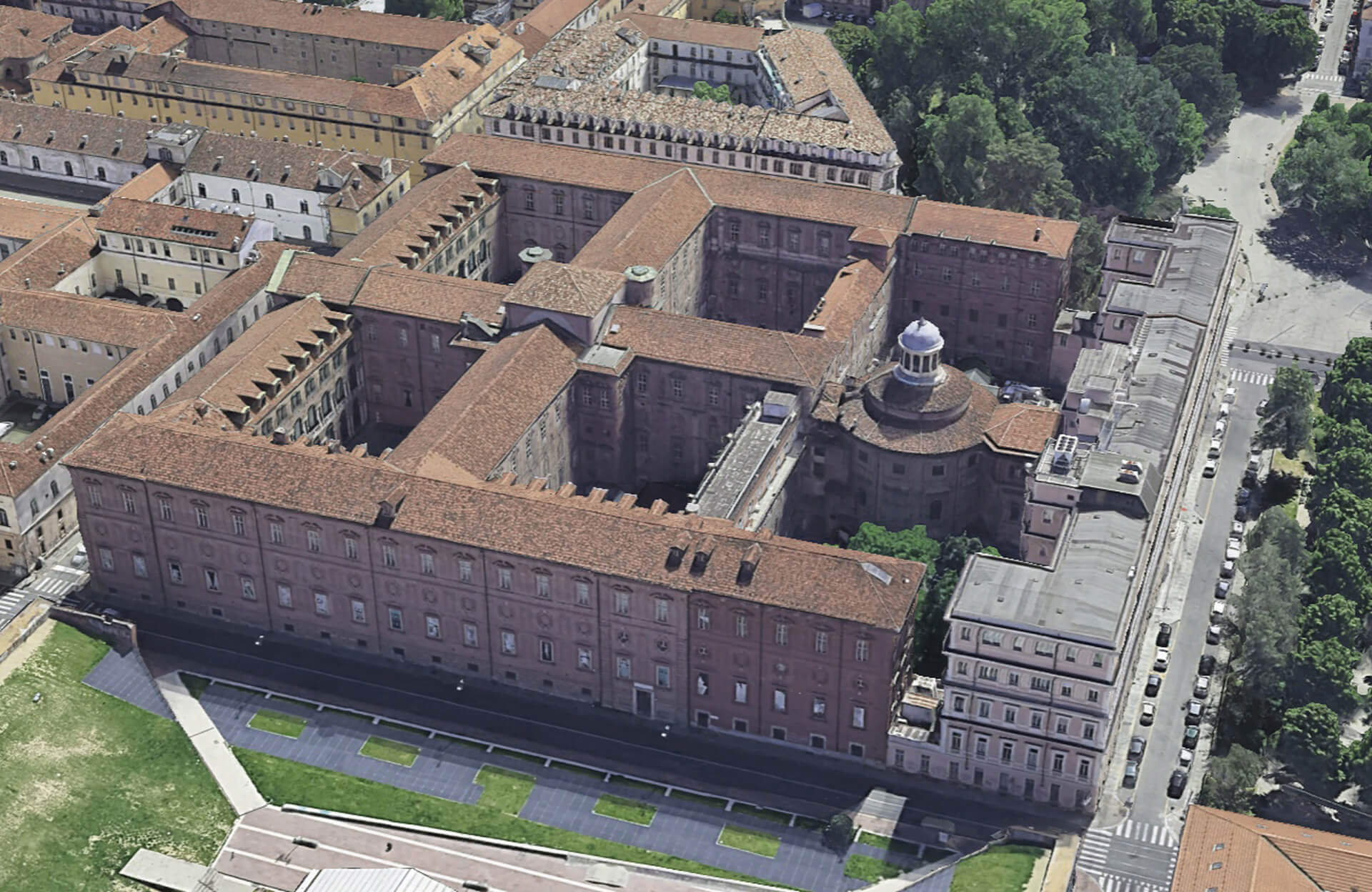
The image shows an aerial view of an architectural complex, which appears to be a large historic building or convent with a courtyard structure. Here are some significant details: Symmetrical complex: The main building is laid out symmetrically, with a central courtyard visible in the middle. The pitched terracotta roof is a distinctive element, suggesting classical architecture. Central dome: A dome can be seen in the central part of the complex, which could be a significant architectural feature, such as a church or main hall. The dome is often a sign of great architectural and functional importance in historic buildings. Restoration in progress: In some places, the shelving is visible, suggesting the building is undergoing restoration or maintenance. This type of restoration is common for historic buildings of this magnitude. Green belt and garden: Green areas can be seen around the building, contributing to a tranquil atmosphere and the feel of a residence or an academic/clerical institution. Long facades and elegant windows: The long facades with numerous windows could indicate that the building was intended to house many people, such as a convent, monastery, or other type of historical institution. This structure appears to have a rich history and sophisticated architectural design, suggesting it is a building of great cultural and historical value.

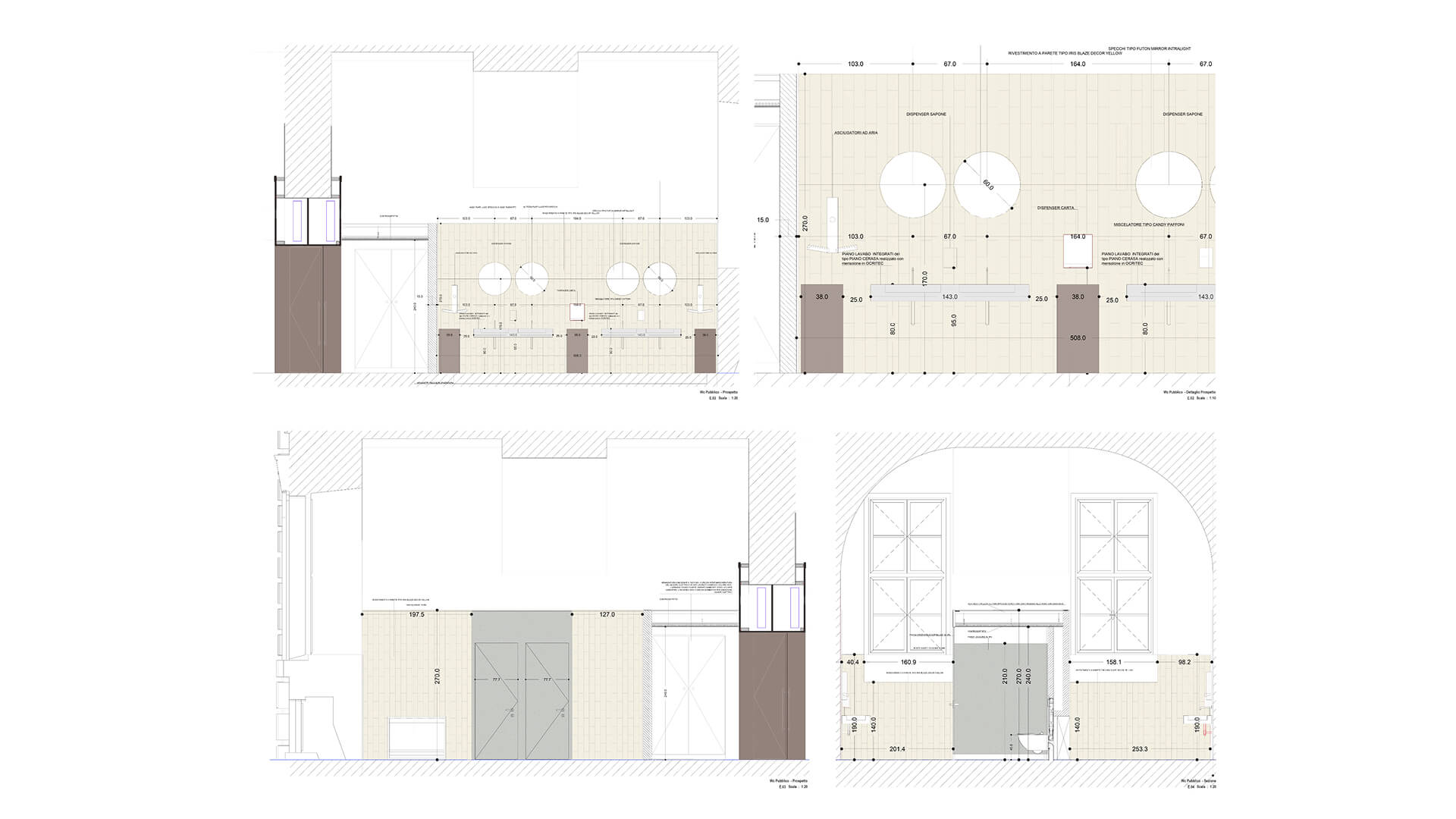
The technical drawing on display represents various views and sections of a space, likely a utility room or laboratory, with structural and functional details. Here's a brief analysis: Floors and Sections: The upper plan shows the layout of various areas, including elements such as sinks, dispensers, and a section with dimensions indicated for the walls and floor. The drawing reveals attention to detail in the layout and accessibility. Accessibility and Distribution: The presence of doors and partitions indicates a well-divided area. There are several distinct areas, including one with a wide passageway, suggesting a space that may need to be separated for different activities (such as laundry or filing). Materials and Finishes: The use of regular flooring, likely tile, is evident, with a uniform appearance throughout the space. The furnishings are elegant and functional, designed to optimize space. Functionality: The design appears to optimize space for practical use, with designated surfaces for washing and distributing items, and the use of windows that allow natural lighting, leveraging light to improve efficiency and aesthetics. The project reflects meticulous architectural design with a focus on functionality and comfort.

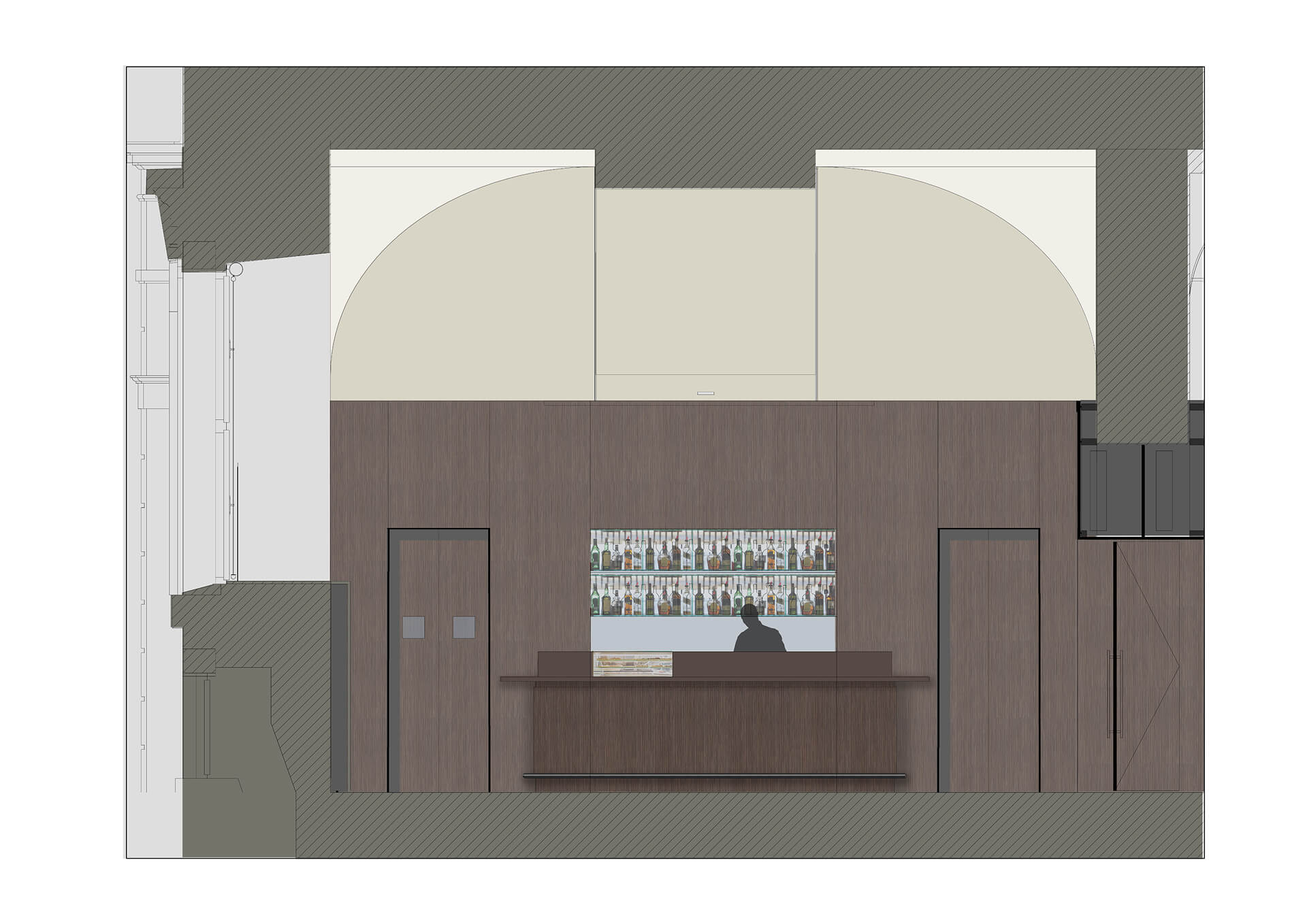
The image shows a cross-section of an architectural design for a bar area. Here's a closer look at the details: Simplicity and elegance: The bar is designed with dark wood walls, lending an elegant yet understated feel. The central area is dominated by the counter with a visible display case for alcohol bottles, while the wall above the display case appears to be light-colored, likely to contrast with the dark wood and better illuminate the space. Arch and ceiling: The ceiling has a vaulted design, with an arch running along the top, a choice that could recall classical architecture, creating a sense of spaciousness and beauty in the design. Functional layout: Behind the counter are doors that could indicate access to service areas or storage. The strategic placement of the counter and doors suggests an efficient workflow for staff. Simple and minimalist furnishings: The furnishings appear minimalist, with clean lines, and the lack of excessive decoration allows for the focus to be on the functional aspect and the atmosphere the space is intended to create. The lower portion of the bar appears to be devoid of seating, suggesting the design is primarily geared toward interaction with the bar staff. Well-lit space: The lighting is well-designed, with spotlights installed above the bar area, focusing light on the bar's key elements and creating a welcoming atmosphere.

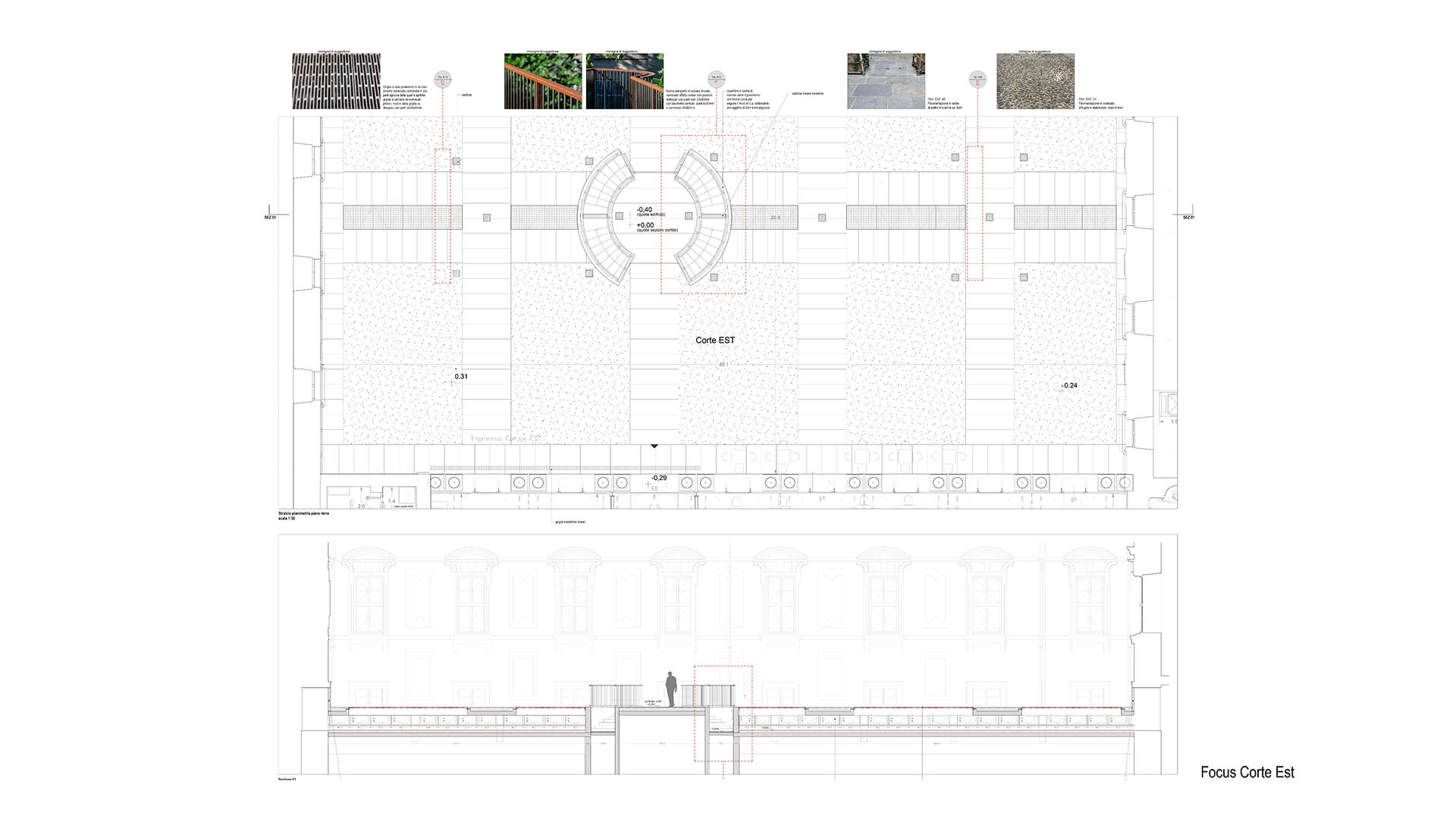
The drawing shows the design of an outdoor area, likely a courtyard, with details of the paving, access, and surrounding areas. Here's a brief analysis: Top view: The plan highlights the layout of the paved areas and circular sections, with two symmetrical spaces connected by a central passageway. The paving features a grid pattern with various materials used, including a type of stone or tile (visible in the images). Specific details: The images in the upper right offer a close-up view of the paving material, gate design, and wall. The dimensions of the different areas are precisely indicated, with heights and distances highlighted, which is useful for installing elements such as plants or other decorative accessories. Architectural details: The lower part of the drawing shows the façade of the palace or building adjacent to the courtyard, with details of the window, balcony, and dividers that may reference a historic architectural element. Functionality: The central area represents an access, presumably a focal point for transit, and the paving appears to be designed to enhance the safety and aesthetics of the route. The solid pavement and transit areas could facilitate a pedestrian or rest area. Overall, it's a well-thought-out project that combines functionality, aesthetics, and historic architectural details to create a livable and attractive area.