Palace in Piazza Arbarello, home of the Carlo Alberto school

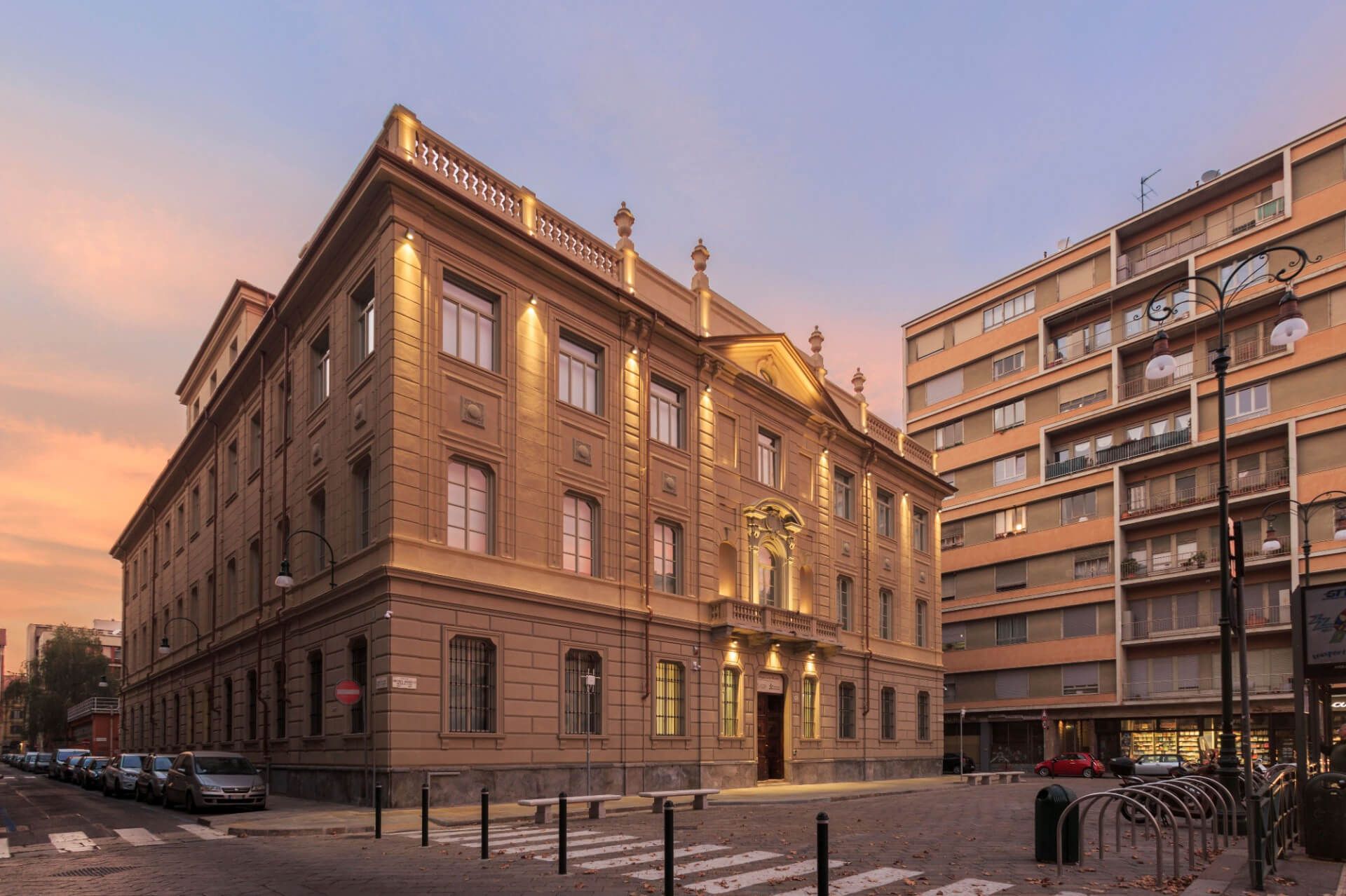
A corner building in neoclassical style, this multi-level building features a rigorously symmetrical composition, with a rusticated base and upper elevations articulated by pilasters, string courses, and molded frames around the openings. The main façade features a central axis emphasized by a monumental portal with sculptural decorations, a balcony above, and a triangular pediment, flanked by regular vertical windows. The crowning feature is a continuous balustrade interrupted by ornamental elements and pinnacles. The integrated architectural lighting, with warm, grazing light, highlights the vertical rhythm of the pilasters and the depth of the decorative details, enhancing the texture of the façade at dusk. The building is set within a diverse urban context, adjacent to modern residential buildings, with street space organized by sidewalks, pedestrian crossings, street furniture, and parking lots. The sunset sky, with its orange-pink hues, helps define the relationship between architectural volumes and light, accentuating the sculptural perception of the whole.

Palace in Piazza Arbarello, home of the Carlo Alberto school

The 1930s building overlaps with a small block situated immediately south to the ancient Roman core of the city. From the urban standpoint it is thus an independent unit.

SEE ALL

Turin, 2012-2017
Client: Compagnia di San Paolo – Collegio Carlo Alberto
Contract value: 7.500.000€
Architectural design: Giovanni Durbiano, Manfredo di Robilant and Isolarchitetti
Structural design: ICIS Srl
Plant systems design: Giuseppe Bonfante – Proeco
Building protected under Legislative Decree 42/2004
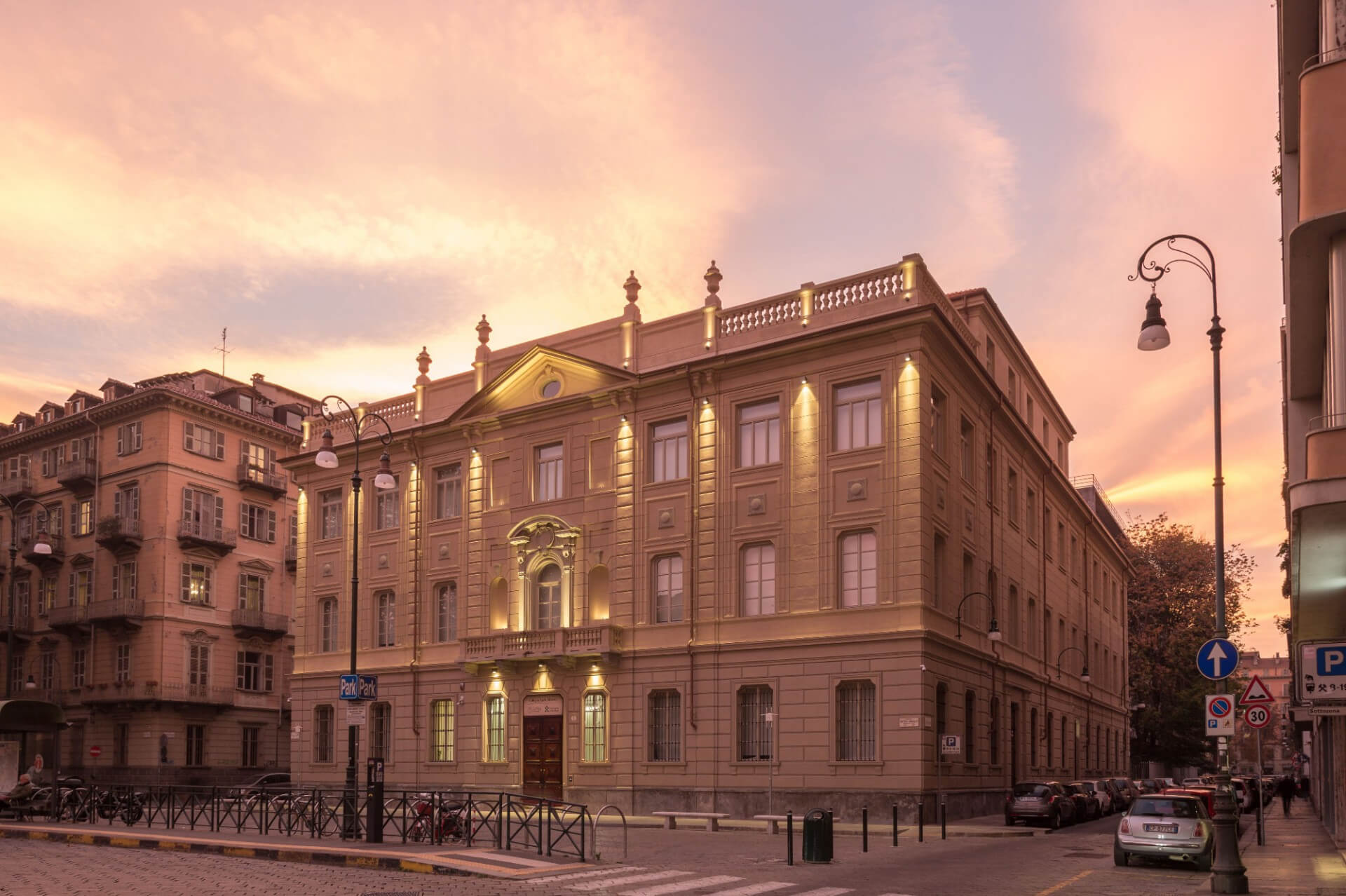
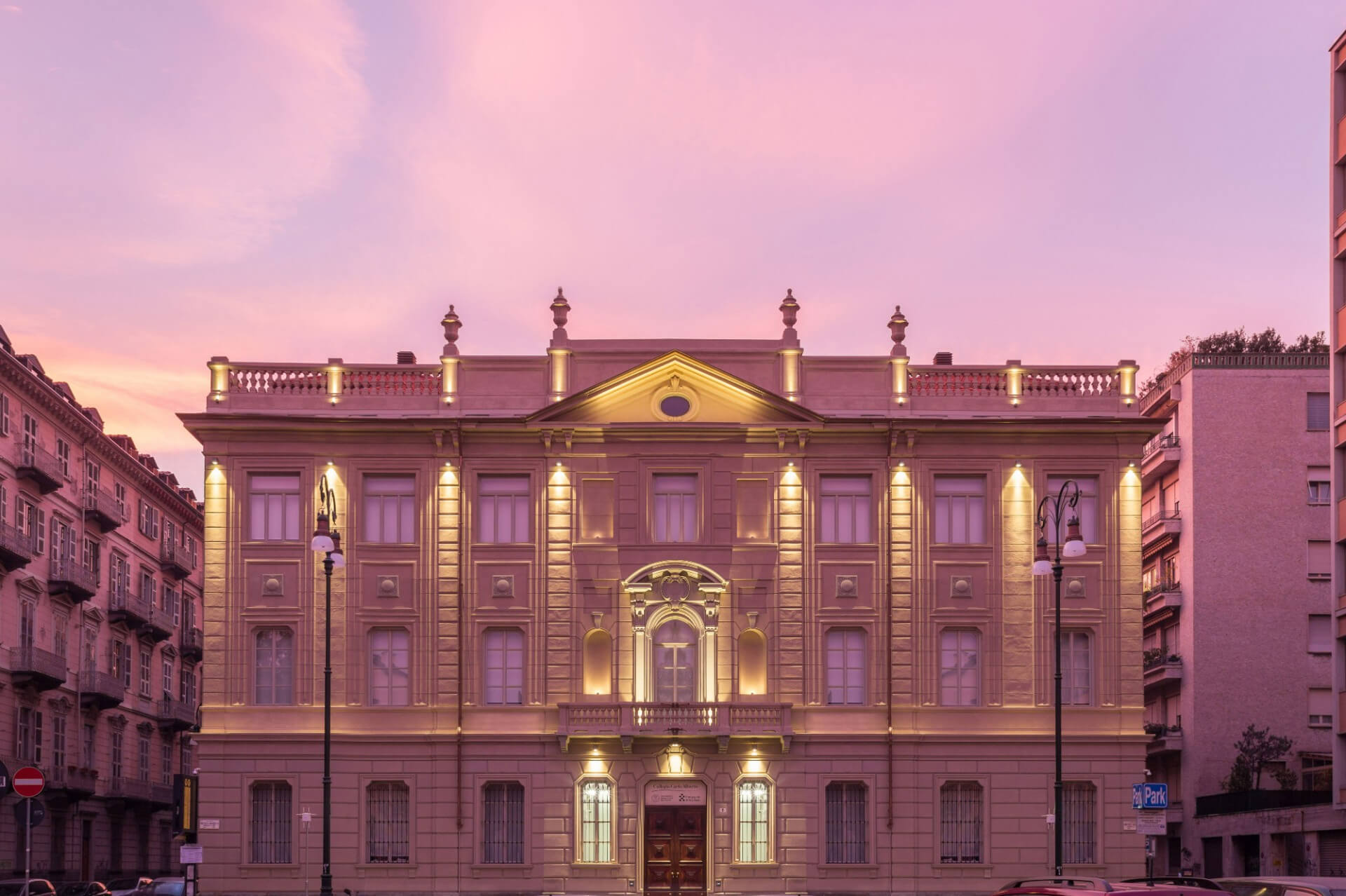
A neoclassical townhouse located on the corner of two streets, it features a symmetrical masonry façade with a rusticated base and upper levels punctuated by pilasters and string courses. The main façade features a monumental central entrance with a decorated portal, a balcony above, and a triangular pediment, flanked by regular windows with molded cornices. The roof is topped by a balustrade with ornamental elements. Warm architectural lighting emphasizes the sculptural details of the façade at dusk, while the surrounding urban context includes adjacent historic buildings, street lamps, signage, and cars parked along the roadway. The sunset sky, with its pink and orange hues, enhances the building's volumes and proportions.

Main facade of a historic neoclassical building characterized by a perfectly symmetrical composition, with a rusticated base on the ground floor and upper levels punctuated by vertical pilasters, string courses, and molded frames around the windows. The central axis is emphasized by a monumental portal with sculptural decorations, surmounted by a balcony with a balustrade and a triangular pediment with an oculus, inserted into the upper crown. The top of the building is defined by a continuous balustrade with ornamental elements and pinnacles that punctuate the roof. Un sistema di illuminazione architettonica integrata, con proiettori a luce calda posizionati lungo le lesene e sotto il cornicione, evidenzia la scansione verticale della facciata e la profondità dei dettagli decorativi, valorizzando la matericità dell’intonaco nelle ore crepuscolari. L’edificio è inserito in un contesto urbano compatto, affiancato da fabbricati residenziali di epoche diverse, con strada, lampioni storici, segnaletica e veicoli parcheggiati che definiscono lo spazio pubblico antistante. Il cielo al tramonto, con tonalità rosate e violacee, contribuisce a sottolineare i volumi e la geometria rigorosa del prospetto.

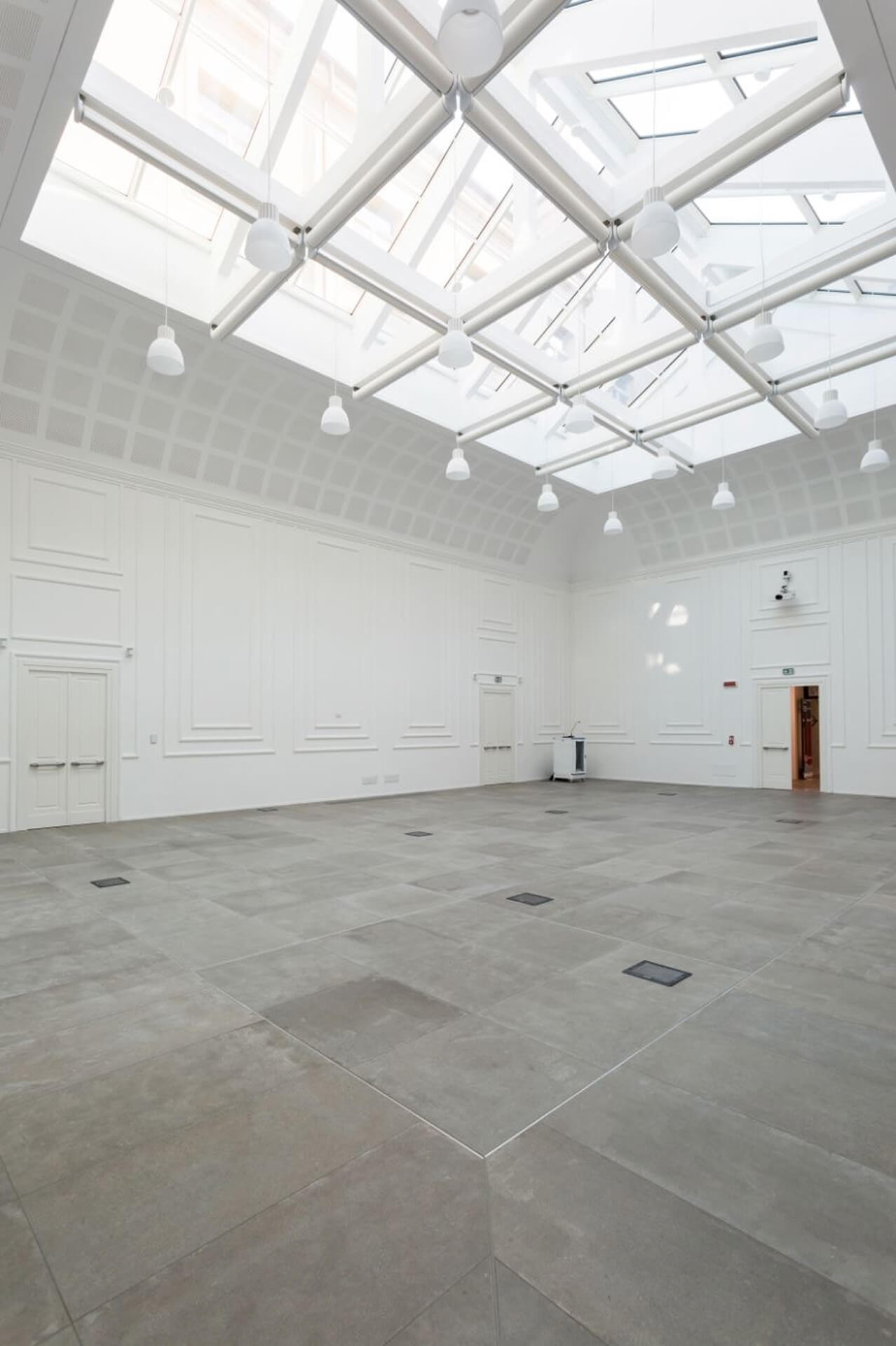
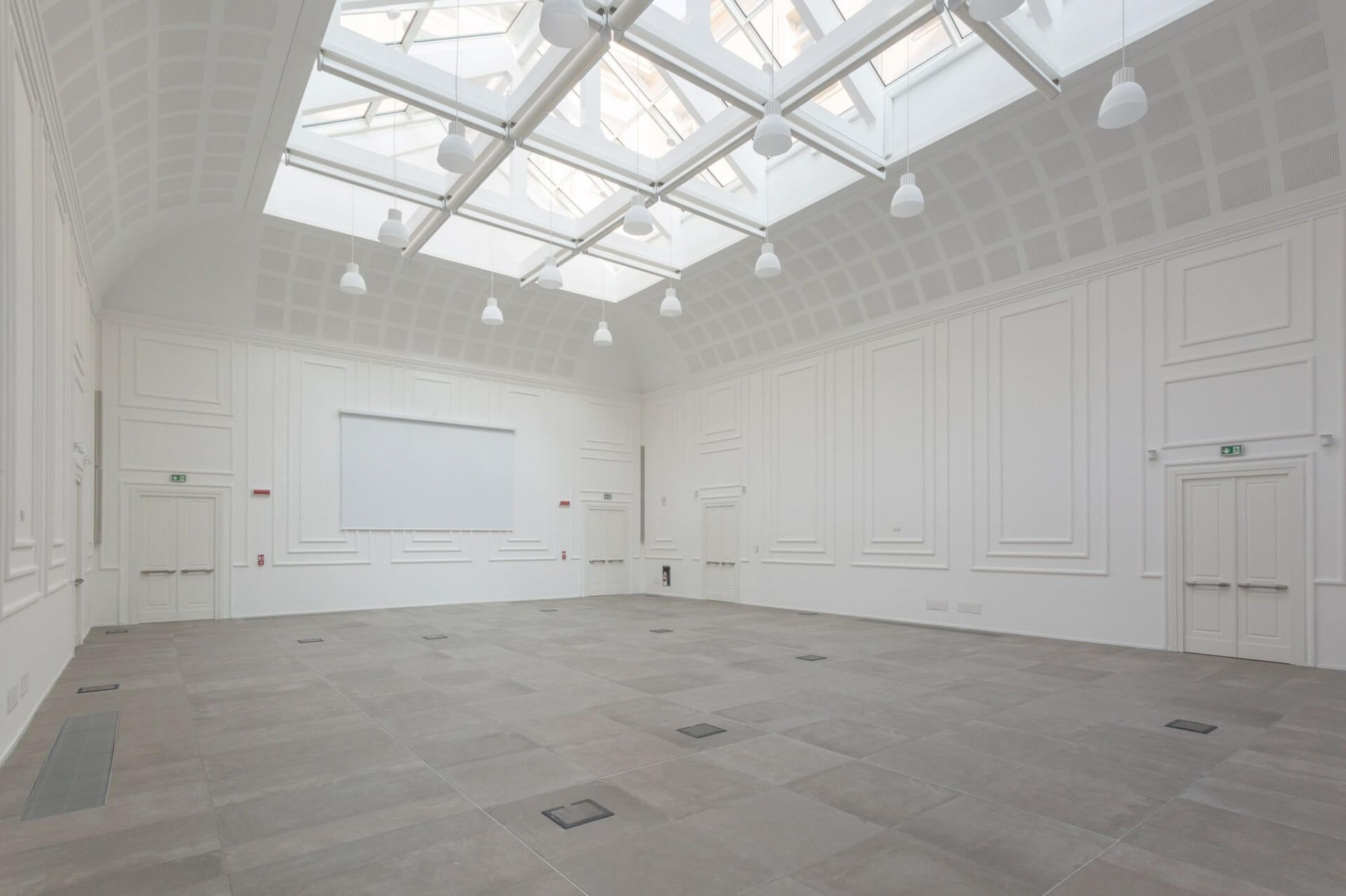
A large interior room with a restored historic shell and a contemporary glass roof, featuring a structural skylight with a modular metal lattice and exposed cylindrical nodes supporting transparent panels. Natural overhead light evenly illuminates the space, highlighting the white perimeter walls with preserved classical cornices and moldings. The floor is made of large, evenly laid gray stone slabs, integrated with flush-fitting technical elements. The glass ceiling is complemented by suspended lighting fixtures distributed throughout the structural grid. The unfurnished space highlights the contrast between the historic architectural language and the contemporary intervention, suggesting a space intended for exhibitions or conferences.

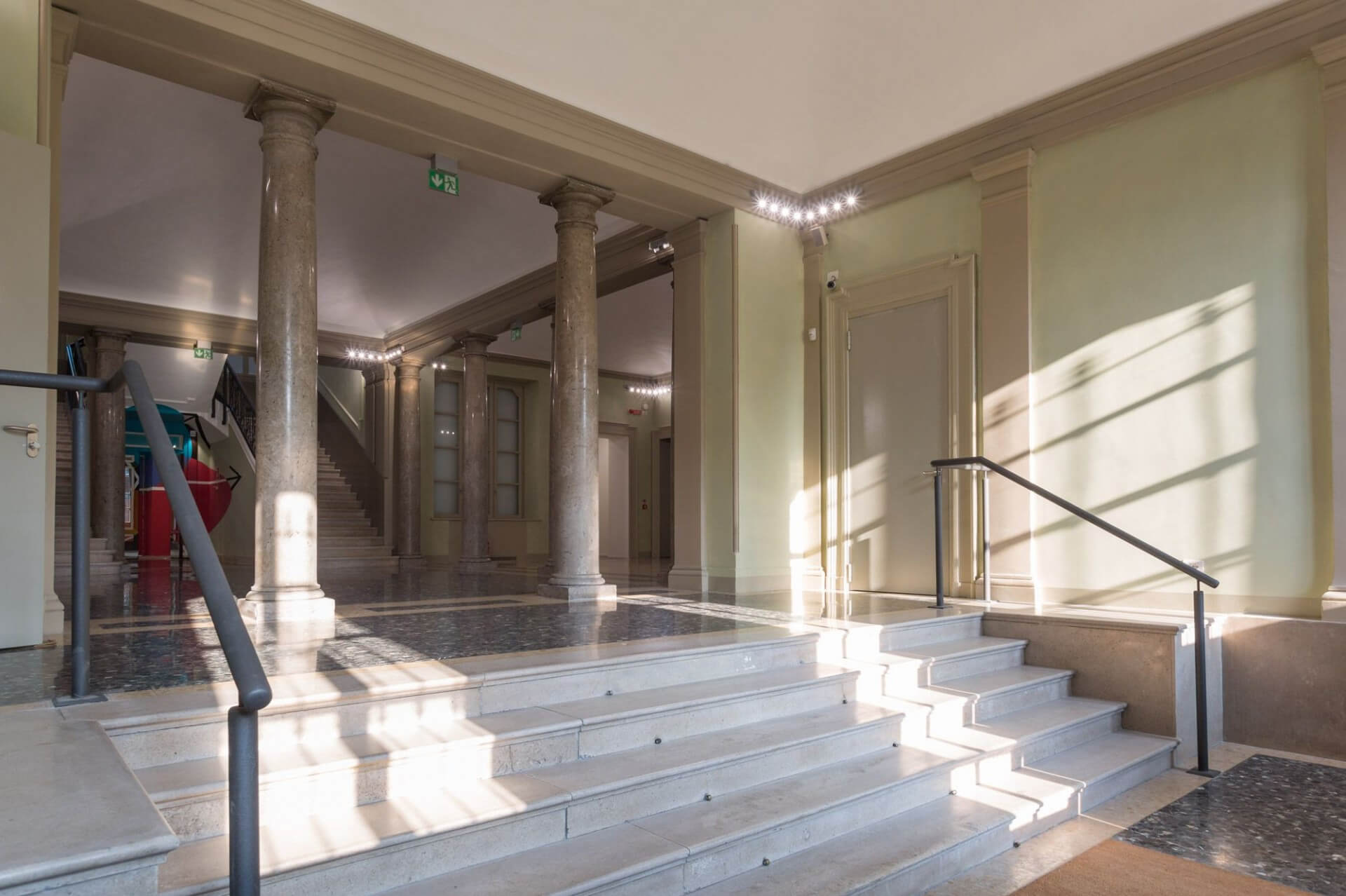
The interior entrance hall features a monumental layout, featuring a sequence of stone columns with simple capitals that define an internal portico and lead to a main staircase in the background. The space features light-colored plastered walls with classic cornices and moldings, complemented by contemporary touches such as linear metal handrails and a continuous LED lighting system positioned along the upper cornices. La pavimentazione combina superfici in pietra levigata e inserti lapidei più scuri, mentre una breve scalinata centrale articola i dislivelli tra gli spazi. La luce naturale radente, proveniente lateralmente, proietta ombre nette sulle superfici verticali e sui gradini, enfatizzando la plasticità degli elementi architettonici. L’insieme evidenzia un intervento di riqualificazione che mette in dialogo il linguaggio storico dell’edificio con soluzioni contemporanee, mantenendo la leggibilità dell’impianto originario.

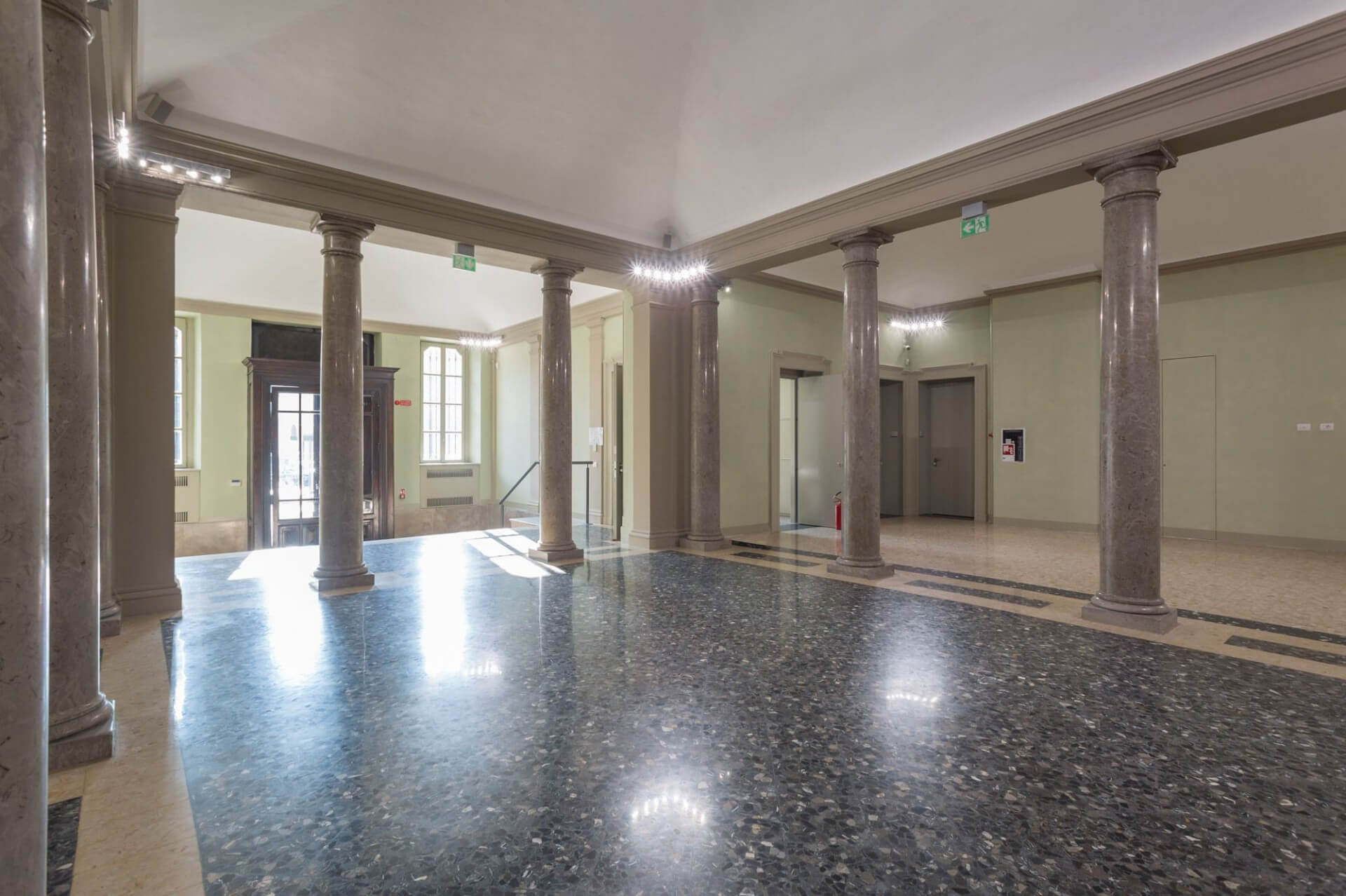
The interior space features a symmetrical layout punctuated by a sequence of polished stone columns supporting continuous architraves, defining a sort of internal portico open on multiple sides. The space features dark terrazzo flooring with a reflective finish, framed by lighter perimeter bands that highlight the geometry of the space. Le pareti intonacate in tonalità neutre presentano cornici e modanature classiche semplificate, integrate da interventi contemporanei quali illuminazione lineare a LED posizionata lungo il perimetro superiore e corpi illuminanti direzionali. Sullo sfondo si leggono aperture vetrate e ingressi secondari che articolano i percorsi interni, mentre la luce naturale proveniente dall’ingresso principale contribuisce a enfatizzare la profondità dello spazio e la matericità delle superfici lapidee. L’insieme restituisce un ambiente di rappresentanza riqualificato, in cui elementi strutturali e decorativi storici dialogano con soluzioni tecnologiche contemporanee, mantenendo una chiara leggibilità dell’impianto originario.

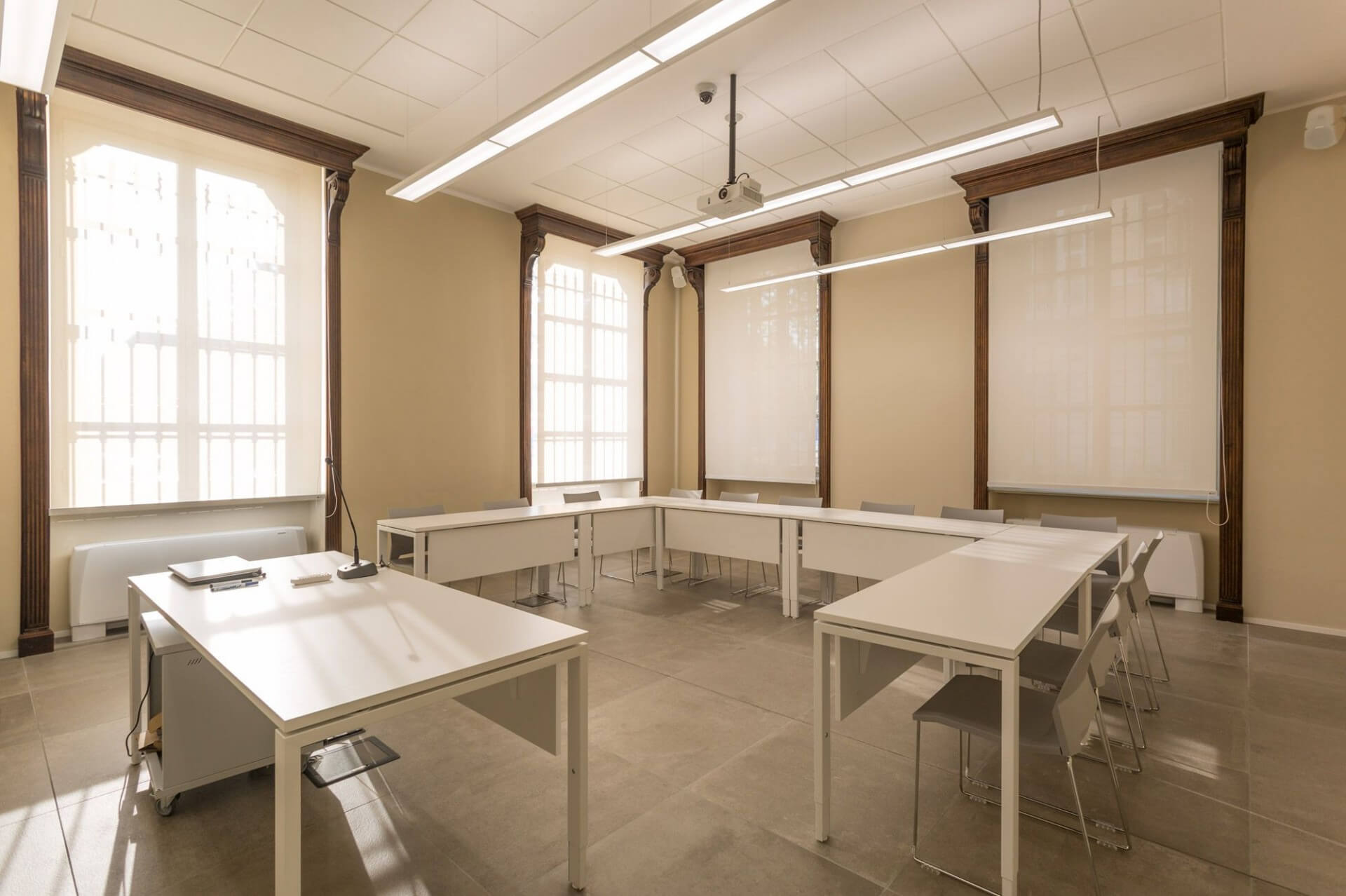
A multipurpose classroom created in a renovated historic building, featuring tall vertical windows with original frames and molded wooden frames framing the openings. The space features neutral-toned plastered walls and a modular suspended ceiling with integrated linear lighting fixtures, from which a central projector for presentations is suspended. L’arredo contemporaneo è composto da tavoli modulari bianchi disposti a configurazione a U, con sedute leggere coordinate, suggerendo un uso didattico o per riunioni. Il pavimento in grandi lastre ceramiche a finitura opaca contribuisce alla percezione ordinata e funzionale dello spazio. La luce naturale filtrata dalle schermature alle finestre si combina con l’illuminazione artificiale, evidenziando il dialogo tra elementi storici conservati e interventi tecnologici contemporanei.

A large double-height room with a restored historic shell and a contemporary glass roof, featuring a structural skylight with a modular metal lattice and exposed nodes supporting transparent panels. Diffused natural light from above evenly illuminates the space, highlighting the white perimeter walls articulated by classic cornices and frames. Il pavimento è realizzato in grandi lastre lapidee grigie con integrazione di elementi tecnici a filo, mentre il sistema di illuminazione sospesa segue la maglia strutturale della copertura. Su una delle pareti principali è integrato uno schermo per proiezioni, suggerendo una destinazione d’uso per eventi, conferenze o attività espositive. L’insieme evidenzia il dialogo tra linguaggio storico e intervento contemporaneo, con particolare attenzione alla luce e alla leggibilità spaziale.

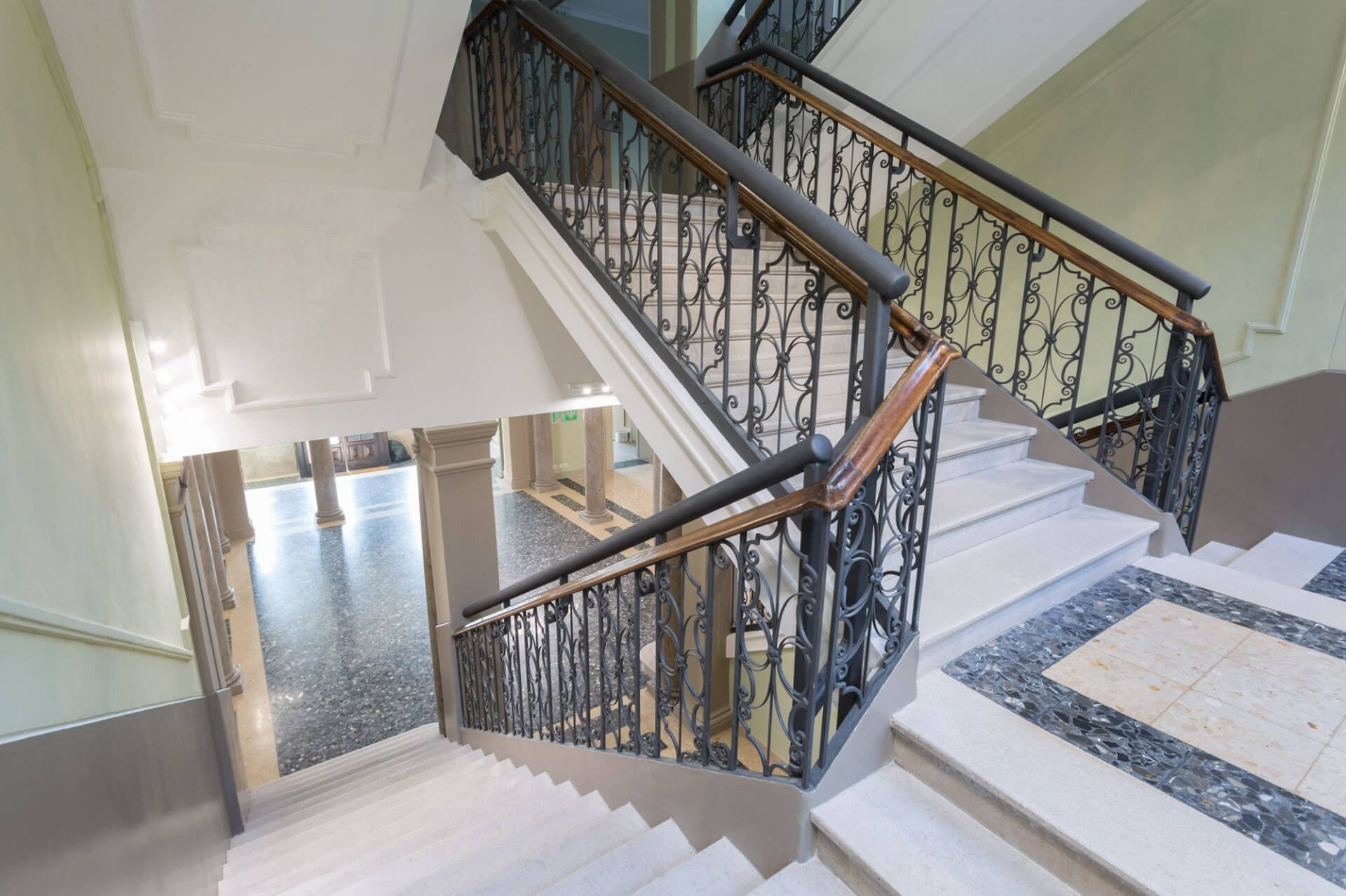
Monumental internal staircase in a restored historic building, featuring light-colored stone ramps with terrazzo-clad landings and decorative stone inserts. The wrought iron parapet features a continuous ornamental design and a wooden handrail, an original feature preserved and integrated into the renovation project. La scala si sviluppa attorno a un vano aperto che mette in relazione i diversi livelli dell’edificio, con affaccio sullo spazio distributivo sottostante scandito da colonne in pietra. Le pareti intonacate in tonalità neutre presentano cornici e modanature classiche semplificate, mentre l’illuminazione contemporanea discreta valorizza i dettagli architettonici senza alterare la lettura storica dell’insieme. L’immagine evidenzia il dialogo tra elementi costruttivi originali e interventi di adeguamento funzionale, con particolare attenzione alla conservazione delle finiture e alla continuità materica tra pavimentazioni, strutture verticali e parapetti.

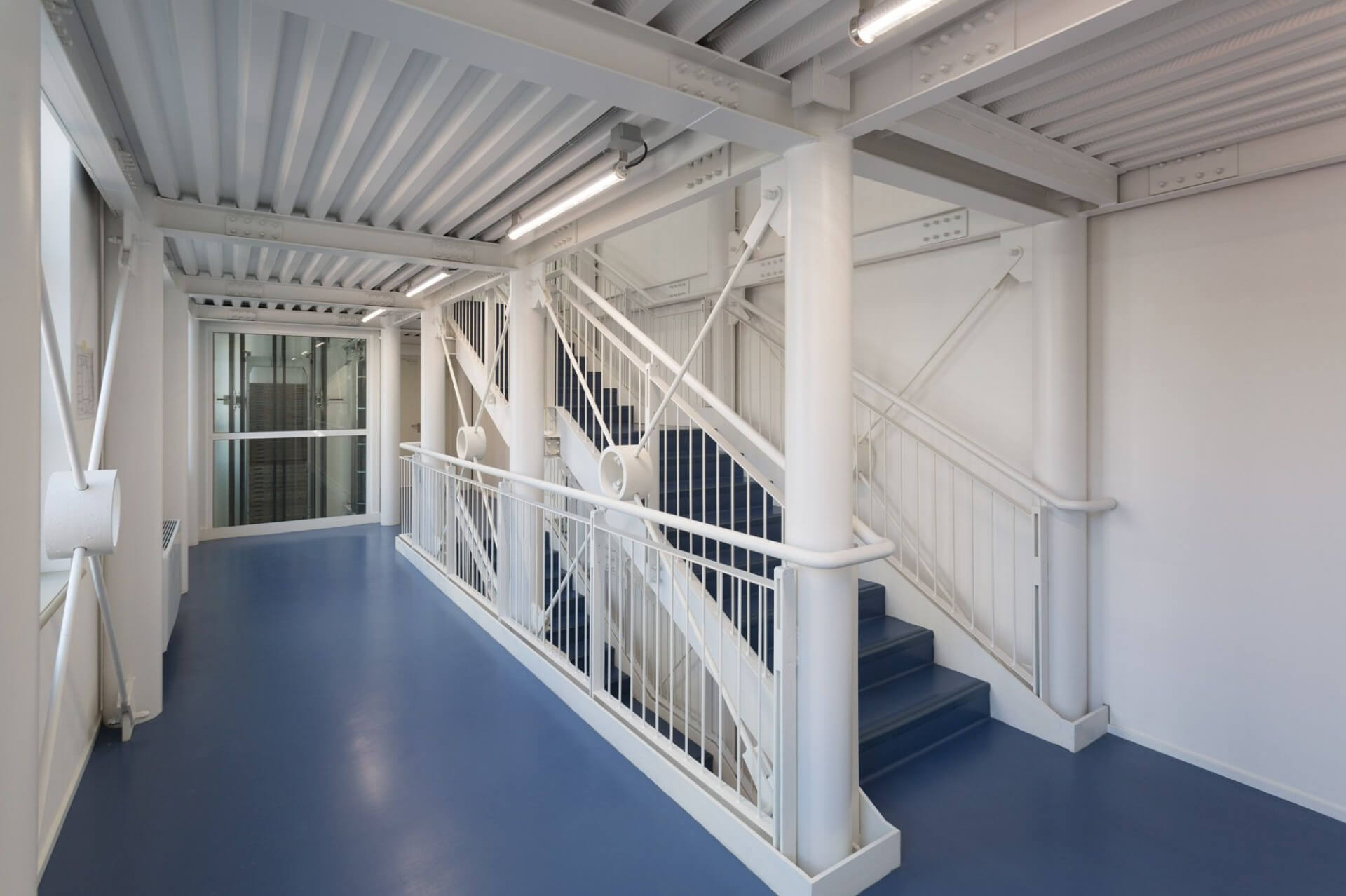
Contemporary interior space with vertical distribution and an exposed metal structure, featuring white-painted steel beams and pillars and a technical suspended ceiling with ribbed elements. The staircase, divided into multiple flights, features a metal structure with vertical bar parapets and an integrated handrail, while the steps are clad in a dark material that contrasts with the dominant white. Il pianerottolo è definito da una pavimentazione continua in resina blu, che enfatizza il carattere funzionale e industriale dell’ambiente. Elementi strutturali diagonali e nodi di connessione evidenziati contribuiscono alla lettura tecnica dell’insieme, mentre l’illuminazione lineare a soffitto garantisce una distribuzione uniforme della luce. Sullo sfondo, una chiusura vetrata delimita ulteriori spazi interni, rafforzando la trasparenza e la permeabilità visiva del progetto. L’immagine evidenzia un linguaggio architettonico industriale e contemporaneo, con particolare attenzione alla chiarezza strutturale e alla coerenza materica tra elementi portanti, finiture e sistemi impiantistici.

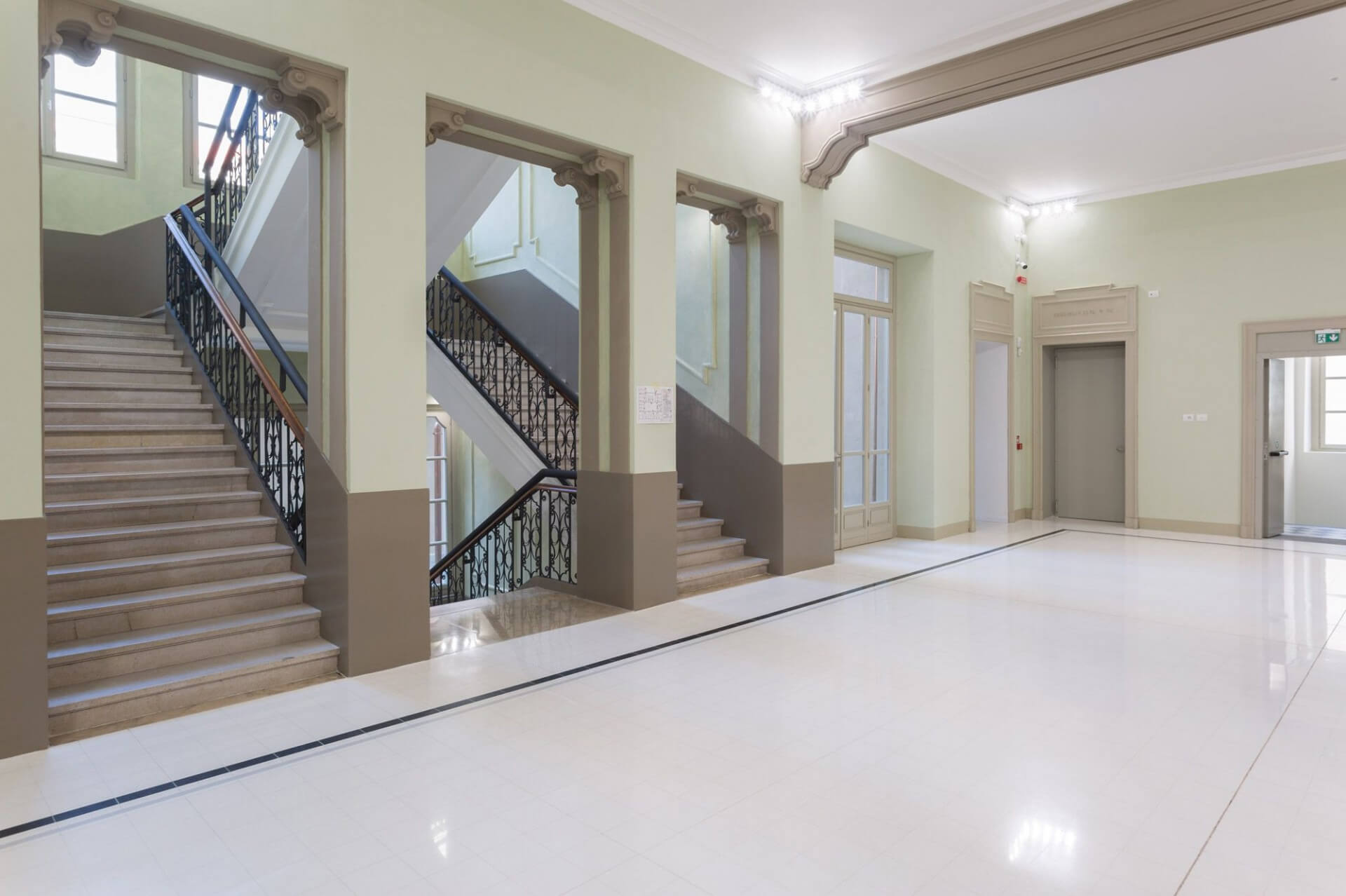
Interior distribution space in a restored historic building, featuring a large foyer with polished light-colored flooring and neutral-toned plastered walls with classic cornices and moldings. The interior façade is punctuated by a sequence of segmental arched openings with decorative trim, framing the monumental staircase, divided into multiple flights. The stairs are made of stone with ornamental wrought-iron parapets and wooden handrails, original features preserved and enhanced in the renovation project. Alongside the main space are glass windows and an integrated elevator shaft, demonstrating the incorporation of contemporary systems within the historic structure. Discreet linear lighting positioned along the upper perimeter emphasizes the moldings and contributes to a uniform reading of the space, highlighting the dialogue between traditional architectural elements and functional adaptations.

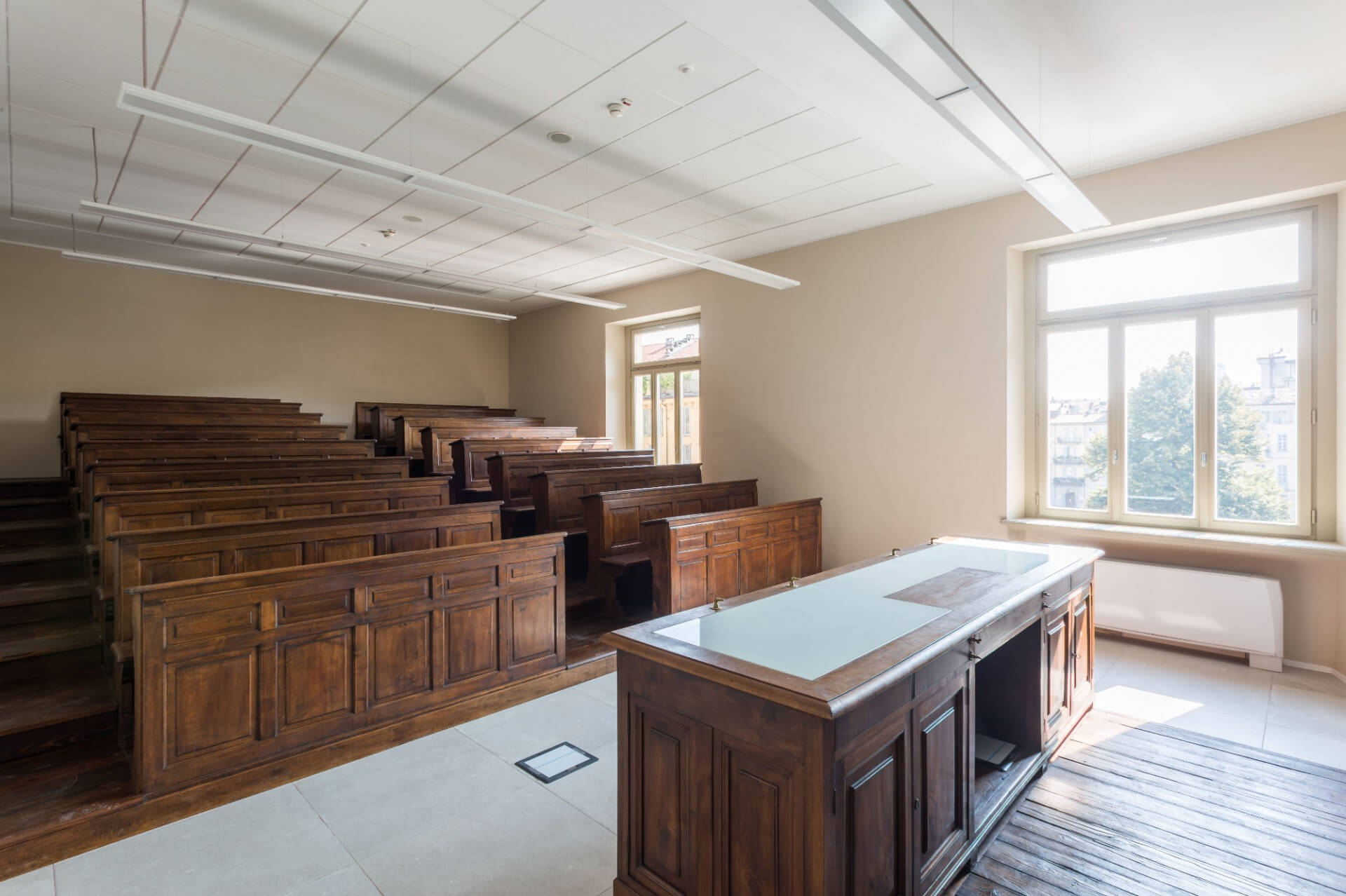
Classroom with a historic layout featuring wooden benches arranged on tiers, crafted from solid wood with molded paneling, facing a frontal wooden teacher's desk with an integrated worktop. The space is defined by neutral-toned plastered walls and large side windows that provide natural lighting, overlooking the urban surroundings outside. The ceiling features a modular false ceiling with suspended linear lighting fixtures and integrated technical devices, highlighting a contemporary intervention aimed at functionally adapting the space. The floor combines stone slab surfaces in the front area and wooden planks in the tiers, emphasizing the hierarchy of the spaces. The overall effect is that of a historic classroom repurposed for teaching purposes, where the original furnishings and layout are preserved and integrated with modern systems.

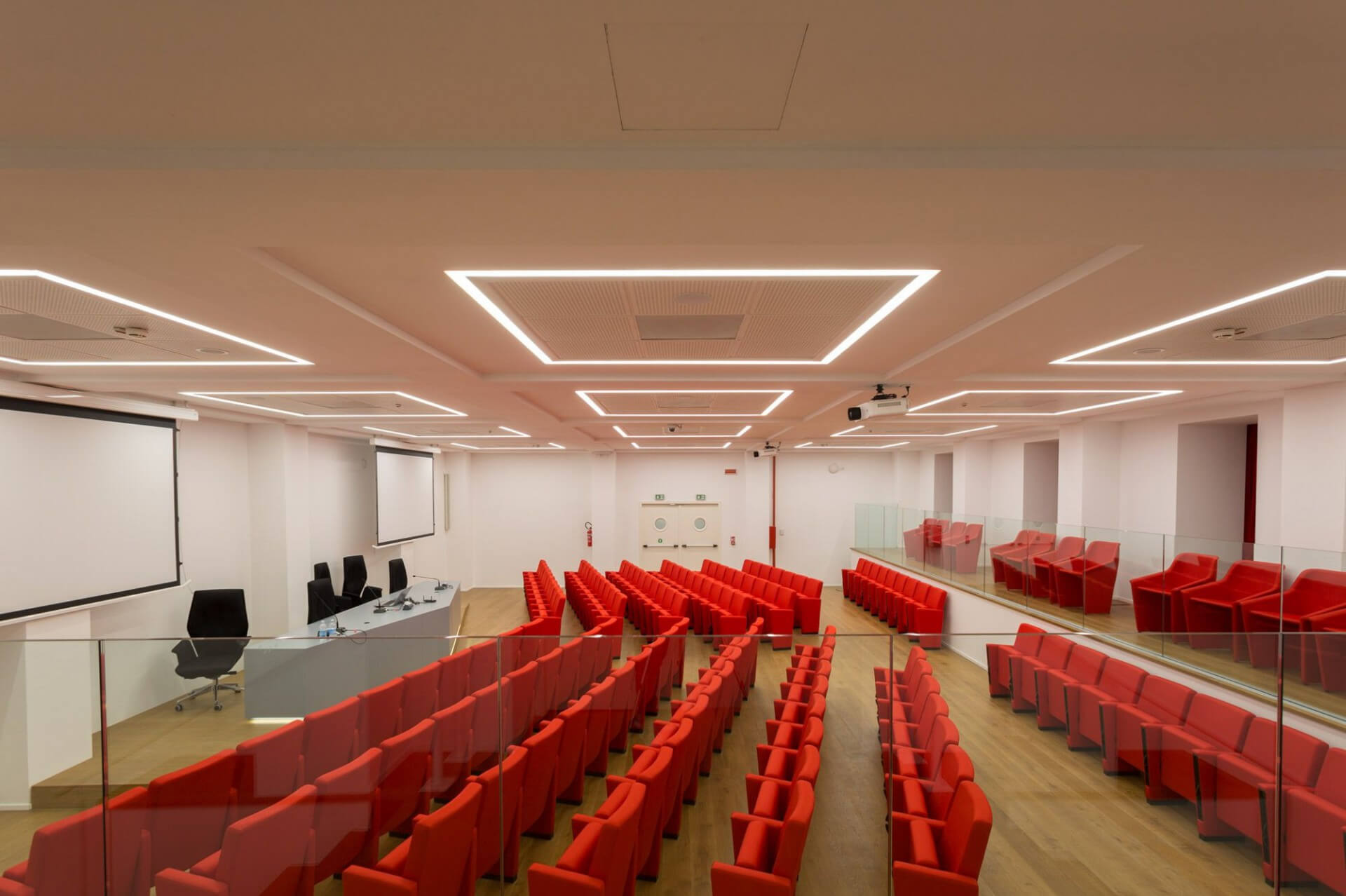
A contemporary conference room with an auditorium layout, featuring neat rows of red padded seats oriented toward the front stage, which houses a speaker table and projection screen. The space features a longitudinal configuration with wooden flooring and lateral glass parapets delimiting the raised areas. The ceiling is defined by a technical false ceiling with modular panels and LED lighting integrated into recessed geometric profiles, creating a regular and uniform light grid. The white plastered walls house projection screens and audiovisual equipment, highlighting the space's intended use for conferences, lectures, or events. The overall design expresses a contemporary architectural language, with attention to acoustics, visibility, and system integration, through the coordinated use of light surfaces, glass elements, and colorful furnishings that define the spatial hierarchy.

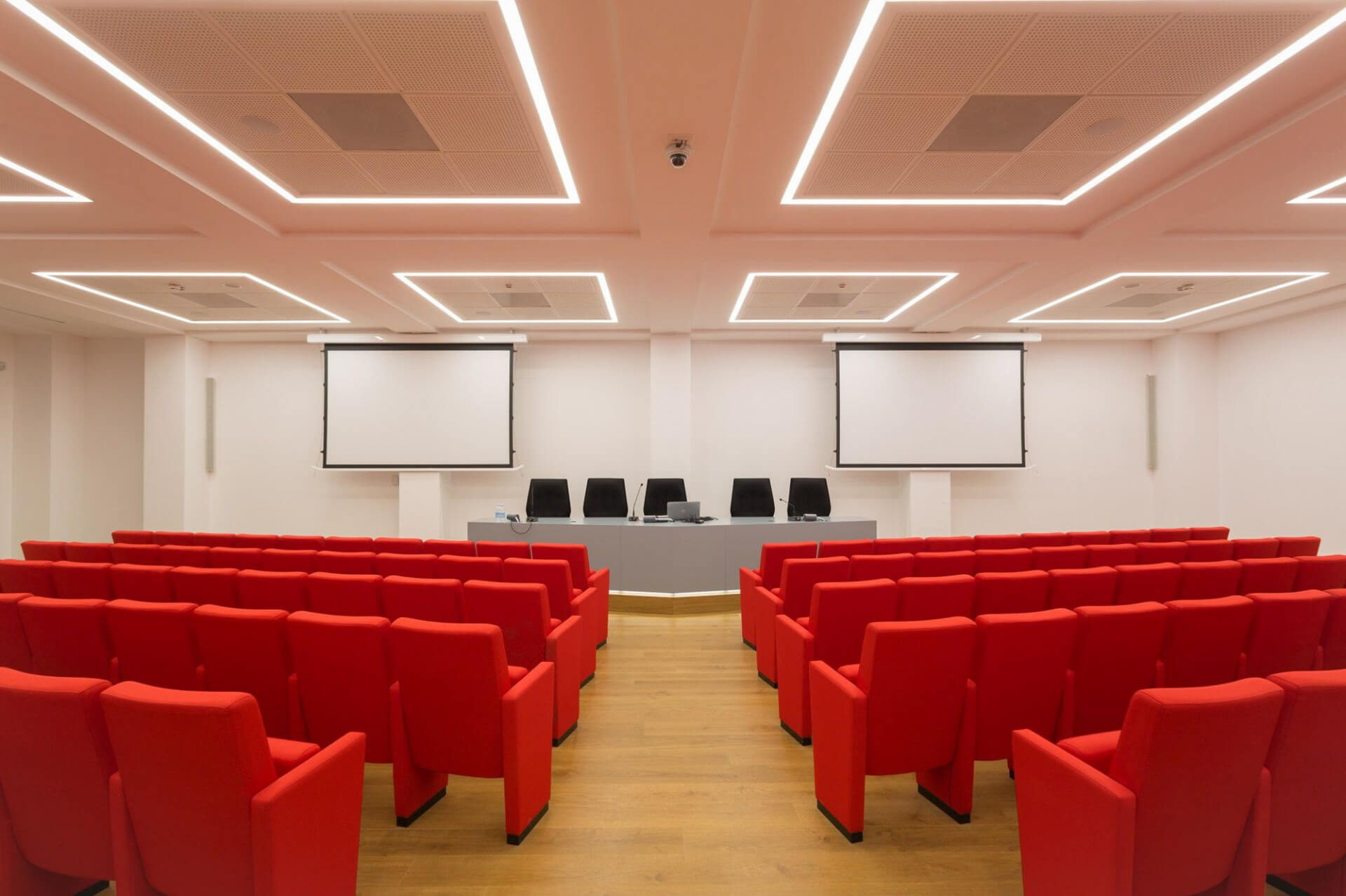
A contemporary conference room with a symmetrical front layout, featuring tiered rows of red padded seats arranged in a theater-style layout on a wooden floor, facing the stage with a speaker table and five workstations. The back wall features two side-by-side projection screens, highlighting the space's multifunctional purpose. The ceiling features a modular technical false ceiling with sound-absorbing panels and LED lighting systems recessed into rectangular geometric frames, creating a regular pattern of light and contributing to visual comfort. The vertical surfaces, finished in neutral tones, house acoustic elements and integrated audiovisual devices. The overall design reflects an environment designed for conferences and presentations, with particular attention to acoustic quality, visibility, and system integration, using a minimalist and contemporary architectural language.