Corso Raffaello: University Campus

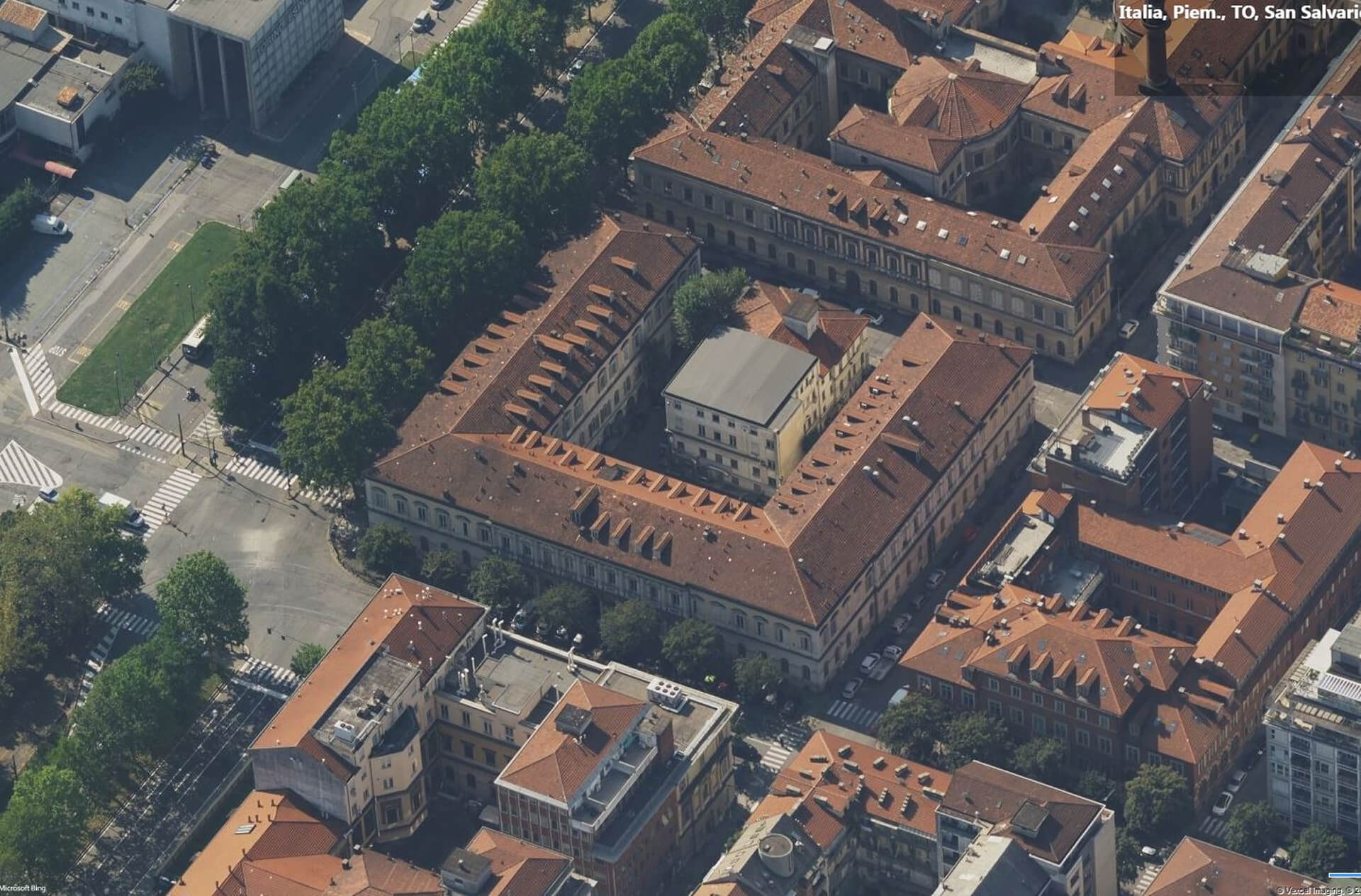
Vista aerea del tessuto urbano con isolato storico a corte chiusa caratterizzato da edifici con coperture in laterizio e impianto rettangolare organizzato attorno a cortile interno. Il complesso, inserito in un contesto urbano compatto con strade alberate e incroci viari, è circondato da edifici residenziali e strutture pubbliche di diversa epoca. L’immagine evidenzia la morfologia dell’isolato, la continuità delle facciate lungo il perimetro e il rapporto tra il complesso architettonico e il sistema urbano circostante.

Corso Raffaello: University Campus

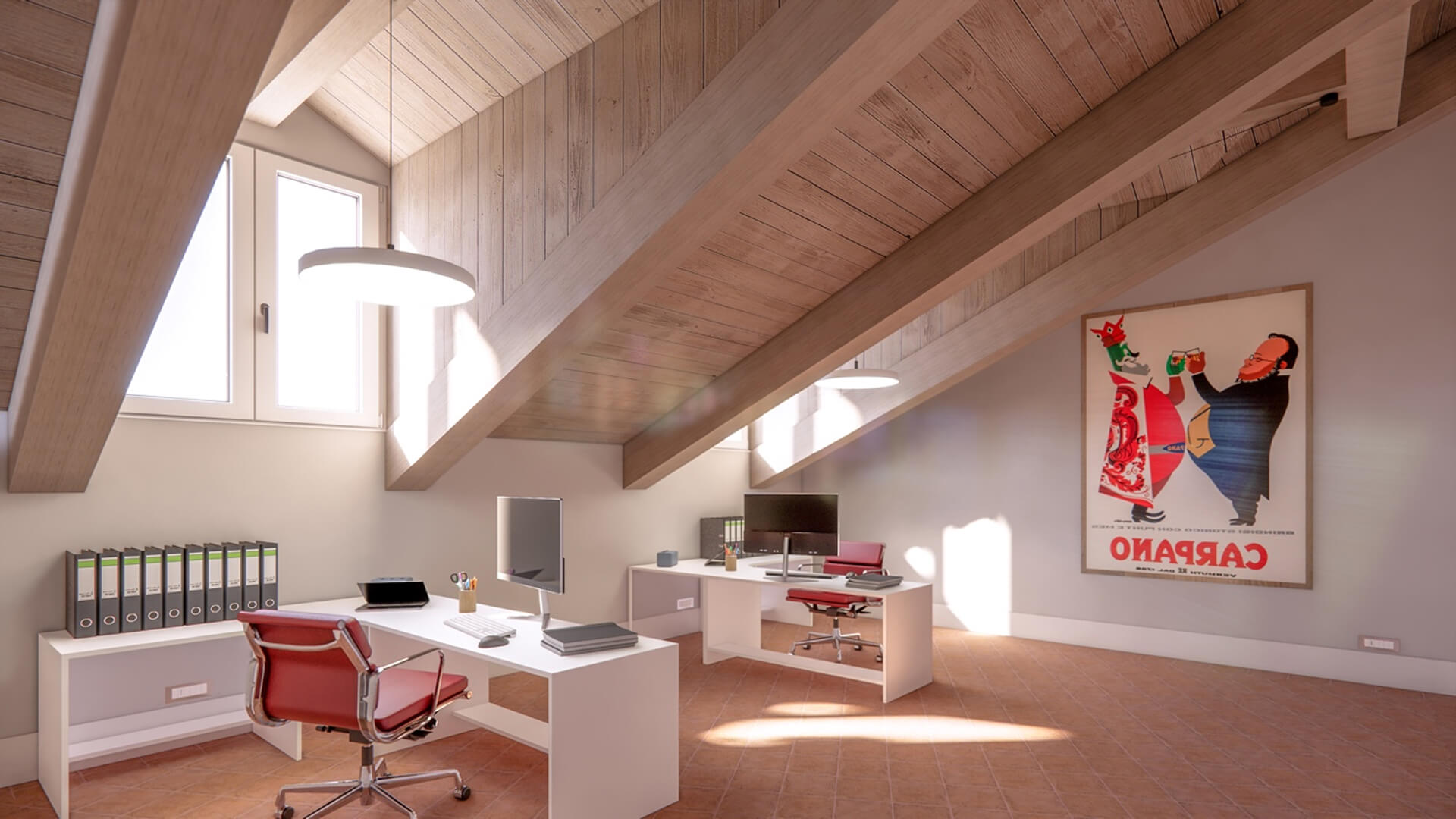
At Corso Raffaello 30, in the heart of the “City of Science,” this project focuses on a historic university building, aiming to restore its efficiency and safety, create new workspaces, and preserve its identity. The roof has been entirely redesigned with a new, non-thrusting wooden structure that is well insulated for energy efficiency. The dormers have also been uniformly redesigned, fully respecting both landscape constraints and the building’s original appearance.

SEE MORE

Turin, 2023 – Work in progress
Client: Università degli Studi di Torino
Value of works: 5.000.000 €
Architectural project: Giovanni Durbiano
Structural and building services engineering: MCM Ingegneria Srl
Building subject to protection under Legislative Decree no. 42/2004
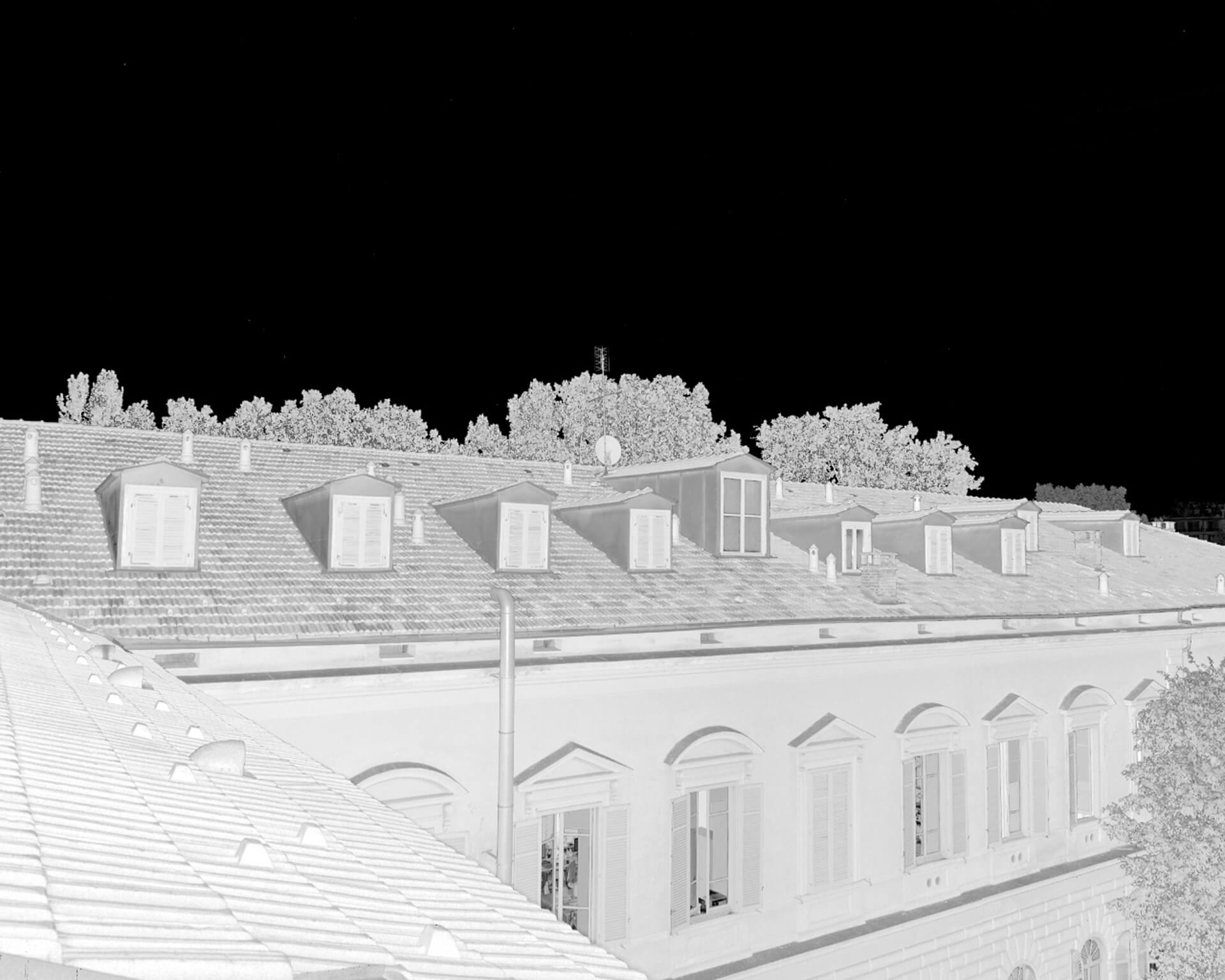
View of the roofs of a historic building with a pitched roof made of tiles and dormer windows aligned along the ridge, represented in a high-contrast monochrome image used for technical analysis or digital survey. The façade below has regular openings with molded frames and shutters, while trees and the urban profile can be seen in the background. The image has the character of a technical document, probably derived from a scan or three-dimensional model, used to study the geometries of the roof and the existing architectural context.

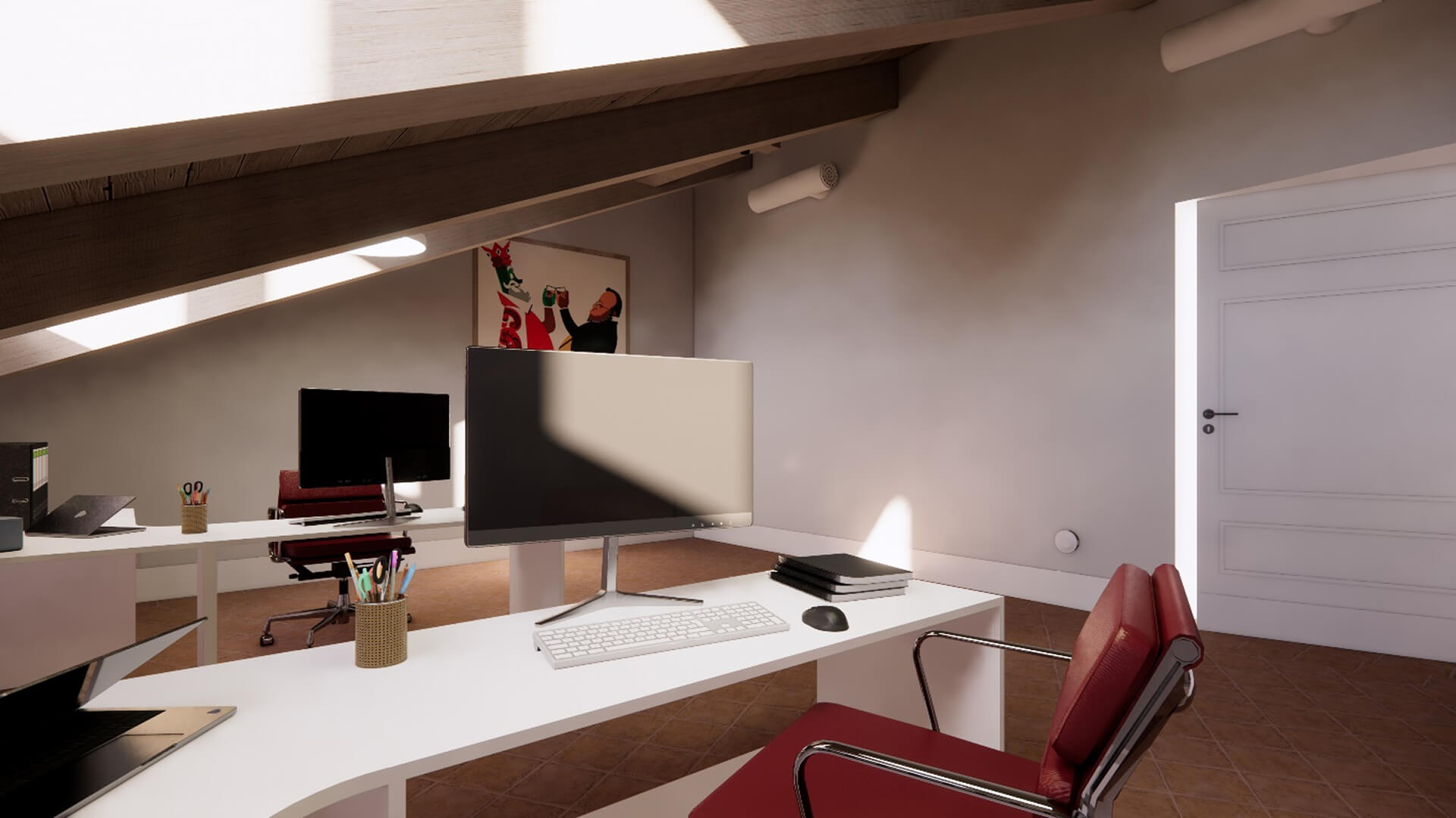
Internal view of an office environment created in the attic of a building undergoing renovation work. The space is characterized by a sloping roof with an exposed wooden structure and wooden planking, with light-coloured plastered walls. Natural lighting comes from openings placed along the pitch, integrated by linear lighting fixtures fixed to the wall. The floor is in terracotta tiles. In the foreground there is a contemporary workstation consisting of a white desk with monitor, keyboard and office accessories, flanked by a red padded operational seat with a metal structure. In the background you can see a second similar station and a decorative wall element in vintage graphic style. The intervention highlights the insertion of modern furnishings within a recovered historical casing, intended for management and administrative functions in the attic rooms.


Interior of an office space located in the attic of a building undergoing architectural renovation. The space features a double-pitched roof with an exposed wooden structure composed of main and secondary beams and wooden planking, with internal beading lining the sloping surfaces. Natural lighting is provided by vertical windows inserted into the lower portion of the roof, complemented by pendant lights with circular diffusers and linear wall lights. The floor is made of diagonally installed terracotta tiles. The space is furnished with contemporary workstations consisting of white desks, monitors, red padded task chairs with metal frames, and low filing cabinets with file cabinets. The project emphasizes the preservation of the historic structure and the inclusion of modern furnishings and systems, following a restoration approach that repurposes the attic spaces for management and administrative purposes.

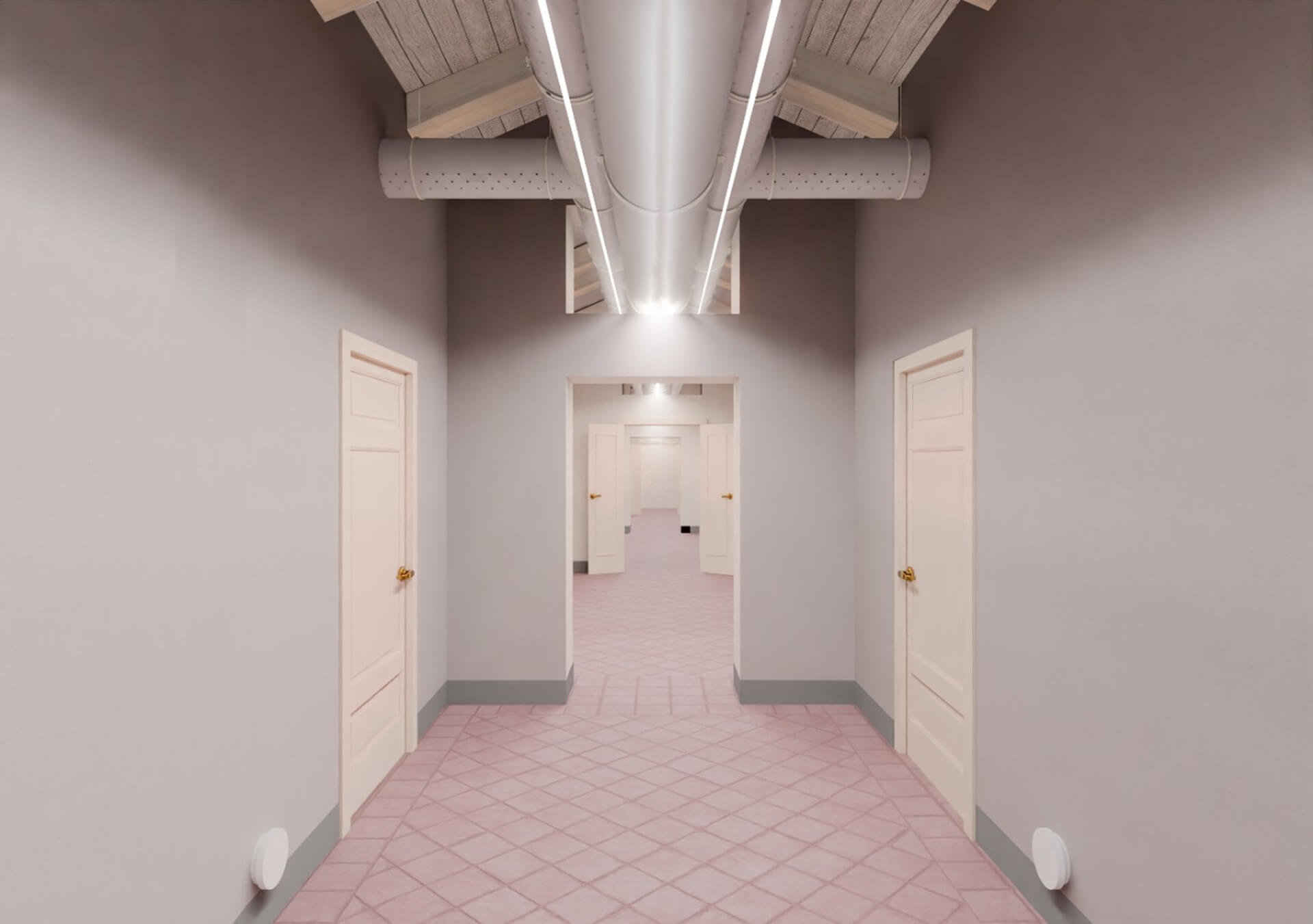
Interior of a corridor located in the attic of a building undergoing architectural renovation. The space features a sloped roof with exposed wooden structure and wooden planking, complemented by centrally located exposed utility ducts, including metal ventilation ducts and continuous linear lighting fixtures. The walls are plastered and painted light colors with gray skirting, while the floor is made of diagonally laid terracotta tiles. Along the corridor, internal doors in light-painted wood lead to the side rooms, while a sequence of openings is visible along the corridor, highlighting the continuity of the spaces. The project highlights the integration between the restored historic structure and new exposed technological systems, following an approach to repurposing the attic spaces for office and service purposes.

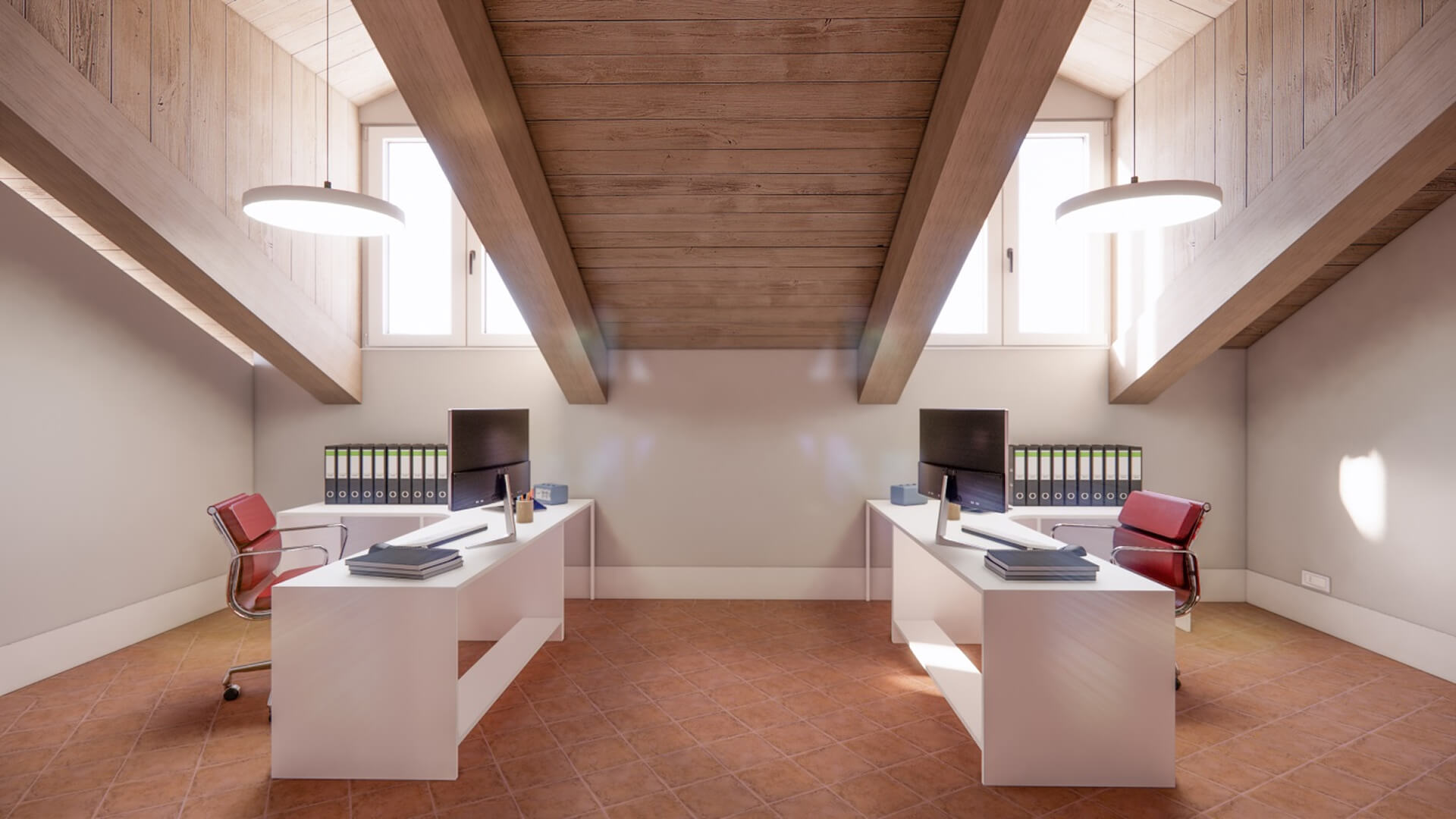
Renovated attic interior with a pitched wooden roof featuring exposed beams and planks, illuminated by windows along the roof. The space is furnished as an office with desks, task chairs, and shelving, set against a terracotta floor and light-colored plastered walls. The project showcases the restoration of the roof volume, incorporating contemporary elements and suspended lighting while maintaining the existing wooden structure. The scene, shown as a project rendering, highlights the functional adaptation of the attic space as a workspace within a historic building.

Renovated attic space with a pitched wooden roof with exposed beams and planks, illuminated by windows along the roof slopes. The space is organized as an office with two symmetrical workstations, white desks, task chairs, and shelving for binders, set against terracotta floors and light-colored plastered walls. The project reclaimed the roof space with contemporary furnishings and suspended lighting, maintaining the existing wooden structure and enhancing natural light. Project rendering showing the functional adaptation of the attic space within a historic building.