Grugliasco: new Edisu residences

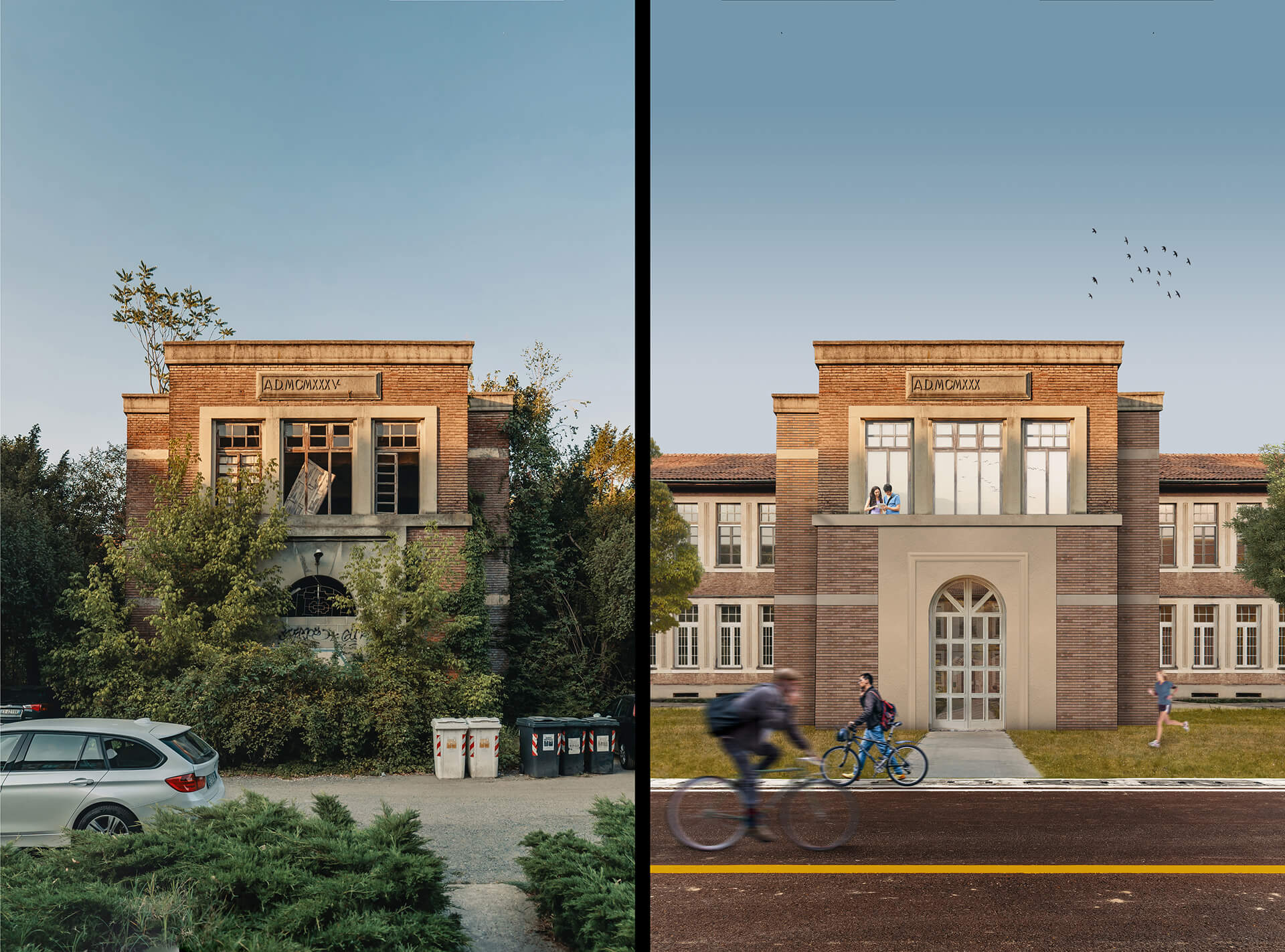
Confronto visivo tra lo stato prima e dopo l’intervento di riqualificazione di un edificio storico. A sinistra: l’edificio appare in stato di abbandono, con vegetazione che invade la facciata, finestre danneggiate e l’area esterna usata come parcheggio e deposito di cassonetti. A destra: rendering del progetto di recupero, con facciata restaurata, ingresso valorizzato, nuove superfici vetrate e uno spazio urbano riqualificato con persone e ciclisti. L’immagine evidenzia la trasformazione da struttura degradata a edificio rinnovato e reintegrato nel contesto urbano.

Grugliasco: new Edisu residences

The project involves repurposing the buildings of the former Interprovincial Institute for the Mentally Ill “Vittorio Emanuele III” in Grugliasco into student residences.

The project includes the redevelopment of outdoor areas and the restoration of five buildings—three larger ones: the Direzionale building, Pavilion D, and Villa Azzurra; and two smaller ones: the plant house and the caretaker’s house.

SEE MORE

Turin, 2022 – 2024
Client: SCR (EDISU Piemonte)
Value of works: 26.000.000 €
Architectural project: Giovanni Durbiano
Structural and building services engineering: MCM Ingegneria Srl
Building subject to protection under Legislative Decree no. 42/2004
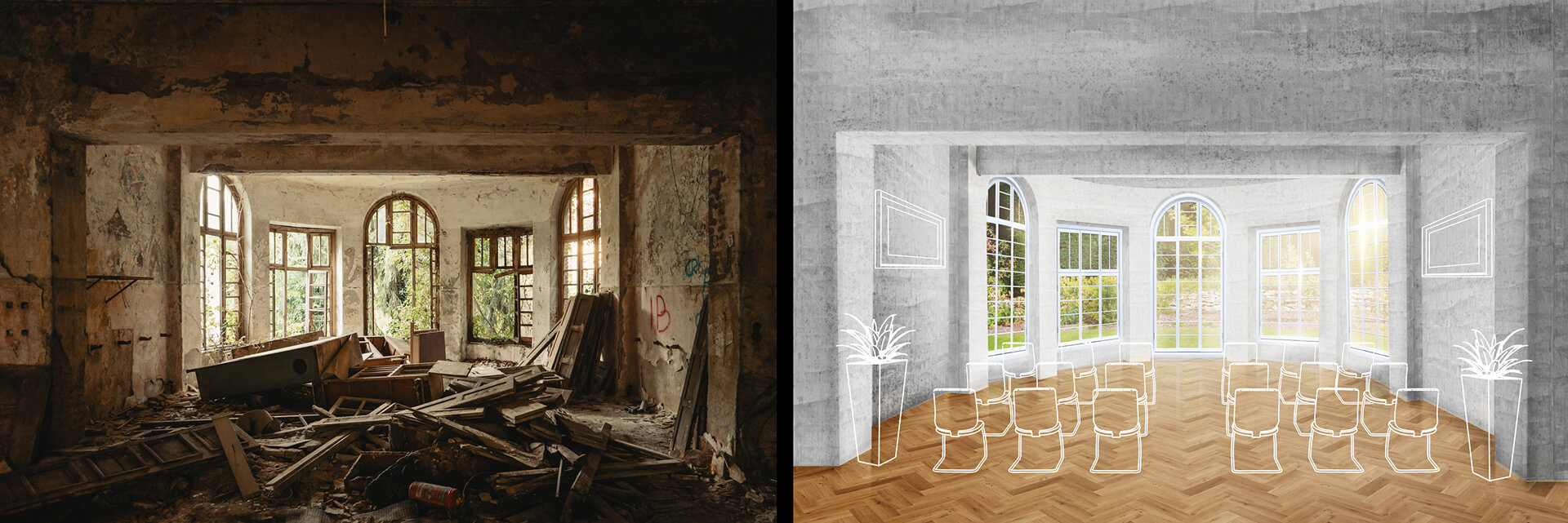
This image shows the before and after of a restoration project: Left: the original state of the room, showing the abandoned building, with damaged walls, broken windows, and waste materials scattered across the floor. Vegetation is invading the interior spaces through the broken windows. Right: a visualization of the restoration. The room is completely renovated, with new wooden floors, restored windows, and modern furnishings, such as plants and chairs. The restoration is complemented by natural light that illuminates the space. This representation illustrates the process of transforming a ruined space into a functional and renovated space.


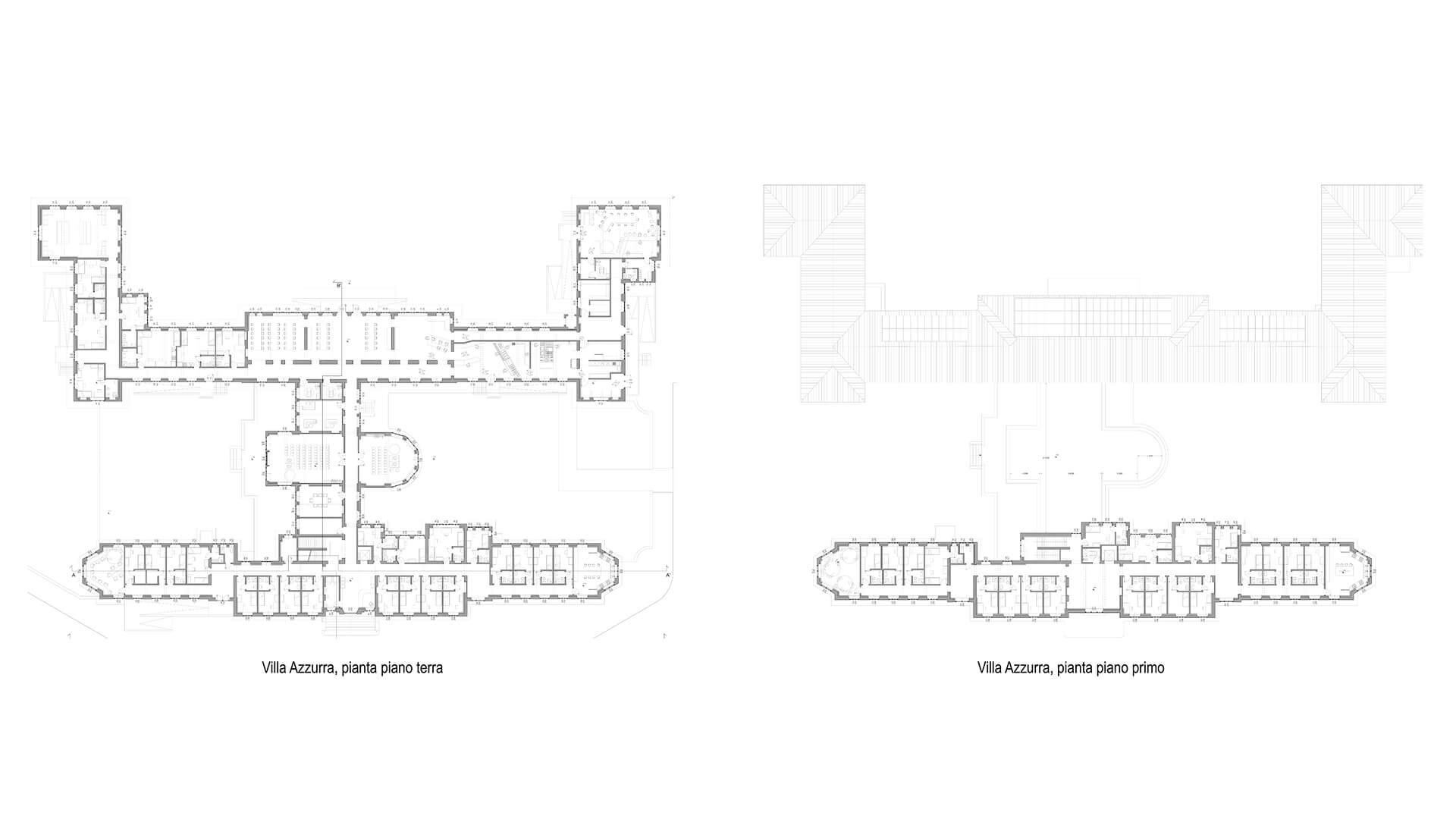
This image shows the floor plans of Villa Azzurra: Left: The ground floor plan of Villa Azzurra, showing the layout of the rooms, corridors, and spaces on the lower level of the building. The plan includes detailed spaces such as the dining room and various rooms, connected by corridors. Right: The first floor plan, showing the layout of the upper floor, which mirrors the ground floor, with rooms and corridors arranged similarly. Both plans provide a detailed view of the building's structure, delineating the functional spaces on the different floors.


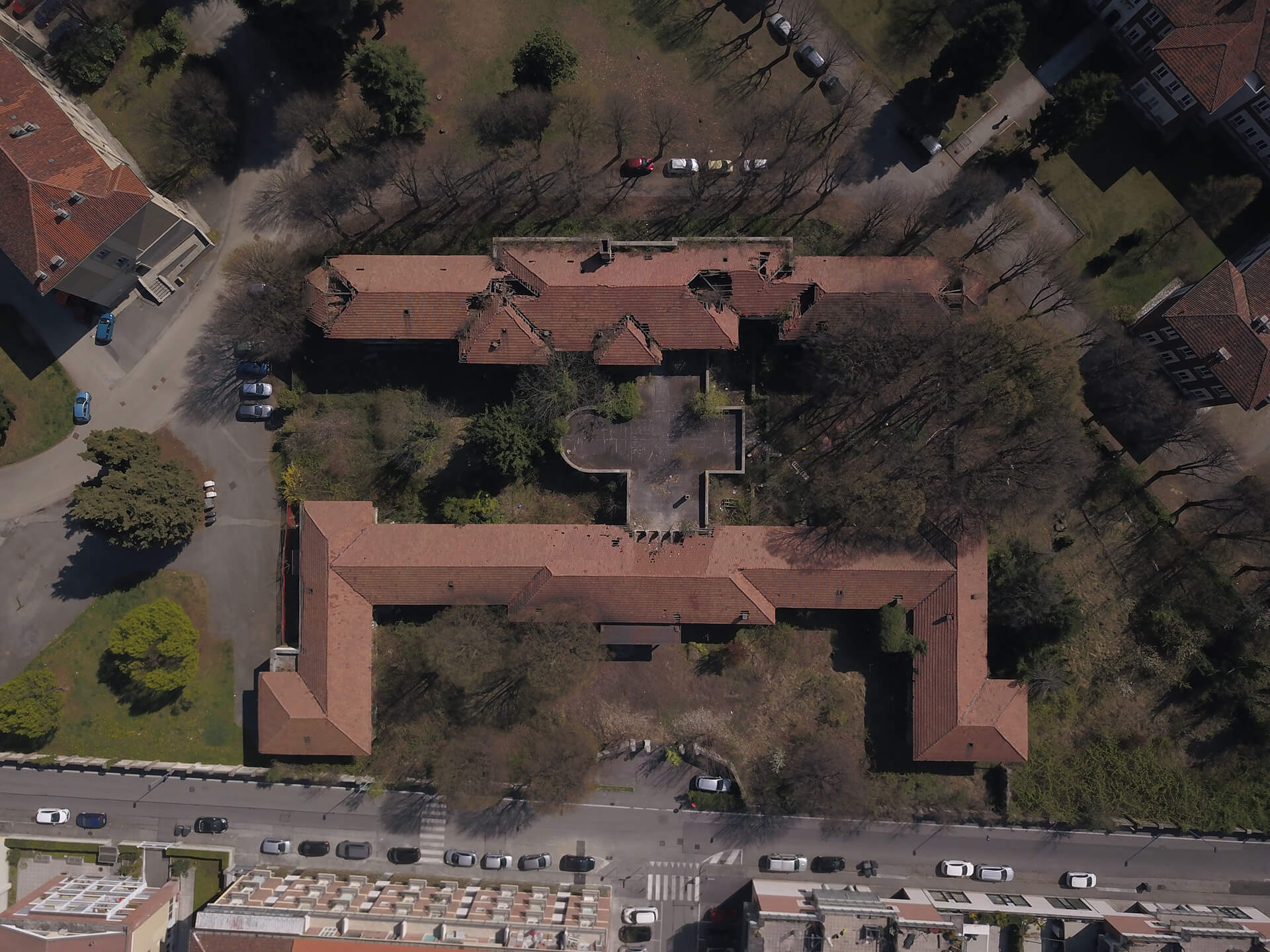
This image shows an aerial view of a housing complex with a large central courtyard surrounded by buildings with pitched roofs. The complex's layout resembles a C-shape, with the central area open. The courtyard appears to be surrounded by trees and some greenery, while roads and parked vehicles are visible around it. The lower portion of the image also shows the surrounding residential area, with houses or buildings below.

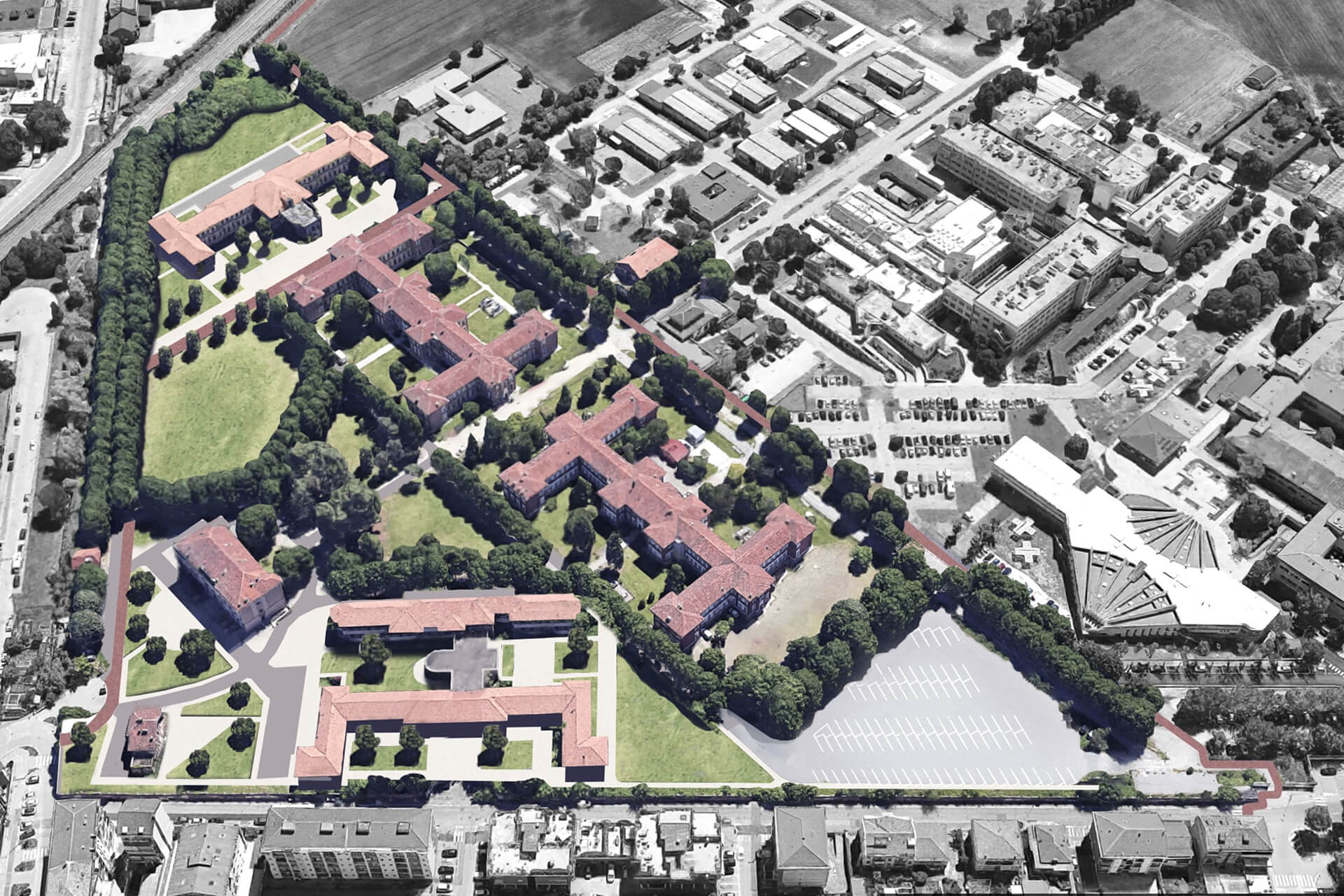
The image shows an aerial view of a large architectural complex, which appears to be a former industrial plant or residential area. The site is composed of several adjacent buildings arranged in a regular pattern, surrounded by large green spaces and asphalted areas. The central part of the complex is characterized by a large green courtyard, while surrounding it are buildings arranged symmetrically. In the foreground, on the left, is a parking area and a road connecting the area to the rest of the city. On the right, a large parking lot, likely for staff or visitors to the complex, is clearly marked with white lines. At the bottom of the image, other low-rise buildings, likely residential or commercial, are visible, contrasting with the taller, more imposing structure in the center. The vegetation surrounding the buildings suggests a focus on landscaping and sustainability, with trees neatly arranged along pedestrian walkways and access roads. The complex appears to be undergoing renovation or transformation, with a clear separation between the older structures and the more modern areas.


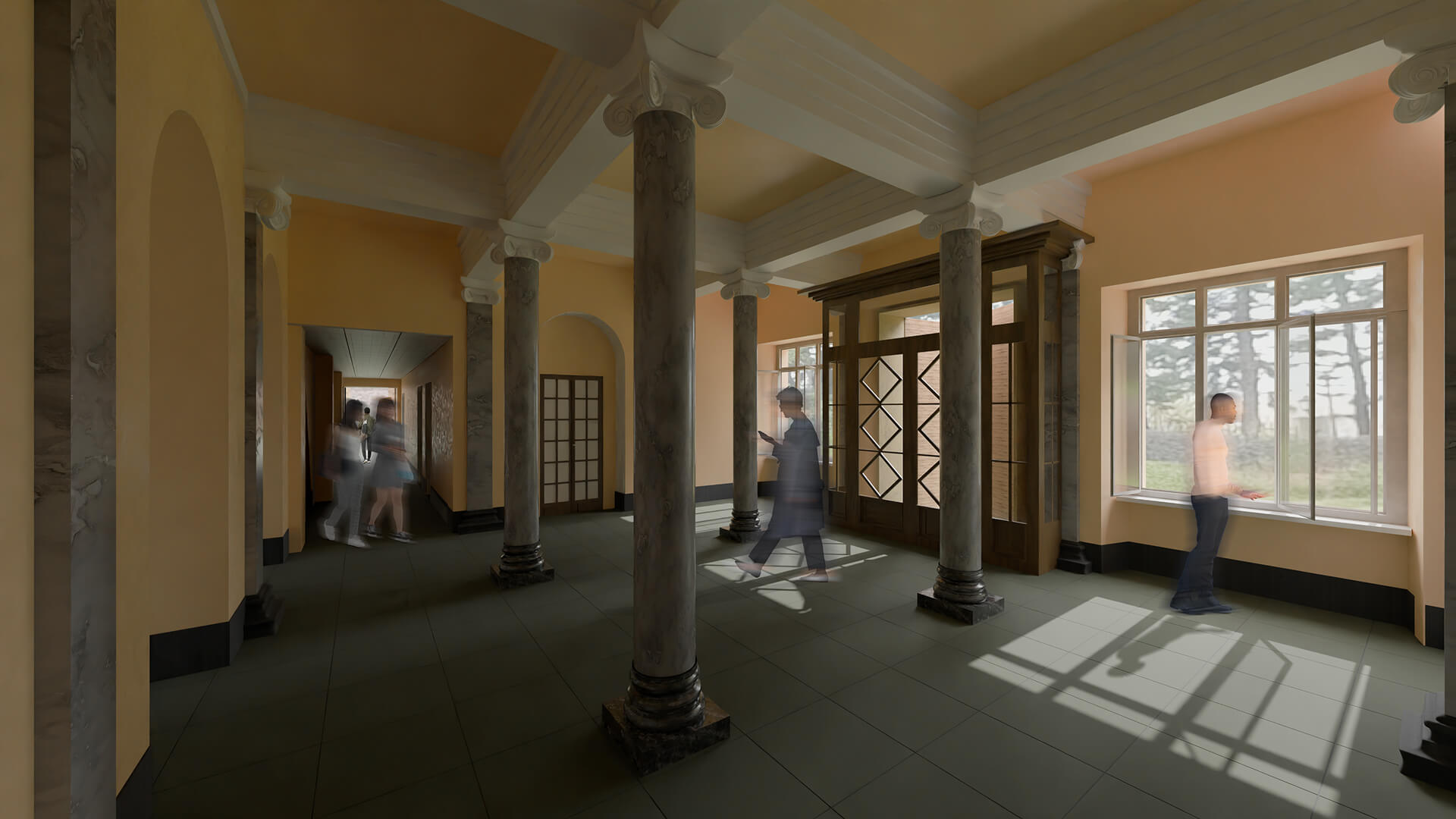
The image shows a large, bright entrance or hallway in a building with a classical architectural style. Doric-style columns, with marble tones, frame the space, which is illuminated by natural light streaming in through large windows. The room features a gray tile floor, and the walls are painted a warm orange, adding a welcoming atmosphere. Several people are walking or interacting with the space, some moving like blurred shadows, while one is looking out the window. The scene conveys a sense of modernity integrated with the historic architecture.


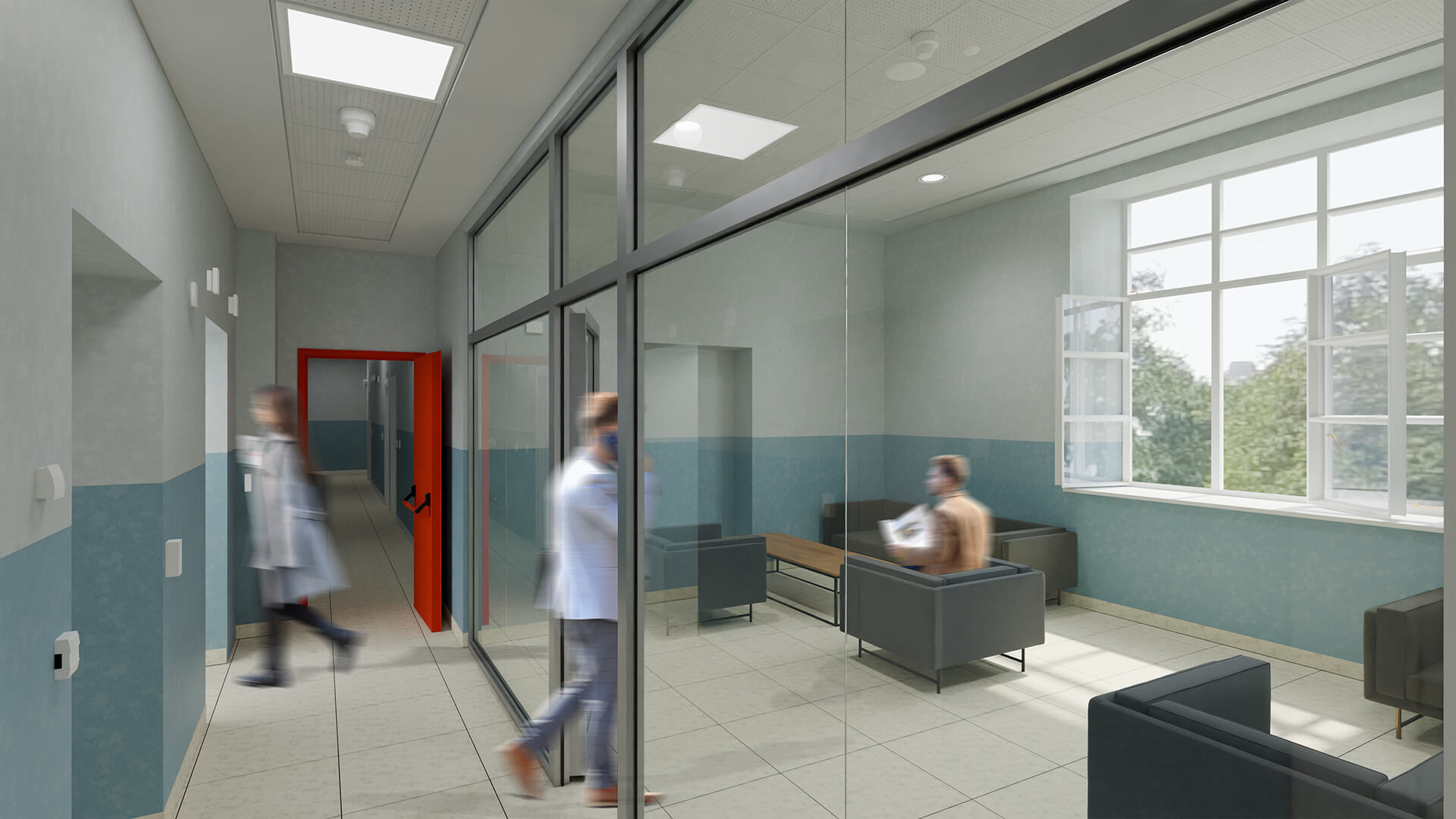
The image shows a modern, well-lit corridor with light gray walls and a blue lower band. The design is simple yet elegant, with glass used to separate spaces. A bright red door adds a pop of color, likely to draw attention or for functional reasons, such as indicating the entrance to a specific area. Behind the glass, a waiting room with comfortable gray sofas can be seen, where a person is reading a book. The large windows offer a view of a green, sunny environment. A few people are walking along the corridor, all wearing masks. The scene suggests a professional environment, likely a hospital or healthcare facility, with a clean, functional atmosphere.

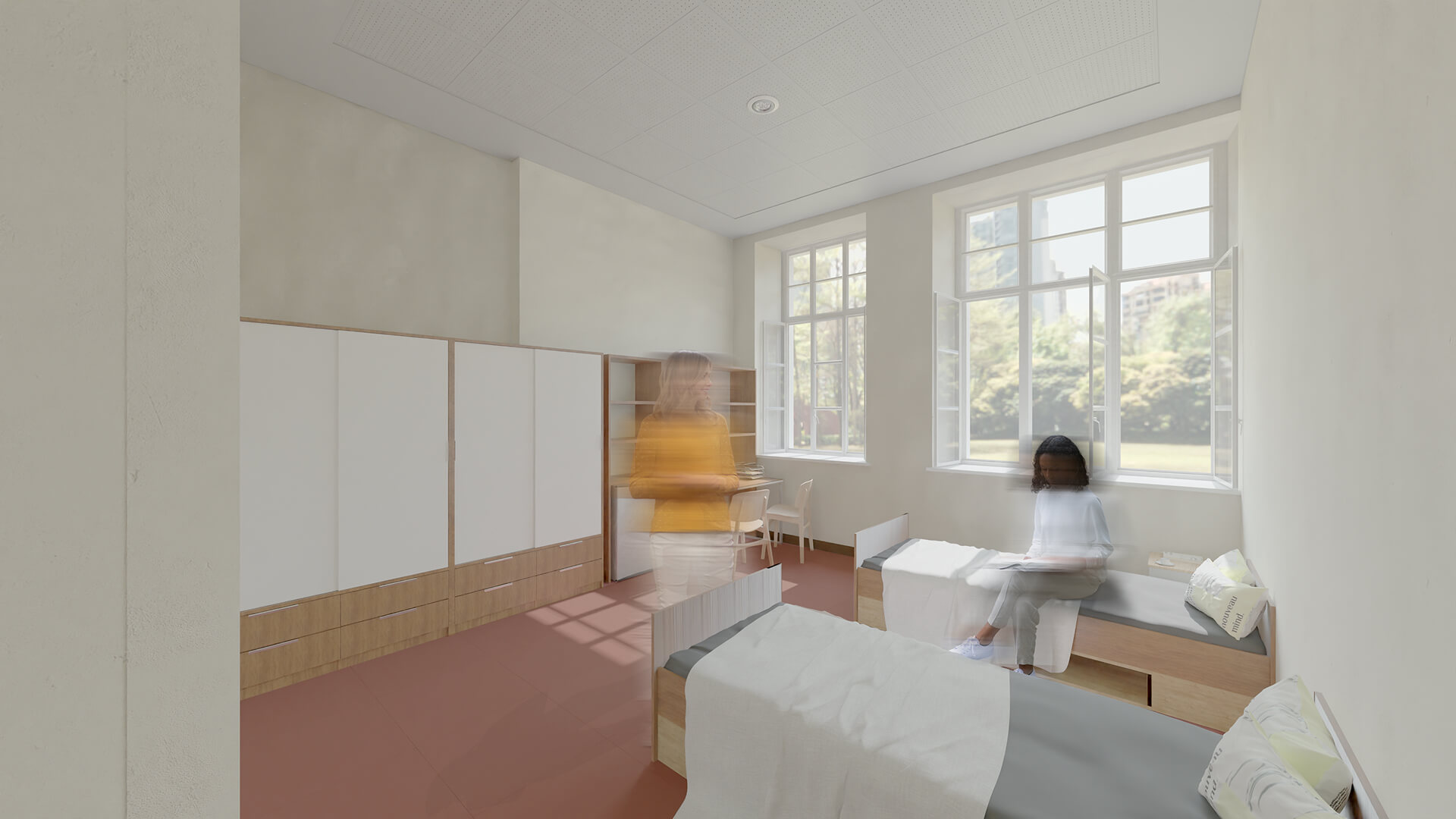
The image shows a bright, modern room, likely part of a healthcare facility or residence, with two separate beds. The walls are light beige, while the floor is a warm red, lending a welcoming atmosphere. The room features large windows overlooking a green setting, allowing plenty of natural light to enter, creating a feeling of openness and freshness. A white wardrobe and a small shelf with bookshelves occupy one section of the room, providing storage space. In the foreground, a person wearing a yellow sweater is moving, while another person is sitting on one of the beds, apparently engrossed in a book. The people are blurred, likely to convey a sense of movement and dynamism to the image. The minimalist, functional design of the room reflects a practical yet comfortable environment, suitable for a healthcare or rehabilitation facility.

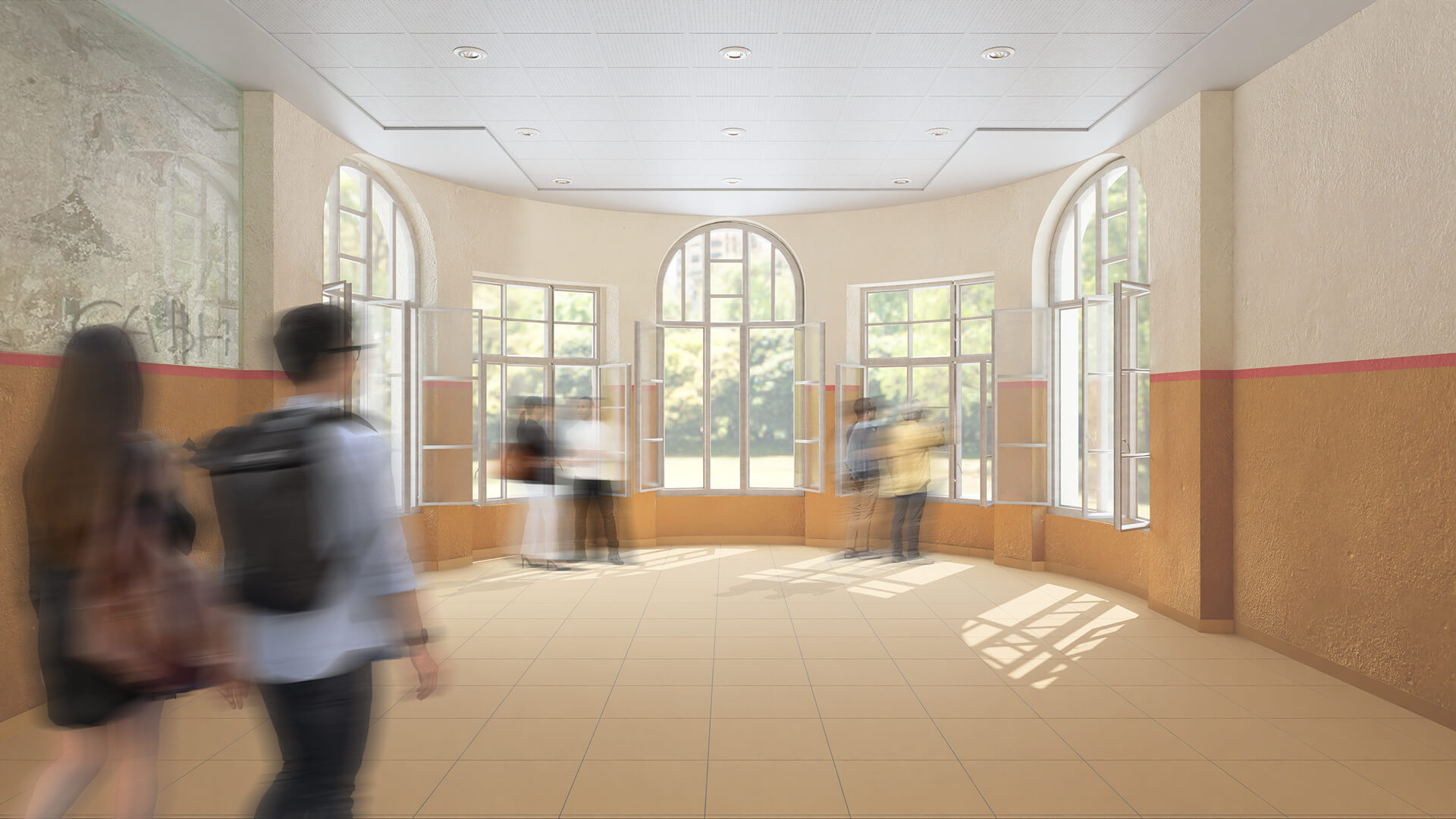
The image shows a large, bright corridor with walls in two shades: a lighter one at the top and a darker one at the bottom, with a red dividing line. The walls, though well-maintained, retain an antique feel, as evidenced by the cladding, which reveals traces of previous decorations. The lower area is covered in beige tiles, and natural light floods in through the large, arched windows, creating a welcoming, bright atmosphere. The space is animated by several people moving about, blurred to convey a sense of dynamism, while several windows are open, allowing fresh air to enter and enhancing the lively, livable atmosphere. The sunlight streaming in through the windows casts sharp shadows on the floor, accentuating the feeling of depth and space. This type of environment suggests the area is a corridor in an institution or residence, where people move from one place to another.

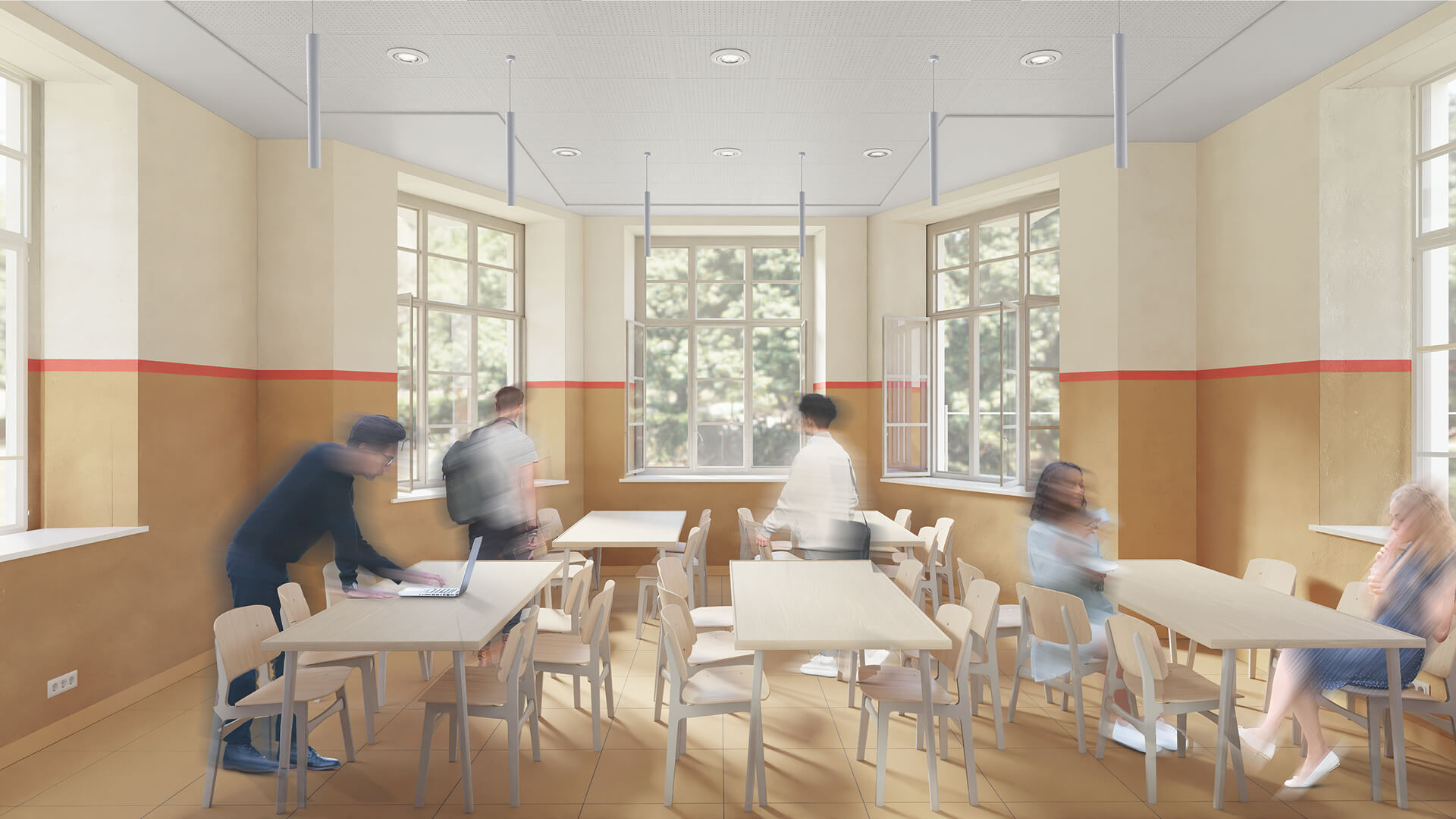
The image depicts a bright space, likely a common room or recreation area in a school or residence. The interior design features two-tone walls: a terracotta-colored lower section and a light beige upper section, interrupted by a red line running along the entire perimeter, adding a touch of liveliness to the space. The floor is tiled in beige, while the ceiling features modern overhead lights. The room is furnished with light wood tables and matching chairs, in a simple yet elegant style. Large windows allow natural light to flood in, creating a welcoming, airy atmosphere, with several open windows allowing for air circulation. Several people are visible, moving about and interacting with the space: a young man is working on a laptop, while others are busy and moving around the room. The scene, full of life and energy, suggests a functional environment, perfect for group activities, studying, or relaxing, with a pleasant visual connection to the outdoors, thanks to the view of the surrounding garden or courtyard.