Restoration of Palazzo Carignano

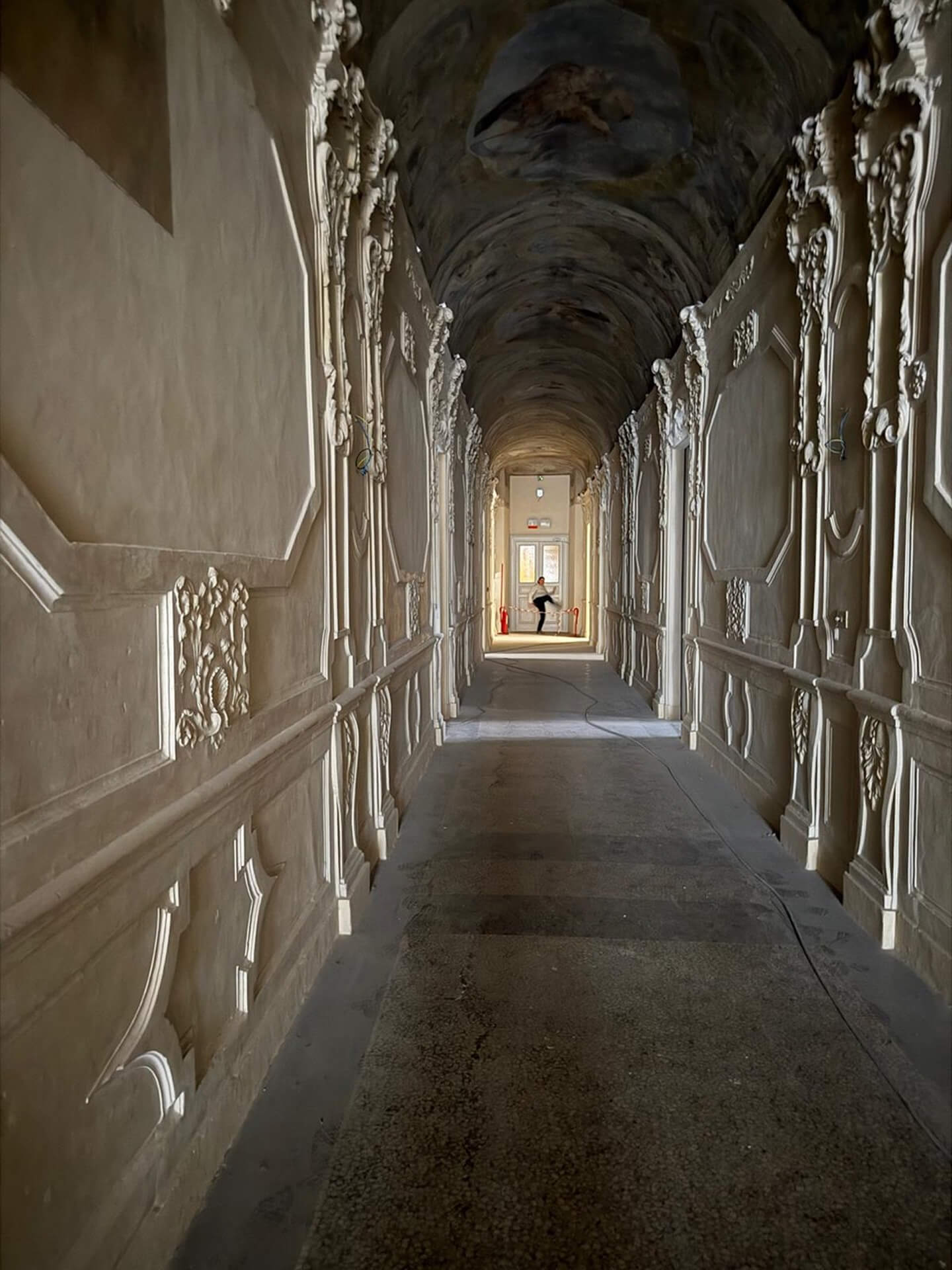
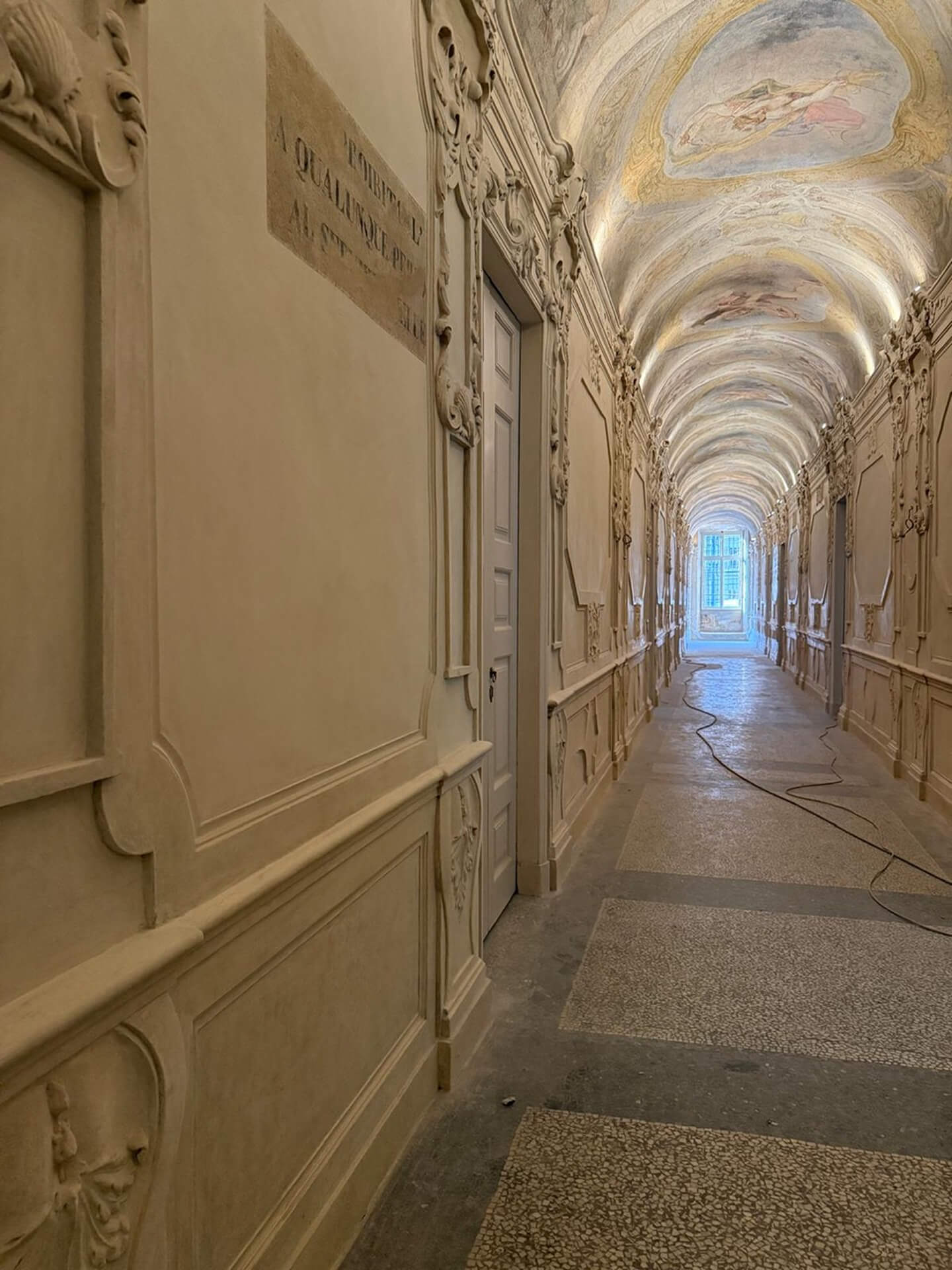
Corridoio interno di edificio storico con copertura a volta decorata e pareti laterali arricchite da stucchi ornamentali e cornici modanate di gusto barocco, caratterizzato da andamento longitudinale fortemente prospettico. Le superfici risultano in fase di restauro, con pavimentazione non finita e segni di intervento sulle pareti e sulla volta, mentre la luce naturale proveniente dall’apertura sul fondo evidenzia la ricchezza dei rilievi decorativi. Lo spazio documenta una fase di recupero conservativo dell’apparato architettonico originario, con impianti temporanei e cavi visibili lungo il percorso.

Restoration of Palazzo Carignano

The main objective of the Restoration and Enhancement project at Palazzo Carignano in Turin is to repurpose the portion on the mezzanine floor, currently occupied by the offices of the Regional Directorate of Museums of Piedmont, in order to restore these spaces, of notable historical and artistic value, during the tour of the apartments of the Princes of Carignano. The offices and related posts, currently on the mezzanine floor, will be moved to the second floor.

SEE MORE

Turin, 2022 – 2025
Client: Piedmont Regional Museums Directorate
Value of works: 2.500.000 €
Architectural project: Giovanni Durbiano (DO) and Isolarchitetti 
Structural project: ICIS Srl
Building services engineering: ONLECO Srl and PROECO
Building subject to protection under Legislative Decree no. 42/2004
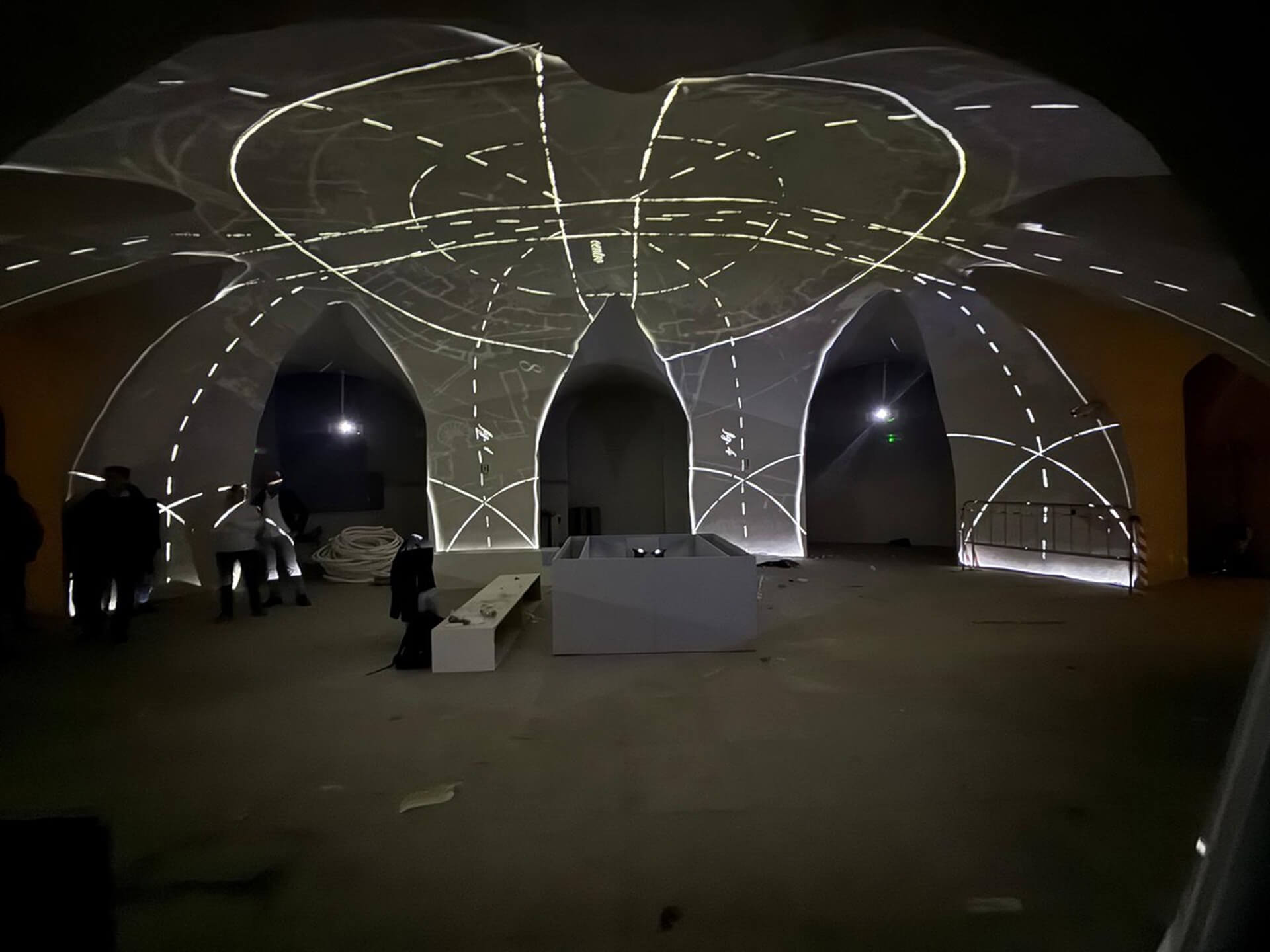
A vaulted interior with a cross-vaulted ceiling supported by masonry pillars and arches, used as an exhibition space within a renovated historic building. A light installation featuring geometric patterns and construction lines that follow the geometry of the structure is projected onto the surfaces of the vaults and walls, highlighting the shape of the bays and the rhythm of the arches. The space, intentionally kept simple with continuous flooring and minimal furnishings, showcases the integration of restored historic architecture and a contemporary multimedia installation intended for exhibitions or temporary installations.

Monumental corridor of a historic building with a fully frescoed vaulted ceiling and walls decorated with ornamental stucco, molded cornices, and Baroque-style portals, arranged in sequence along the longitudinal axis. The terrazzo floor and restored surfaces indicate recent conservation work, while the natural light from the window at the end emphasizes the depth of the space and the richness of the decorative elements. The presence of temporary cables along the floor suggests a construction or completion phase of work within the historic complex.

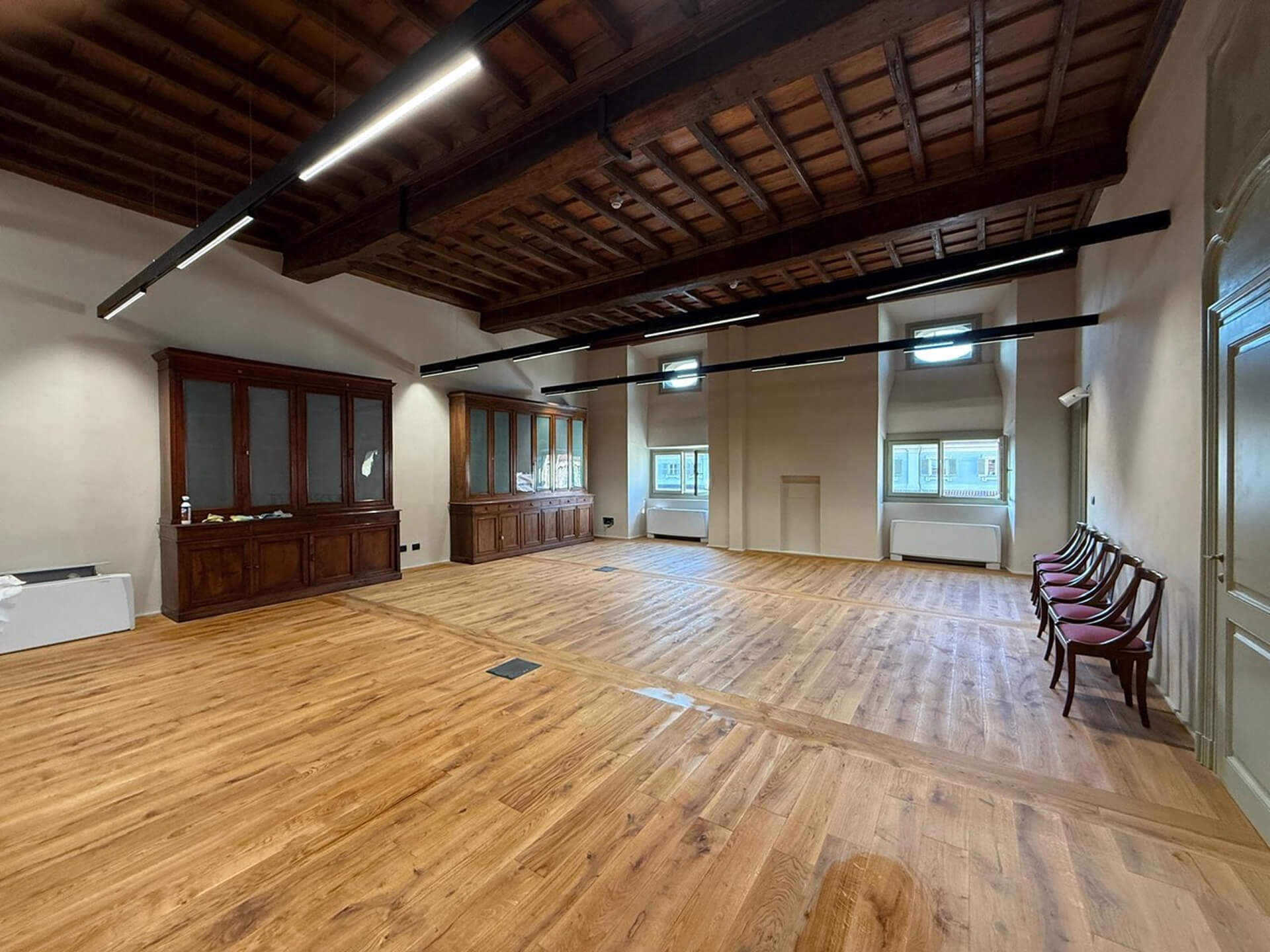
Interior room of a restored historic building, featuring a wooden ceiling with exposed beams and original planking, plastered walls, and newly installed wooden flooring. Built-in wooden cabinets and deep windows along the walls provide natural lighting, while contemporary linear light fixtures are suspended beneath the ceiling structure. The space, free of furniture except for a few seats along the side, demonstrates the functional adaptation of the space for collective or educational use, highlighting the dialogue between preserved historical elements and modern installations.

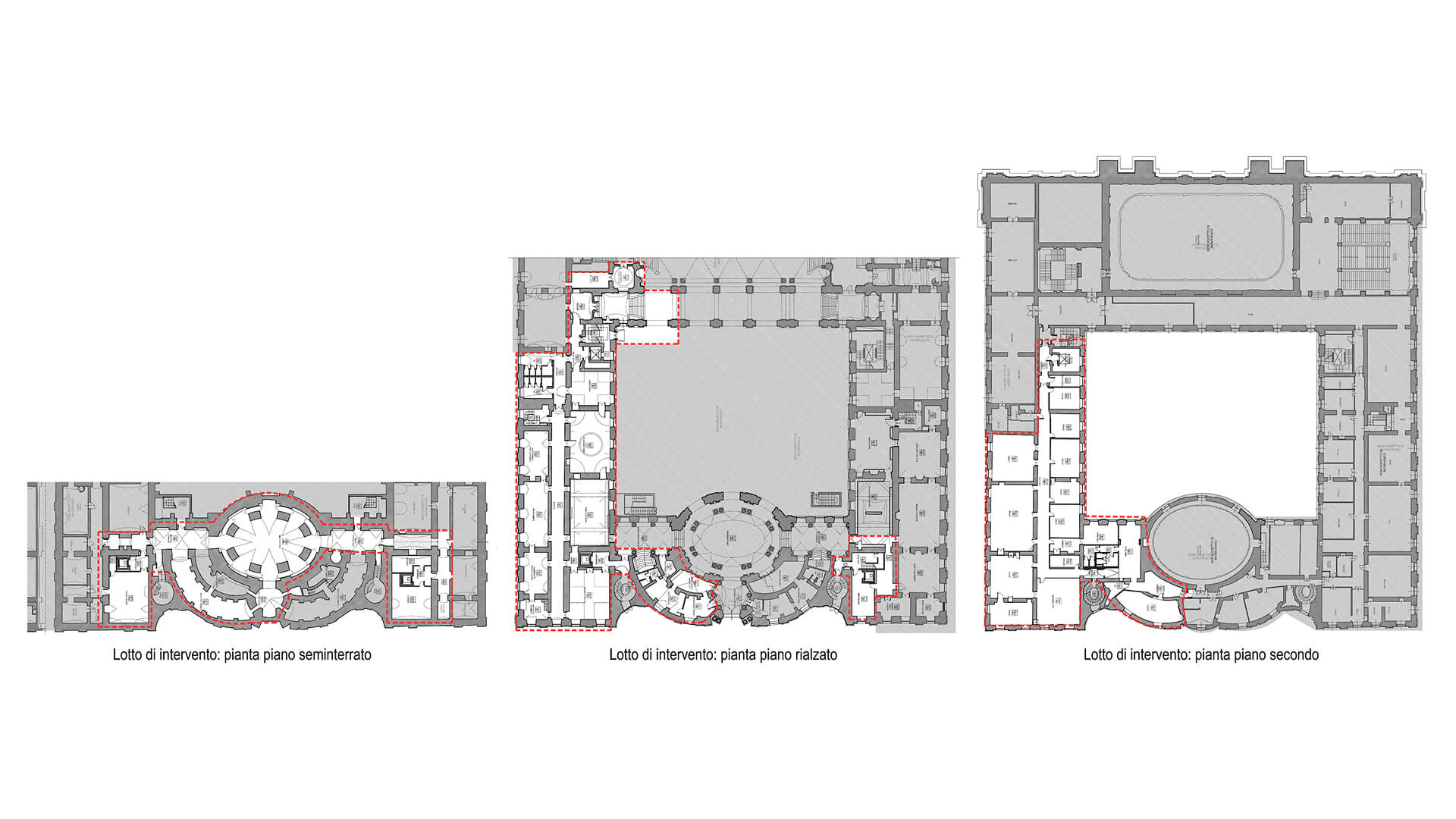
Technical drawing with architectural plans of three levels of a historic complex, including the basement, mezzanine, and second floor, represented in dimensioned drawings with load-bearing walls, room layouts, and internal courtyards. The areas affected by the intervention are highlighted with a red dashed outline, showing the portions affected by the redevelopment project within the existing structure. The plans highlight the presence of a central courtyard, perimeter rooms, and connecting structures, documenting the extent of the intervention across the building's various levels.

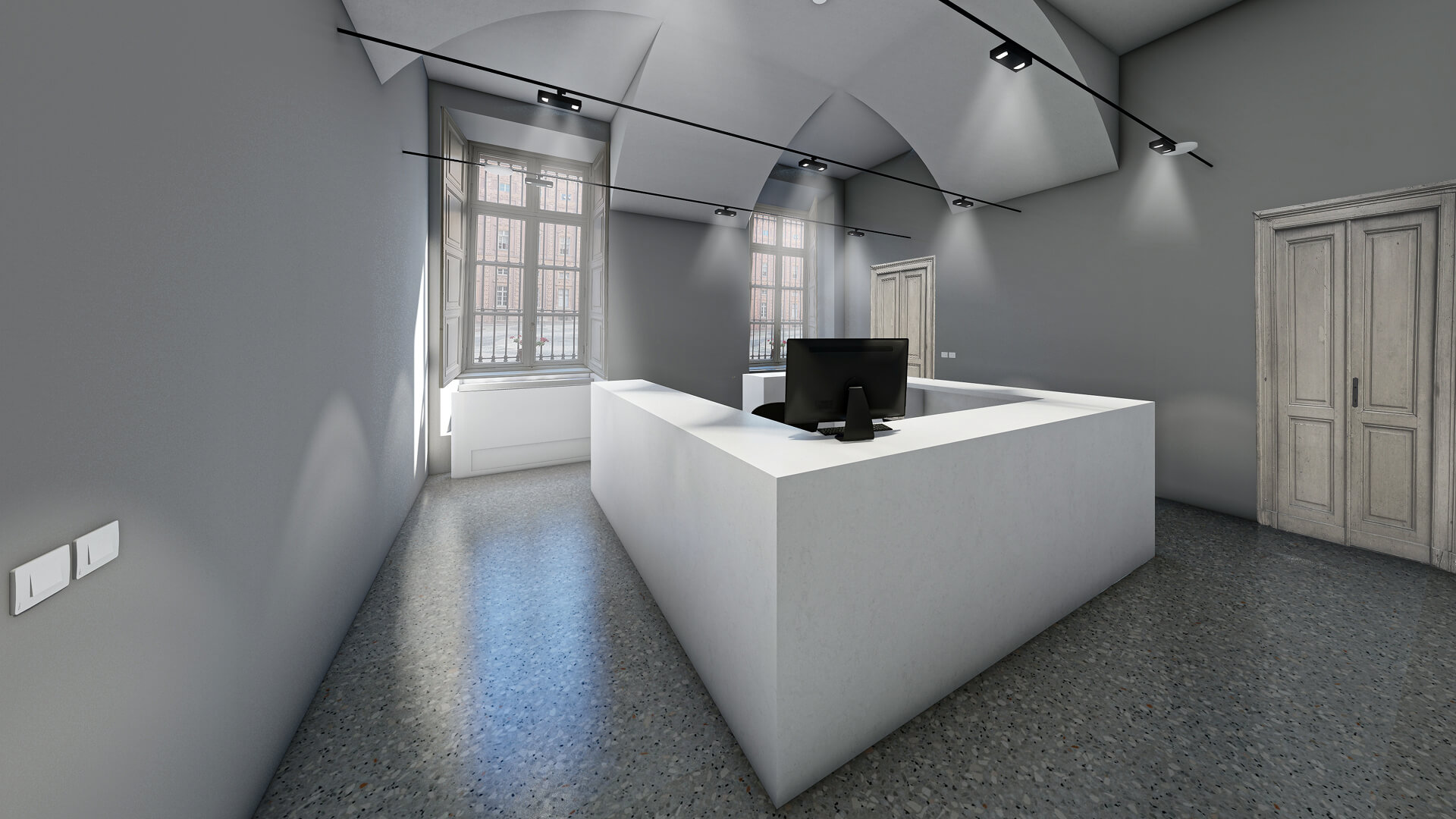
The restored interior features a plastered vaulted ceiling and painted walls, featuring deep windows with historic frames and terrazzo flooring. At the center of the space is a contemporary, light-colored monolithic volume that serves as a reception desk or workstation, while technical track lighting is suspended beneath the vaults to enhance the ceiling's original geometry. The presence of historic wooden doors and modern finishes highlights the renovation project, which integrates new functional elements within the existing architecture.

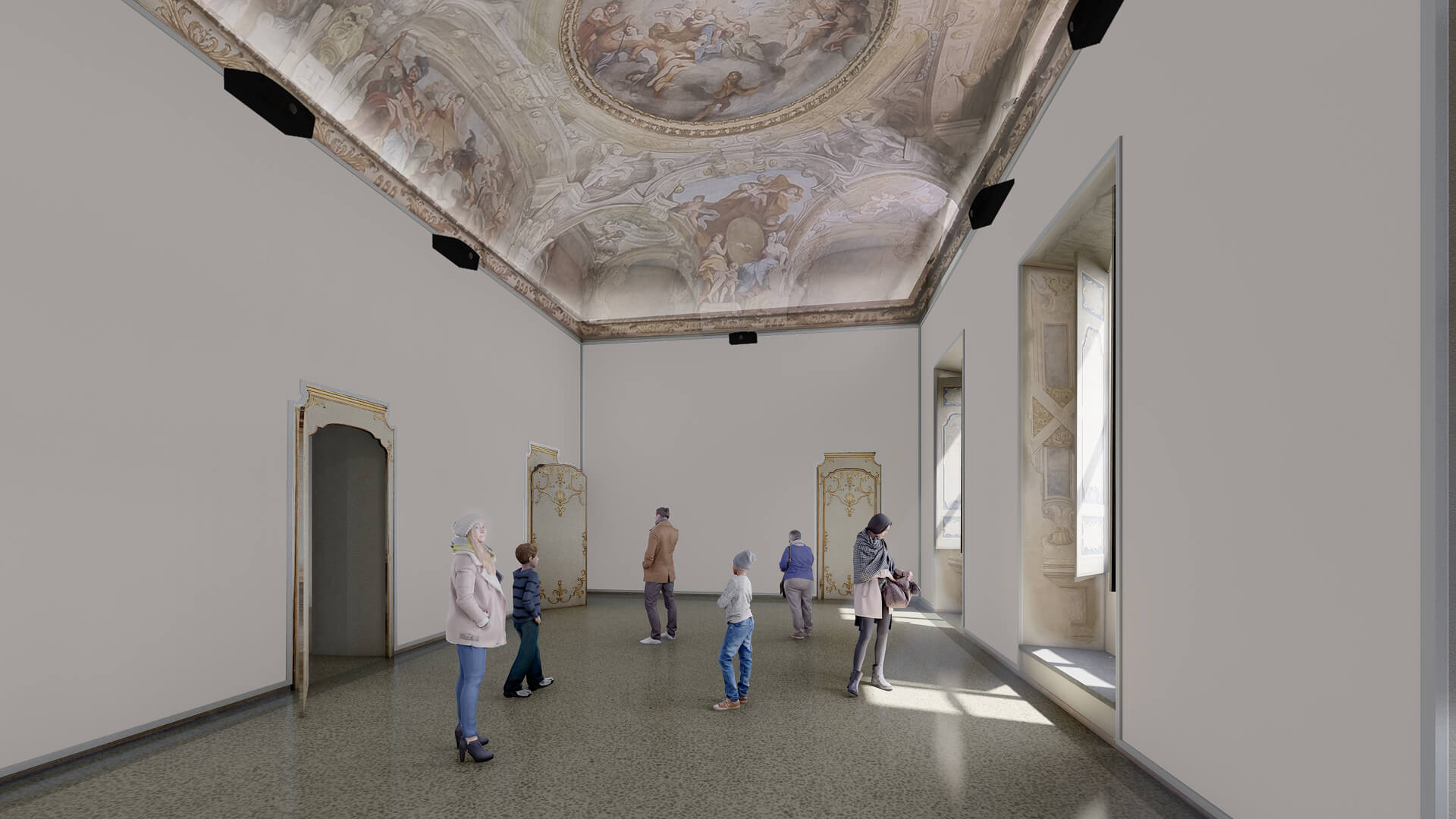
A restored historic room with a fully frescoed ceiling and Baroque-style pictorial decorations, featuring neutral walls left open for exhibition purposes and openings with decorated frames that retain their original ornamental elements. The space is designed as a museum space, with technical lighting installed along the upper perimeter to highlight the vault's pictorial cycle, while the continuous floor and simple surfaces highlight the contemporary renovation. The presence of visitors within the room suggests the space's new public use, establishing a dialogue between the restored historic architecture and its exhibition functions.

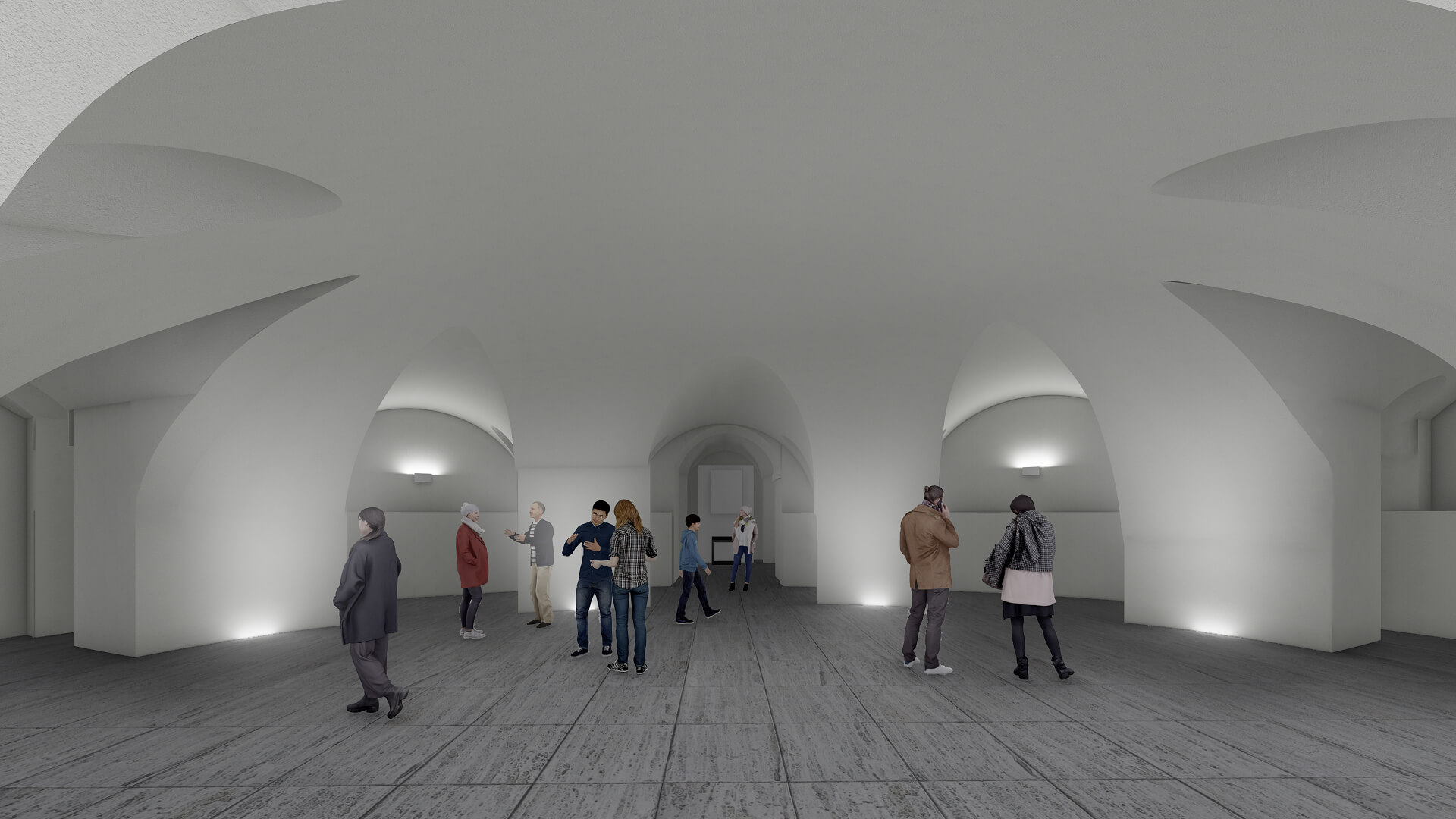
The vaulted interior, with plastered cross-vaulted ceilings resting on central pillars, features a regular geometry and restored, uniform surfaces. The space, intentionally left simple with continuous flooring and grazing lighting integrated into the base of the walls, is designed for exhibitions or public use, with people distributed throughout the space suggesting its scale and use. The renovation project enhances the historic structure through neutral finishes and discreet installations, highlighting the rhythm of the bays and the dialogue between the original architecture and its new, contemporary use.

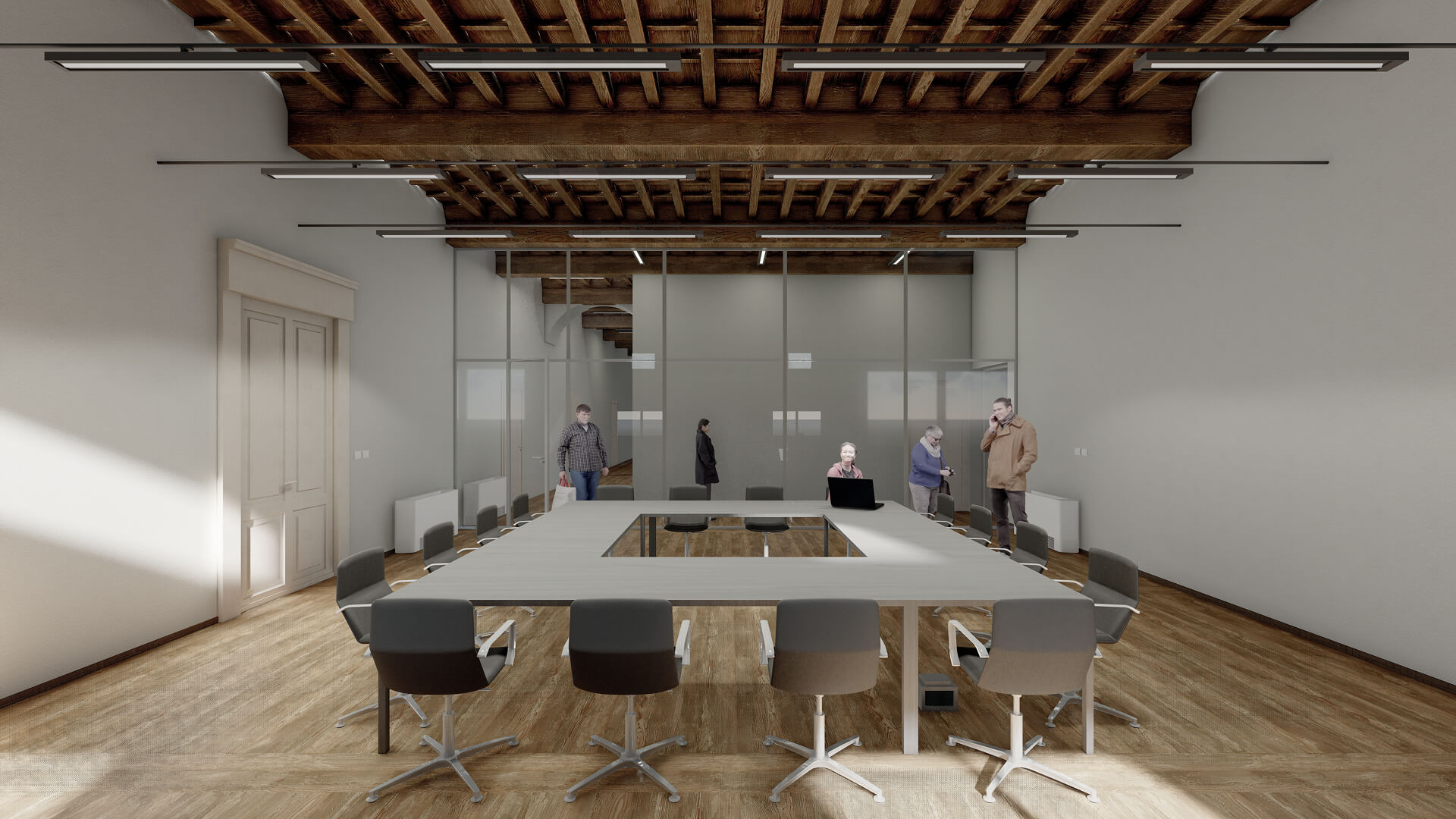
A meeting room created within a restored historic building with a wooden beamed ceiling and exposed planks, plastered walls, and wooden flooring. At the center of the space is a large square table with contemporary conference seating, while at the back, a floor-to-ceiling glass wall defines another room while maintaining visual continuity. Linear technical lighting suspended beneath the attic structure and the presence of restored historic doors highlight the renovation project, which integrates new functional elements within the existing architecture intended for office or institutional use.

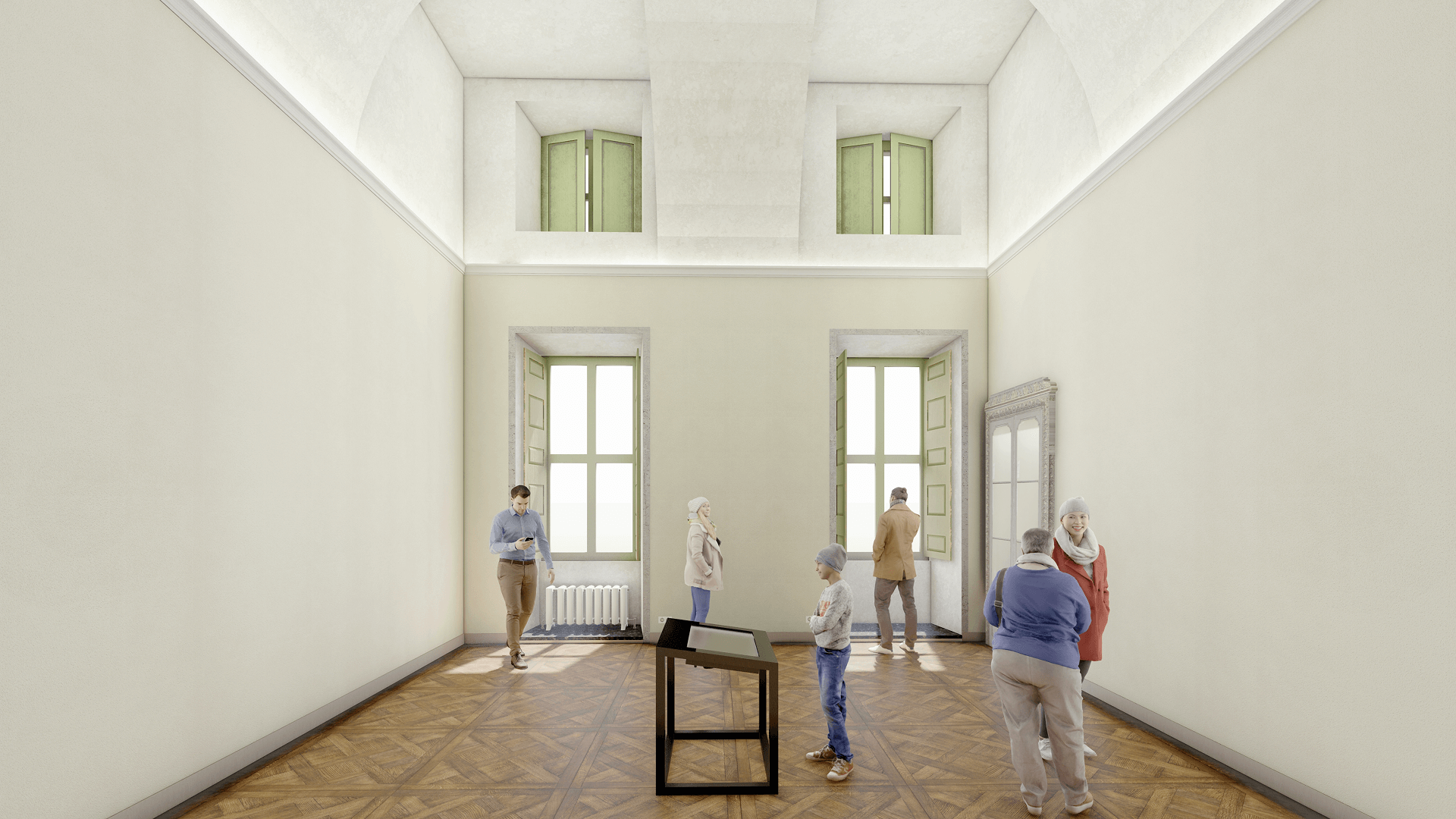
A restored interior room with a vaulted ceiling and plastered walls, characterized by large windows with wooden shutters and stone frames that illuminate the space with natural light. The parquet flooring with a geometric design highlights the space's historical character, while the neutral surfaces and lack of permanent furnishings suggest its use as an exhibition space. An information display is located at the center, while the presence of visitors indicates the space's new public use, the result of a redevelopment project that maintained the original architectural elements while integrating them with contemporary displays.