Restoration of the Medieval Village

Restoration of the Medieval Village

The project to restore the Medieval Village is part of the overall redevelopment of several areas overlooking the banks of the Po River and named “Turin, its park and its river: memory and future”. The overall project, funded by funds from the National Plan complementary to the PNNR, includes the enhancement of the public greenery of Valentino Park, the restoration of river navigation, the construction of the new Civic Library, and the renovation of the Teatro Nuovo in the Torino Esposizioni complex, as well as the restoration of the buildings and external areas of the Medieval Village.

SEE MORE

Turin, 2021 – Works in progress
Client: SCR Piemonte Spa
Value of works: 4.000.000 €
Architectural project: Giovanni Durbiano (DO) and Isolarchitetti 
Structural project: MCM Ingegneria Srl
Building services engineering: Sintecna Srl
Building subject to protection under Legislative Decree no. 42/2004
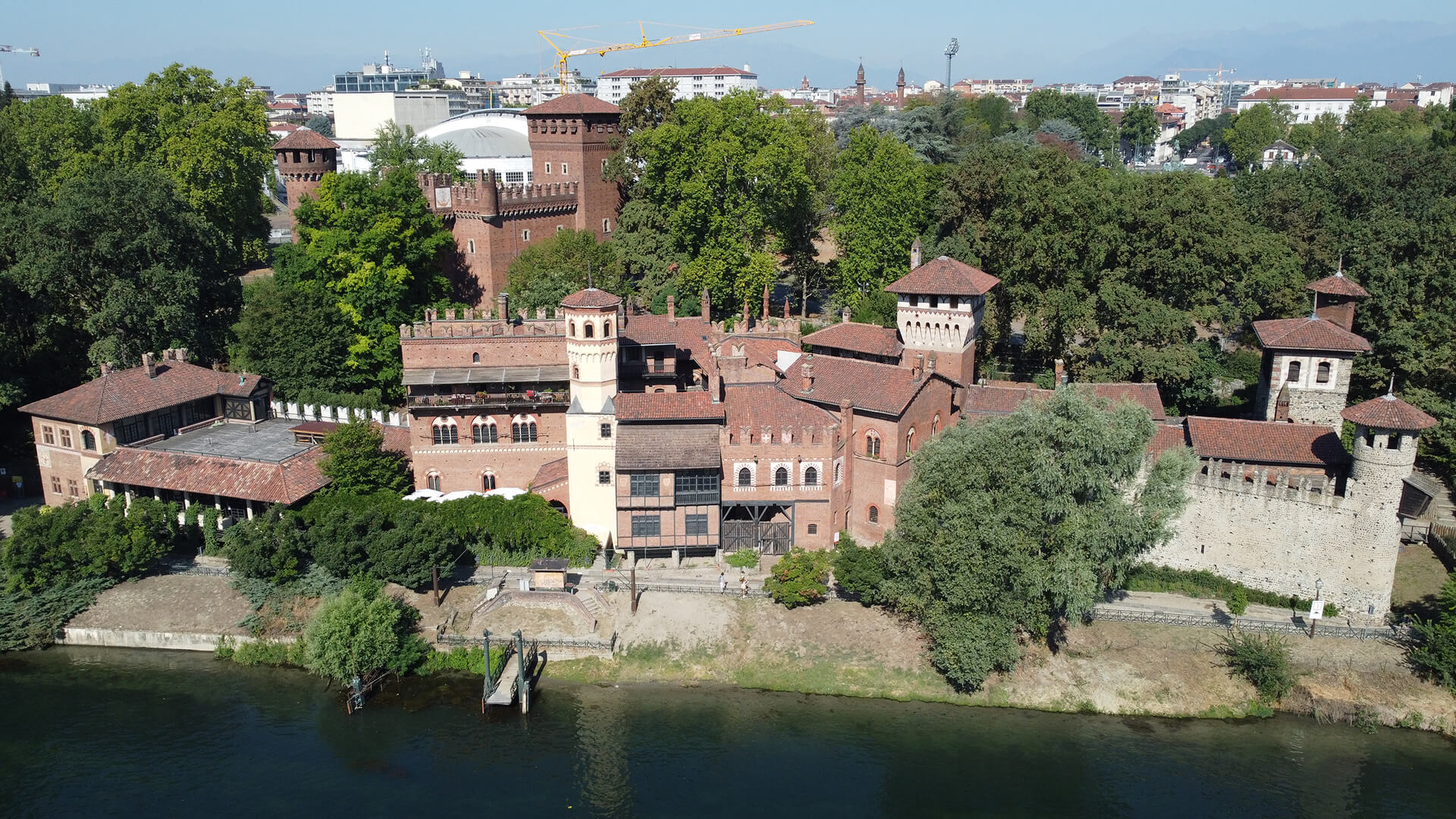
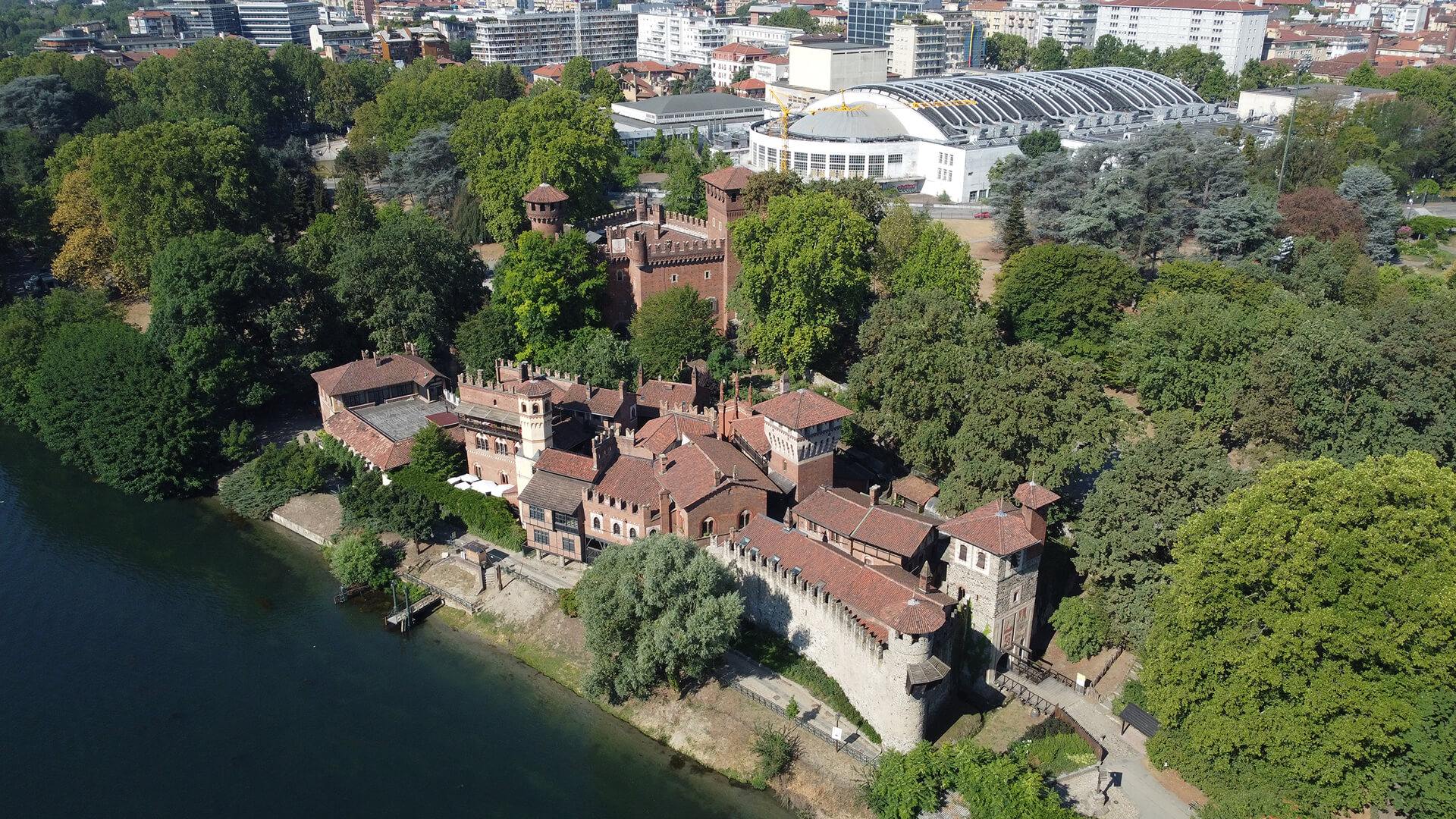
Close-up aerial view of a historic architectural complex with the characteristics of a fortified residence, composed of brick buildings with towers, battlements, and tile roofs, located along the bank of a stream and surrounded by a large, wooded park. The building system features buildings arranged around internal courtyards and perimeter walls, with defensive elements and volumes from different eras integrated into a single whole. In the background, contemporary urban buildings, sports facilities, and construction cranes are visible, highlighting the relationship between the restored historic complex and the surrounding urban context.

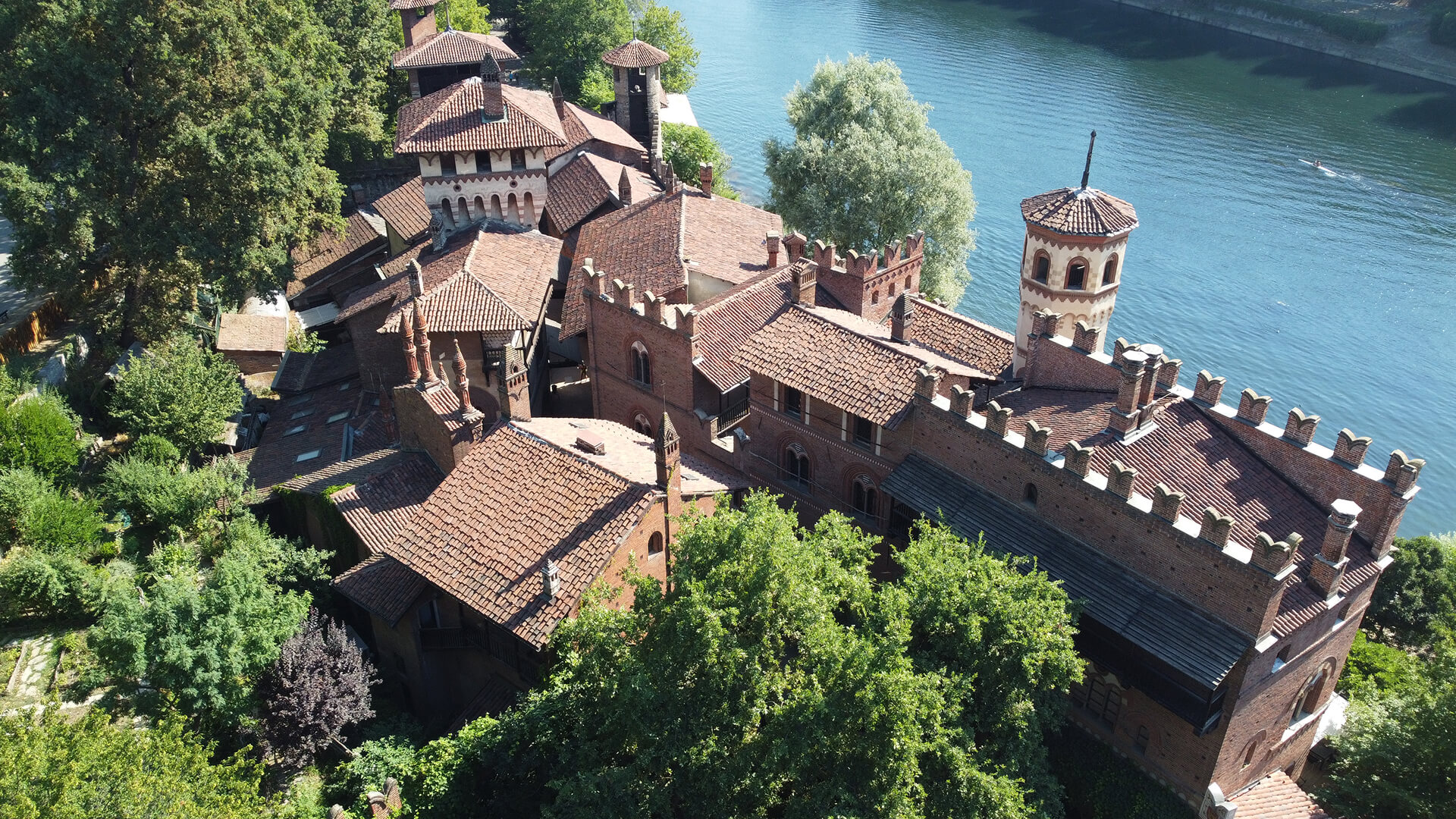
Close-up aerial view of a historic brick complex with neo-medieval architectural features, composed of complex volumes with cylindrical towers, battlements, loggias, and tiled roofs, located along the bank of a stream and surrounded by dense vegetation. The composition shows a succession of interconnected buildings, with fortified perimeter walls and internal courtyards, highlighting the complex's unified layout. The presence of the river and the surrounding park emphasizes the landscape connection between the restored historic architecture and the natural environment.

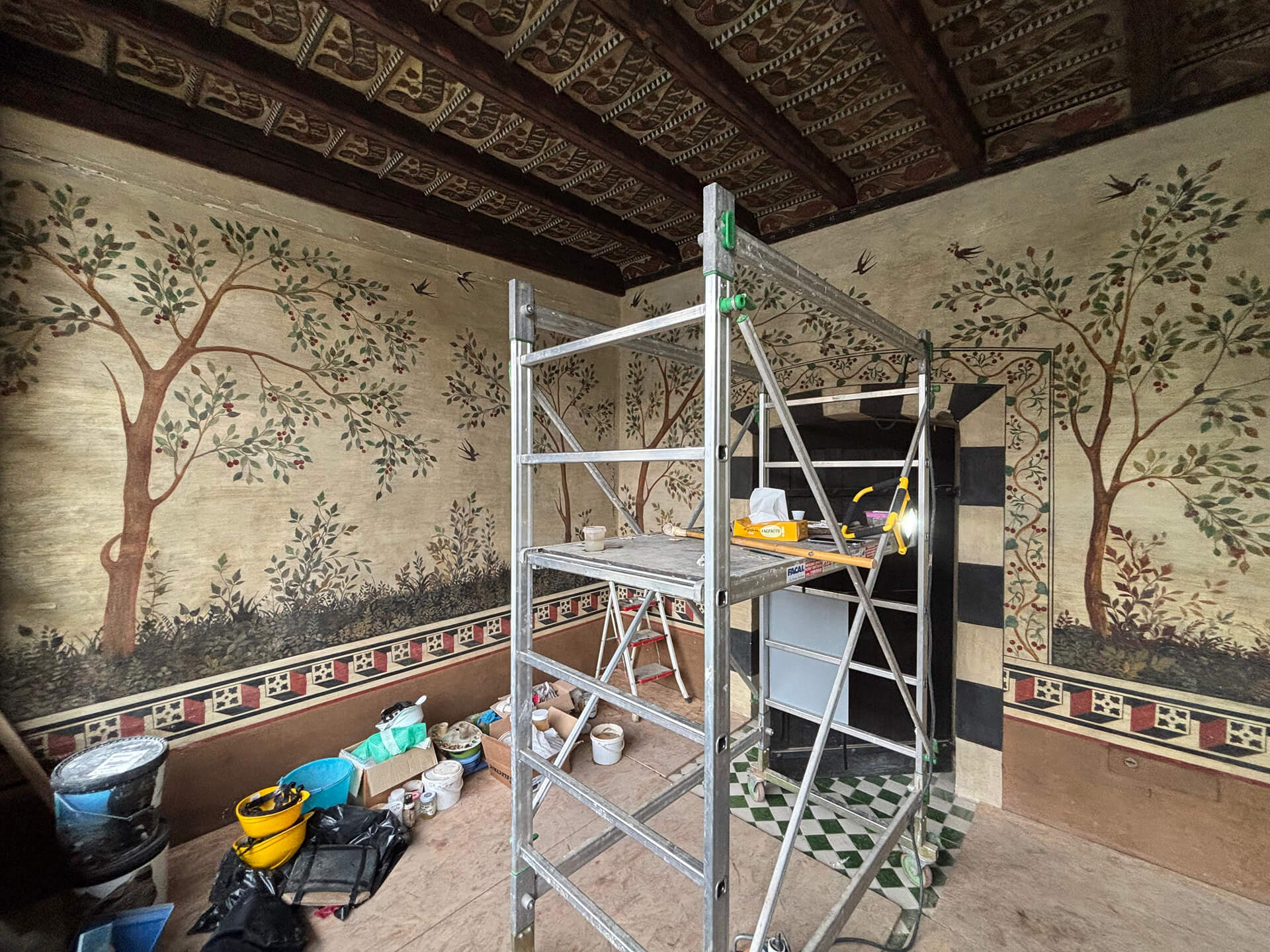
Interior of a historic building during restoration, featuring walls decorated with murals depicting trees, plants, and birds on a light background, with a geometric ornamental band below. The wooden beamed ceiling with decorated coffers is fully preserved and features polychrome painted motifs. At the center of the room is metal scaffolding with construction equipment, buckets, and restoration materials used for cleaning and consolidating the decorated surfaces. The scene documents a phase of conservation work in a historic setting with original decorative features.

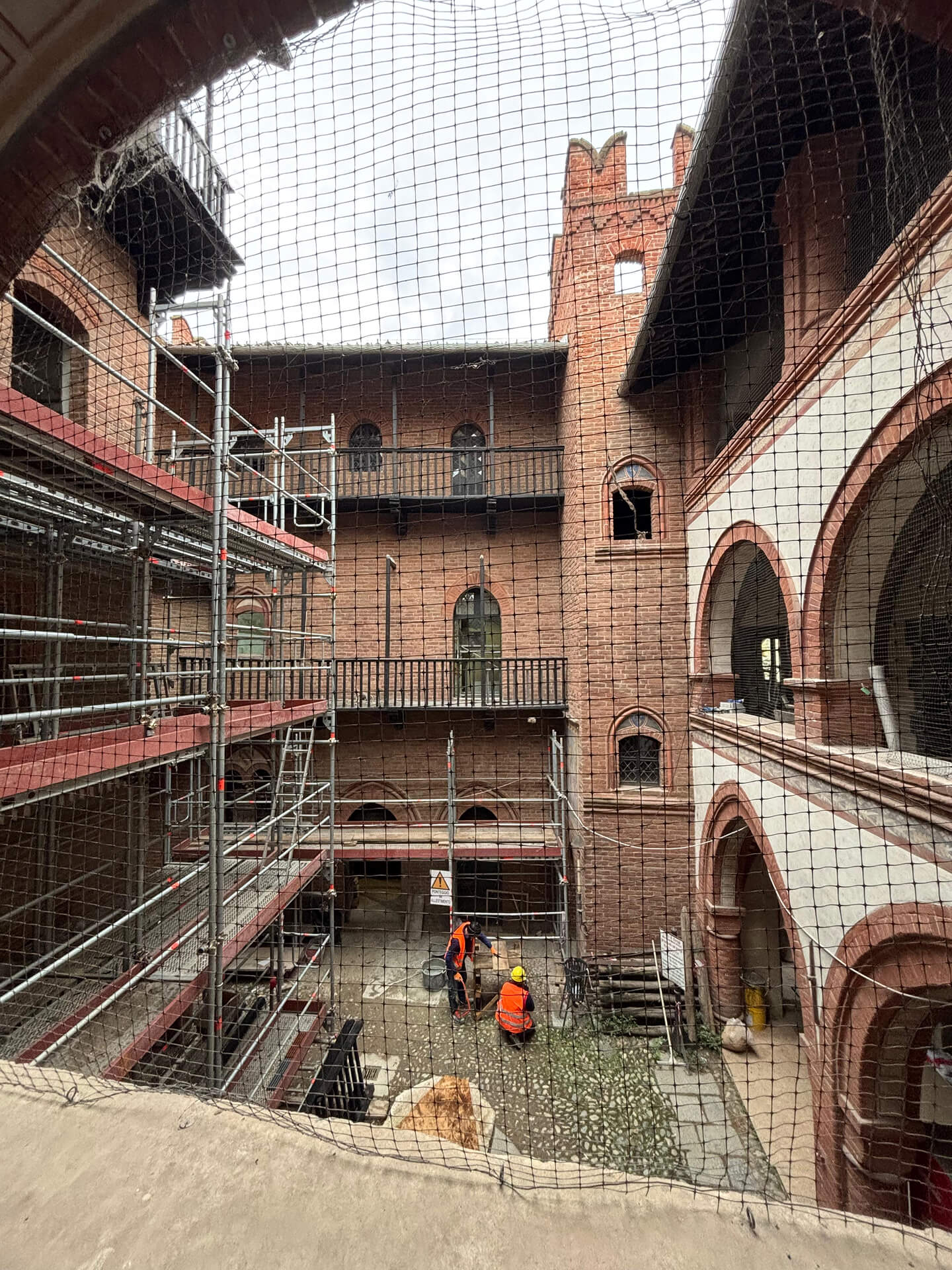
The internal courtyard of a historic brick complex during restoration, featuring exposed brick façades with arches, loggias, and a crenellated turret. Metal scaffolding is present on multiple levels for consolidation and maintenance work on the walls and balconies. A construction site safety net is visible in the foreground, while workers wearing safety gear are working on the ground. The image documents a phase of work within the courtyard, highlighting the original architectural structure and the ongoing restoration work.

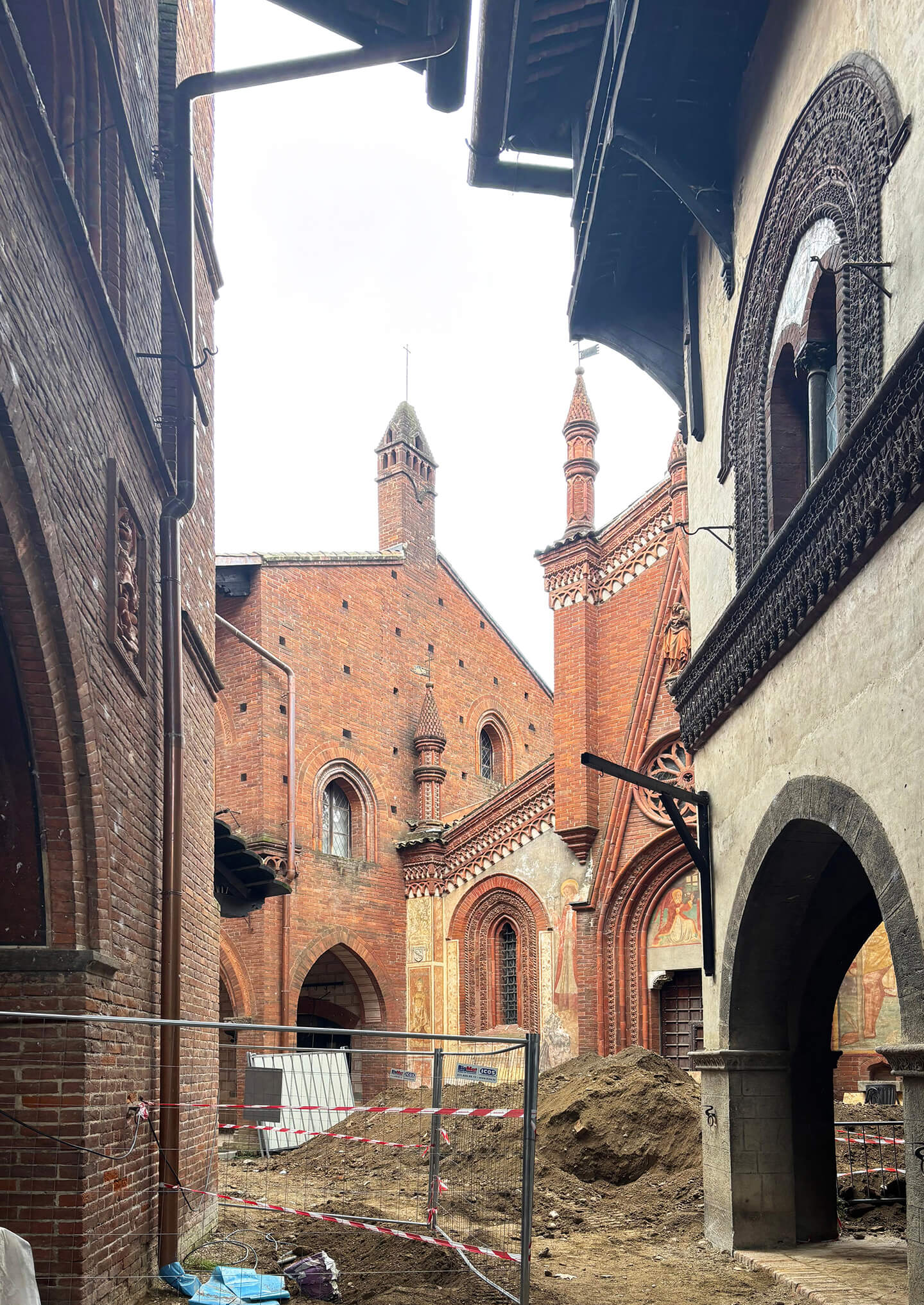
View of the internal courtyard of a historic brick complex during restoration, characterized by neo-Gothic architecture with pointed arches, terracotta decorations, and crenellated turrets. The facades feature decorative elements, frescoes, and molded brick cornices, while in the center of the courtyard, excavations and mounds of earth are visible, enclosed by construction site safety fencing. The image shows a work phase with a restricted area and temporary structures, highlighting the original architectural context and the restoration work underway within the historic complex.

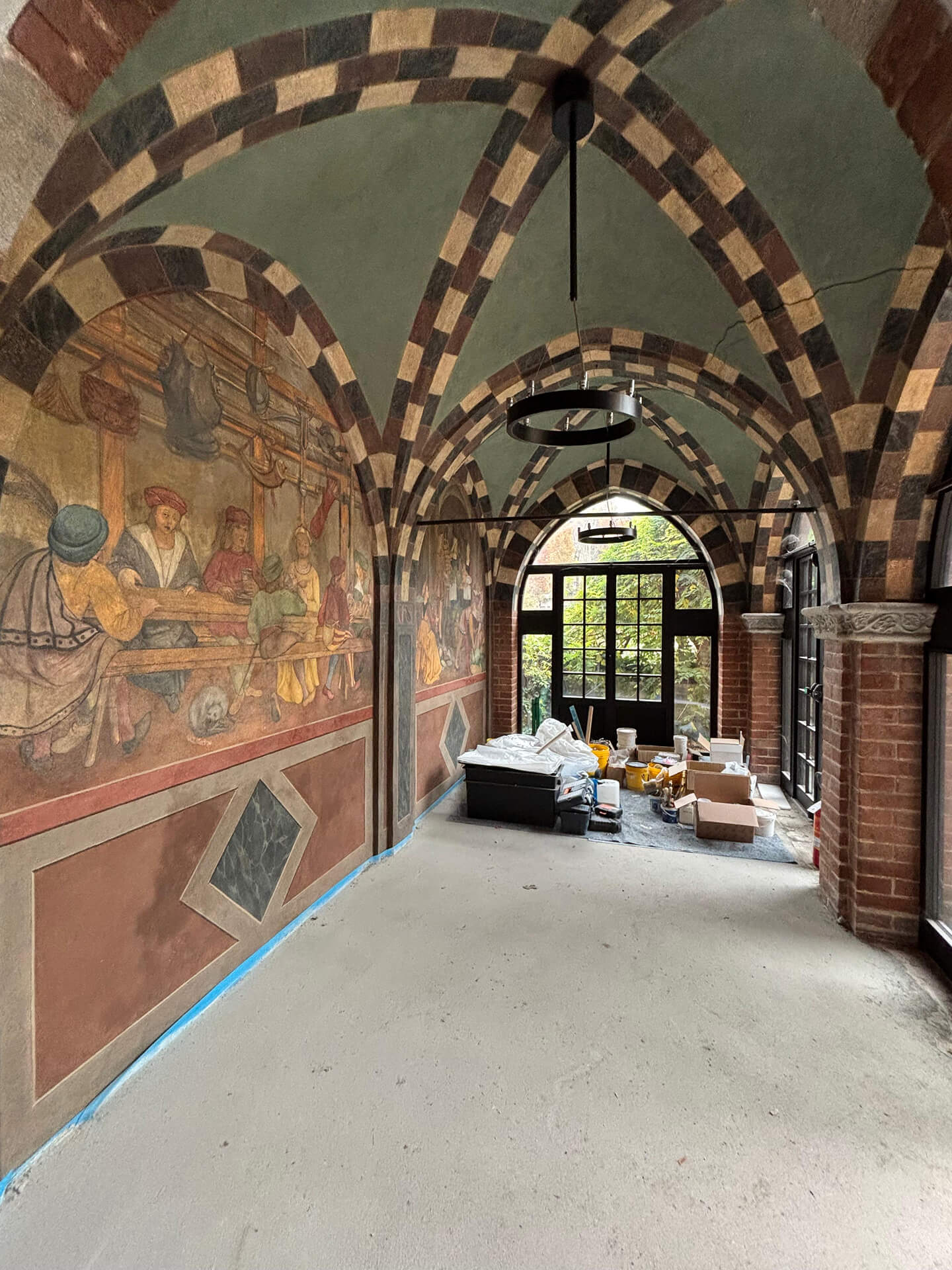
Vaulted corridor of a historic building during restoration, featuring cross vaults with alternating two-tone bands and frescoed walls depicting figurative scenes from historical periods. Brick walls and columns with sculpted capitals support the arches of the loggia, while at the end is a glass door leading to the external courtyard. Visible on the floor are materials, equipment, and construction containers used for cleaning and consolidating the decorated surfaces, documenting a phase of conservative restoration of the pictorial and architectural elements.

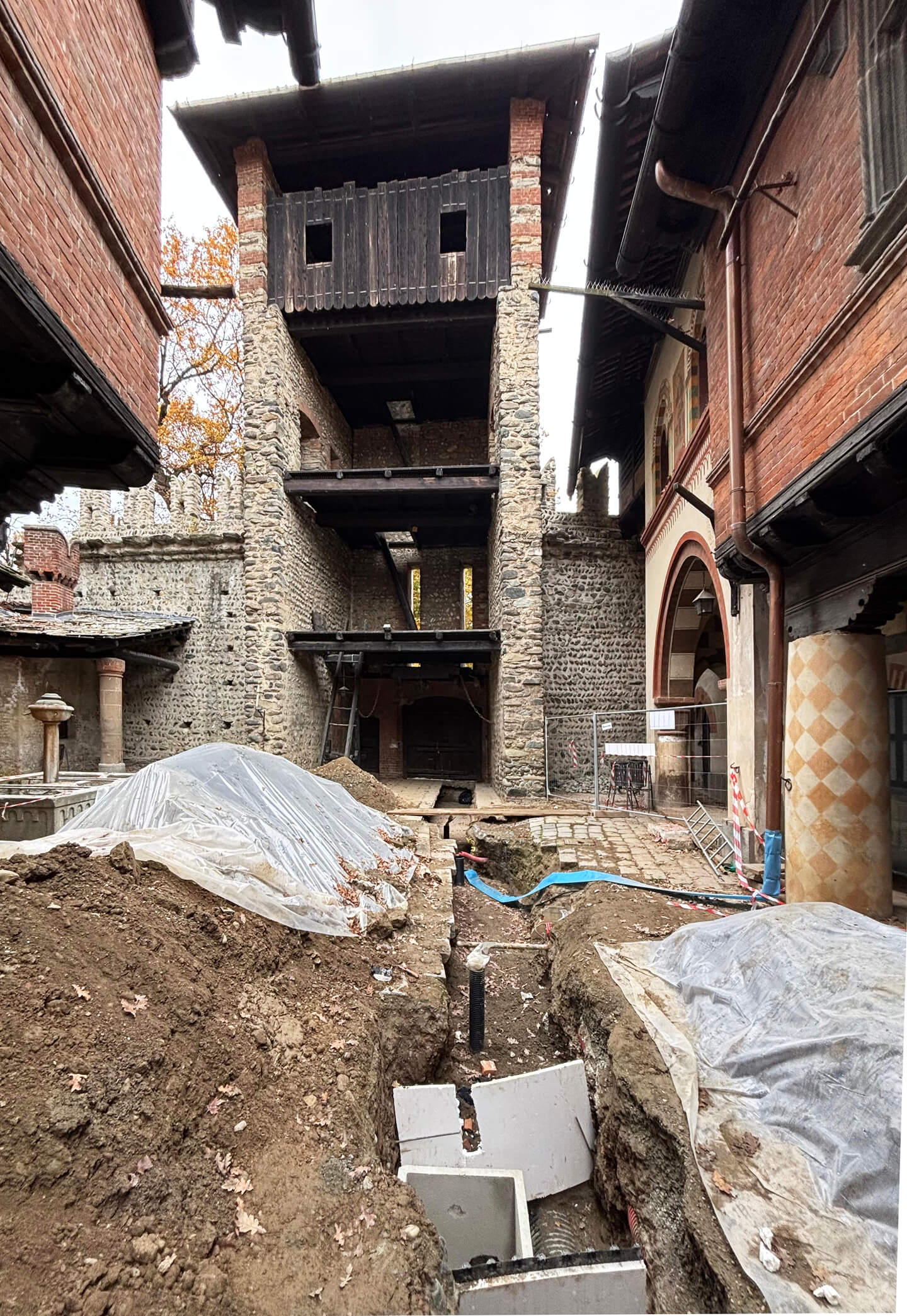
The internal courtyard of a historic complex undergoing restoration, featuring mixed stone and brick masonry structures, featuring a tower with wooden balconies and decorated porticoes. The central area is undergoing archaeological excavations and plant engineering work, with open trenches, pipes, and mounds of earth protected by tarps. Security fencing, temporary stairs, and consolidation work are visible, while the facades feature painted decorative elements, brick columns, and arches. The image documents a phase of ongoing work within the courtyard, highlighting the relationship between the historic structures and the restoration and renovation interventions.


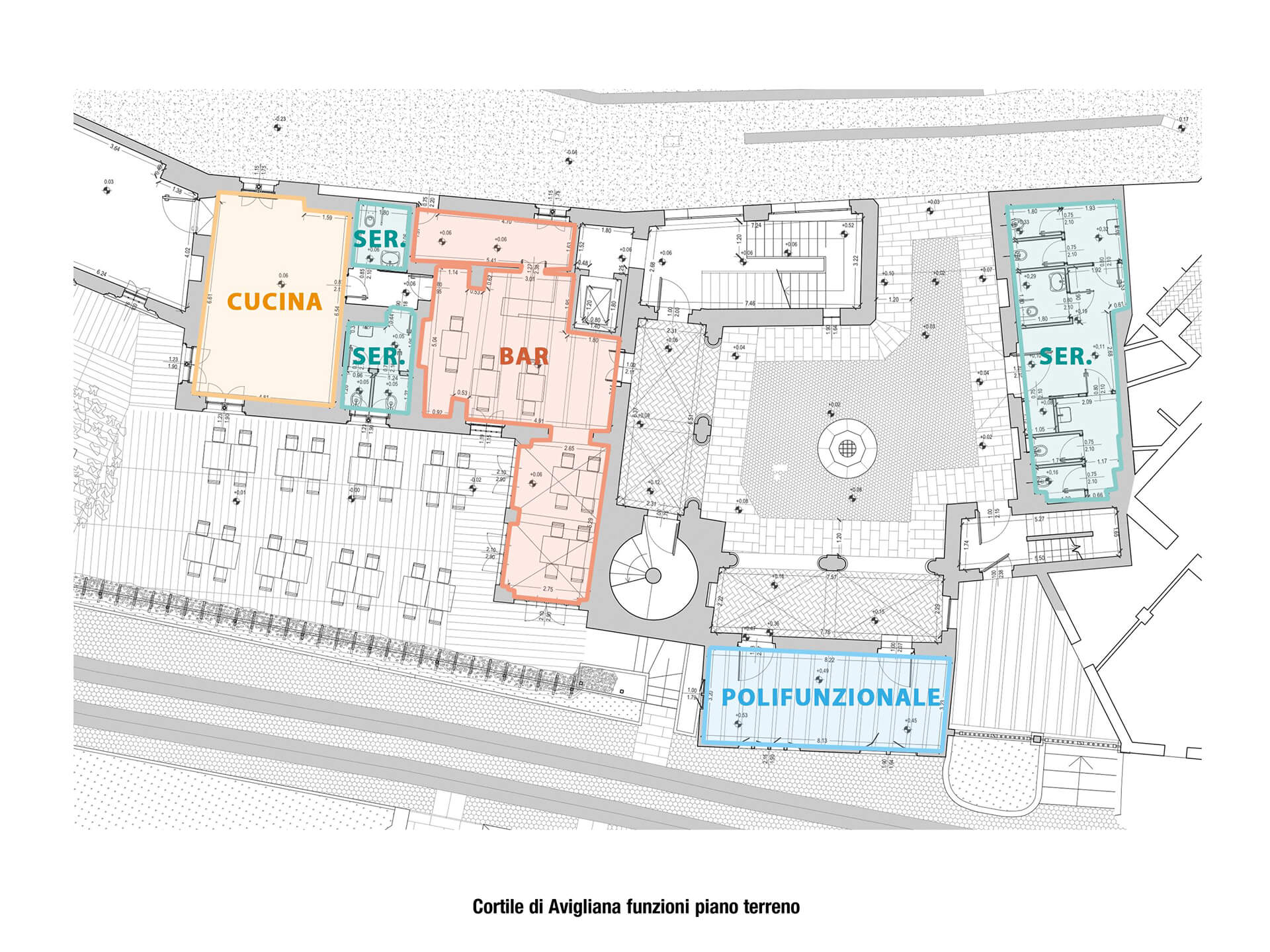
Functional plan of the ground floor of a historic complex with a central courtyard, with color-coded intended uses within the existing layout. The spaces designated for the kitchen, bar, utility rooms, and multipurpose room are highlighted, along with restrooms and connections to the paved internal courtyard. The technical drawing shows walls, stairs, and access points, illustrating the organization of the new public functions within the historic architectural structure and the relationship between the interior spaces, courtyard, and equipped outdoor area.

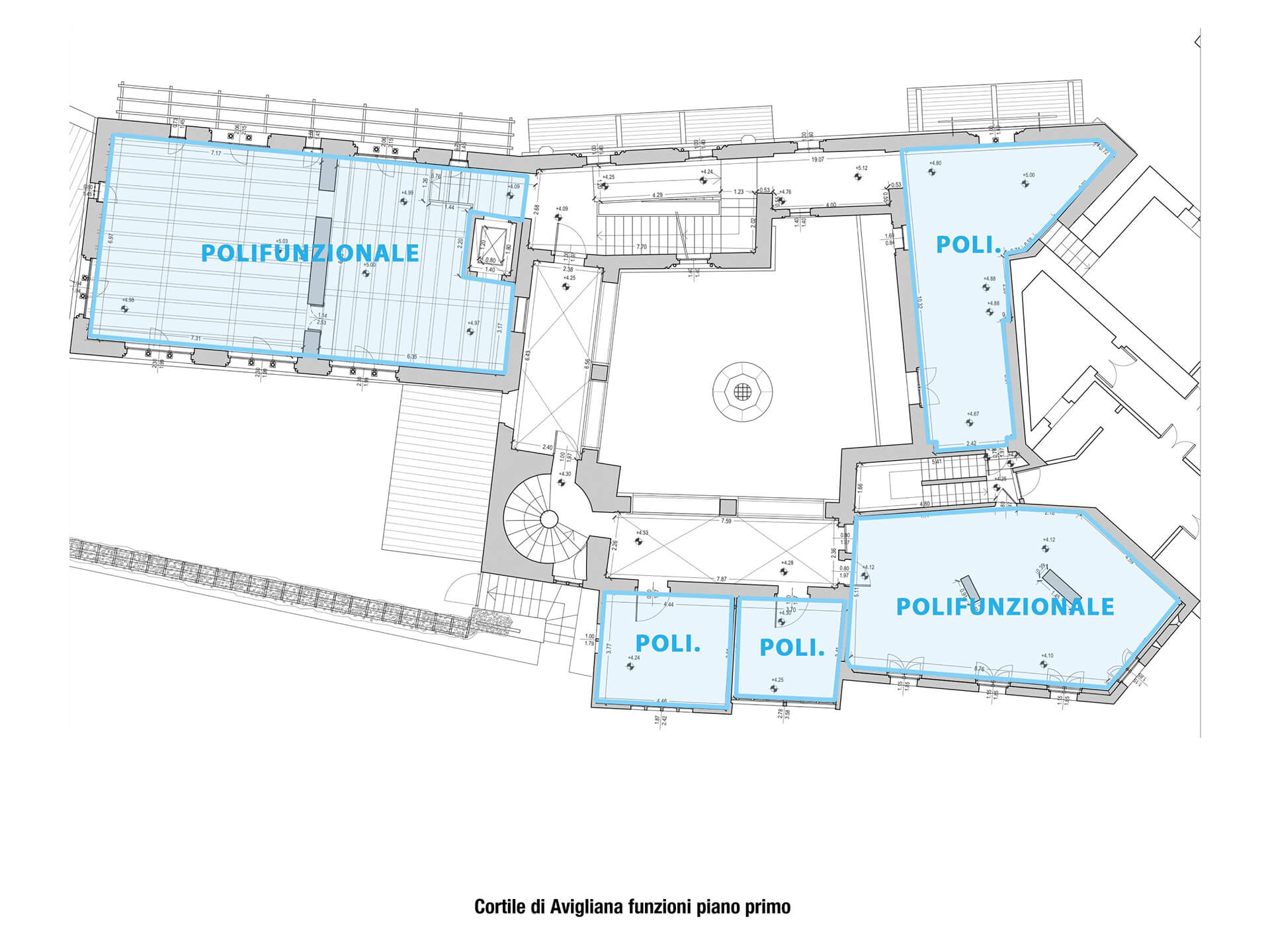
Functional plan of the first floor of a historic complex organized around a central courtyard, with color-coded areas for multipurpose rooms and spaces for collective activities. The technical drawing shows the distribution of the spaces along the perimeter of the courtyard, the vertical connections via the staircase and elevator, and the relationship between the new functions and the existing masonry structure. The highlighted spaces indicate rooms of varying sizes intended for cultural, exhibition, and educational purposes, integrated into the historic architectural structure while maintaining the original layout.

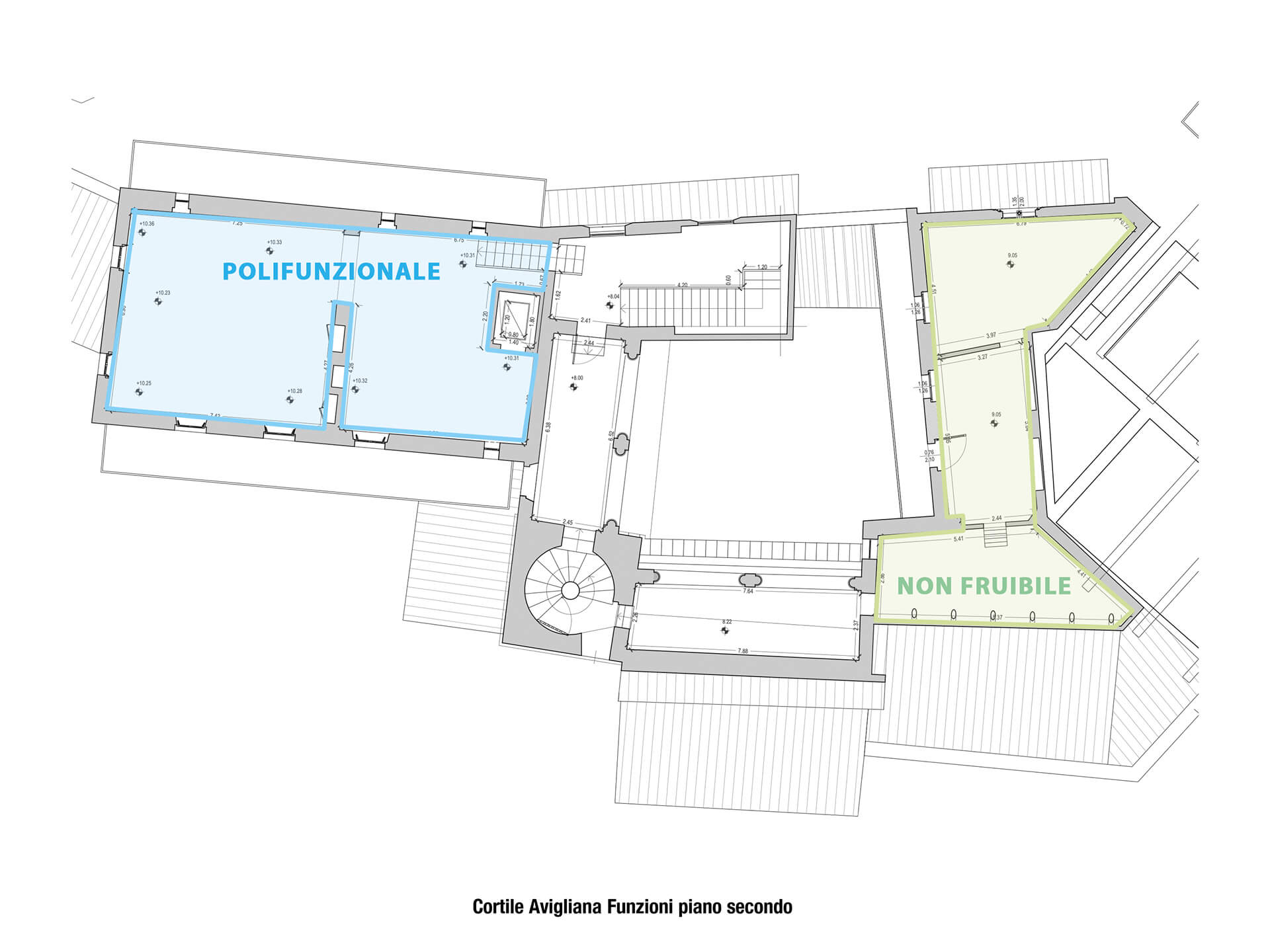
Functional plan of the second floor of a historic complex with a central courtyard, with color-coded intended uses within the existing layout. The main rooms are designated as a multipurpose hall and support spaces, while a portion of the building is designated as non-usable. The technical drawing shows the relationship between the new uses and the original masonry structure, the vertical connections with the staircase and elevator, and the layout of the rooms along the perimeter of the internal courtyard, highlighting the integration of the new functions within the historic architectural structure.

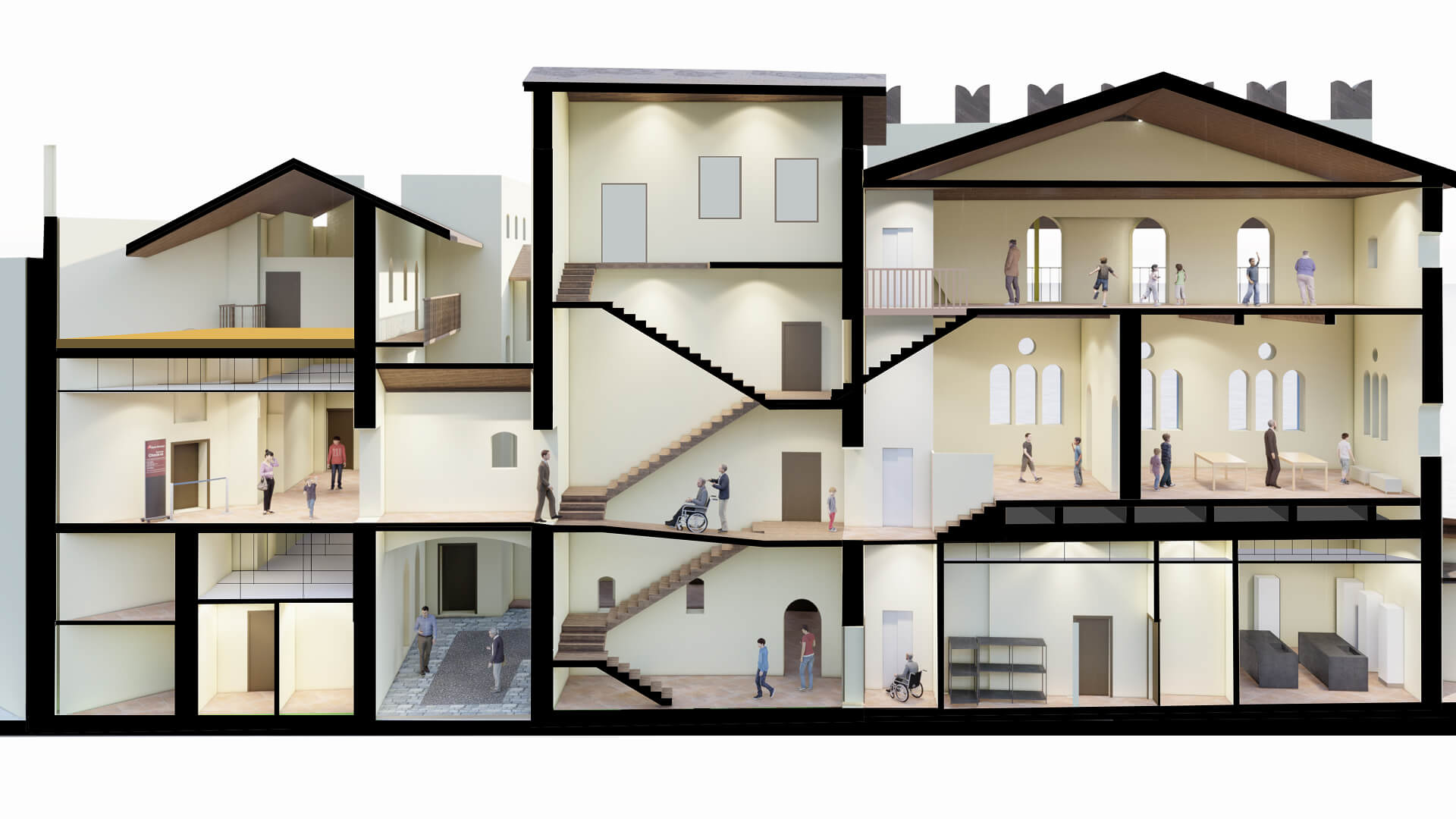
Architectural perspective section of a historic building undergoing renovation, showing the vertical distribution of spaces across multiple levels, with attics, staircases, and new connections inserted within the existing structure. The drawing highlights the coexistence of original walls, vaults, and traditional roofs with new contemporary elements, including walkways, stairwells, elevators, and exhibition spaces. Various internal functions are depicted, with figures illustrating the public use of the spaces, including exhibition rooms, connecting passageways, service areas, and accessible spaces, documenting the overall organization of the architectural renovation project.

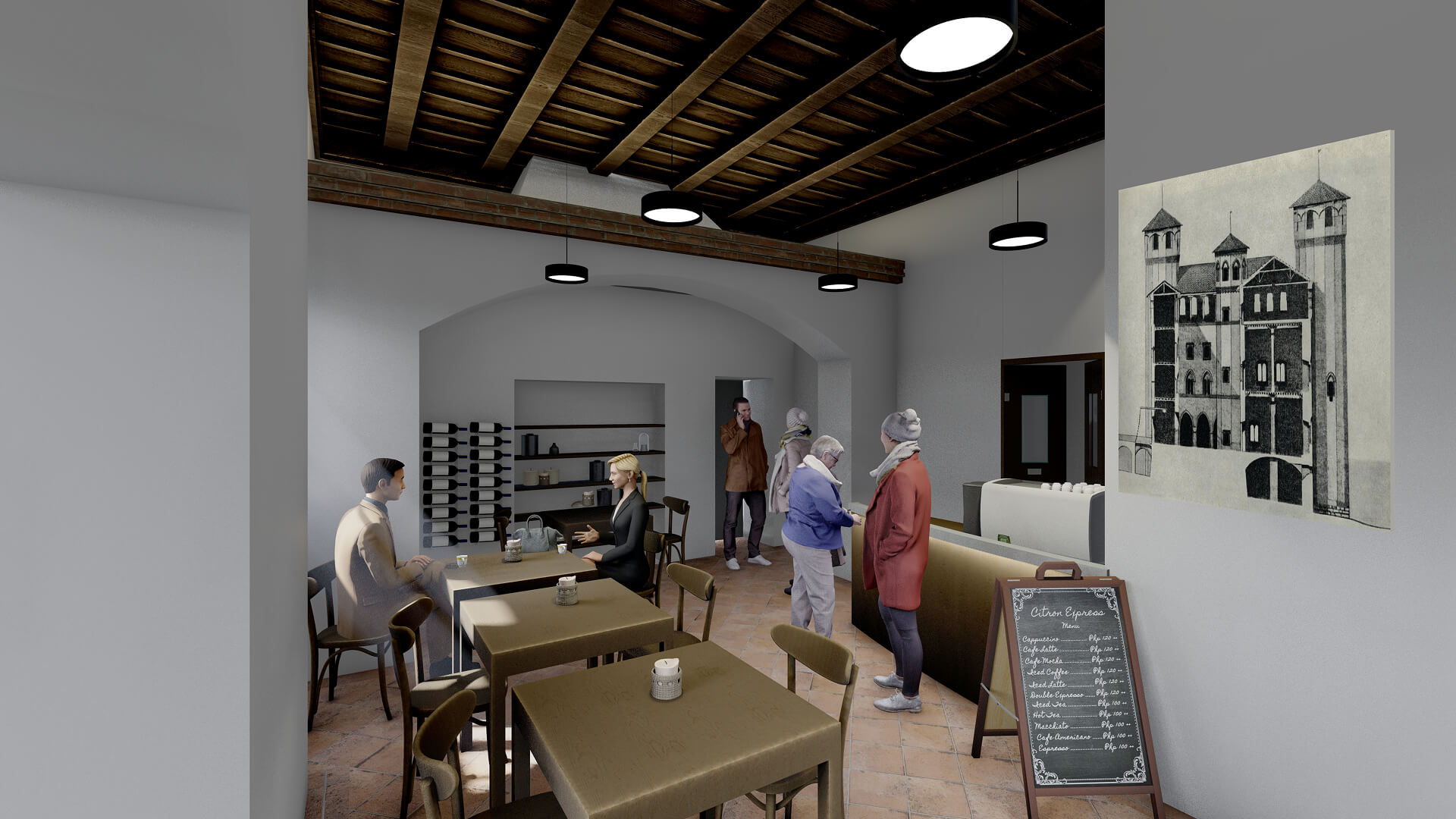
A restored interior with exposed wooden beams and planks, plastered walls, and terracotta flooring, designed as a refreshment area within a renovated historic building. The space is furnished with contemporary tables and chairs, a bar counter, and shelving integrated into a wall niche, while pendant lighting highlights the original attic structure. The presence of visitors and service elements suggests the space's new public use, where the contemporary intervention integrates with the preserved and enhanced historic architectural features.

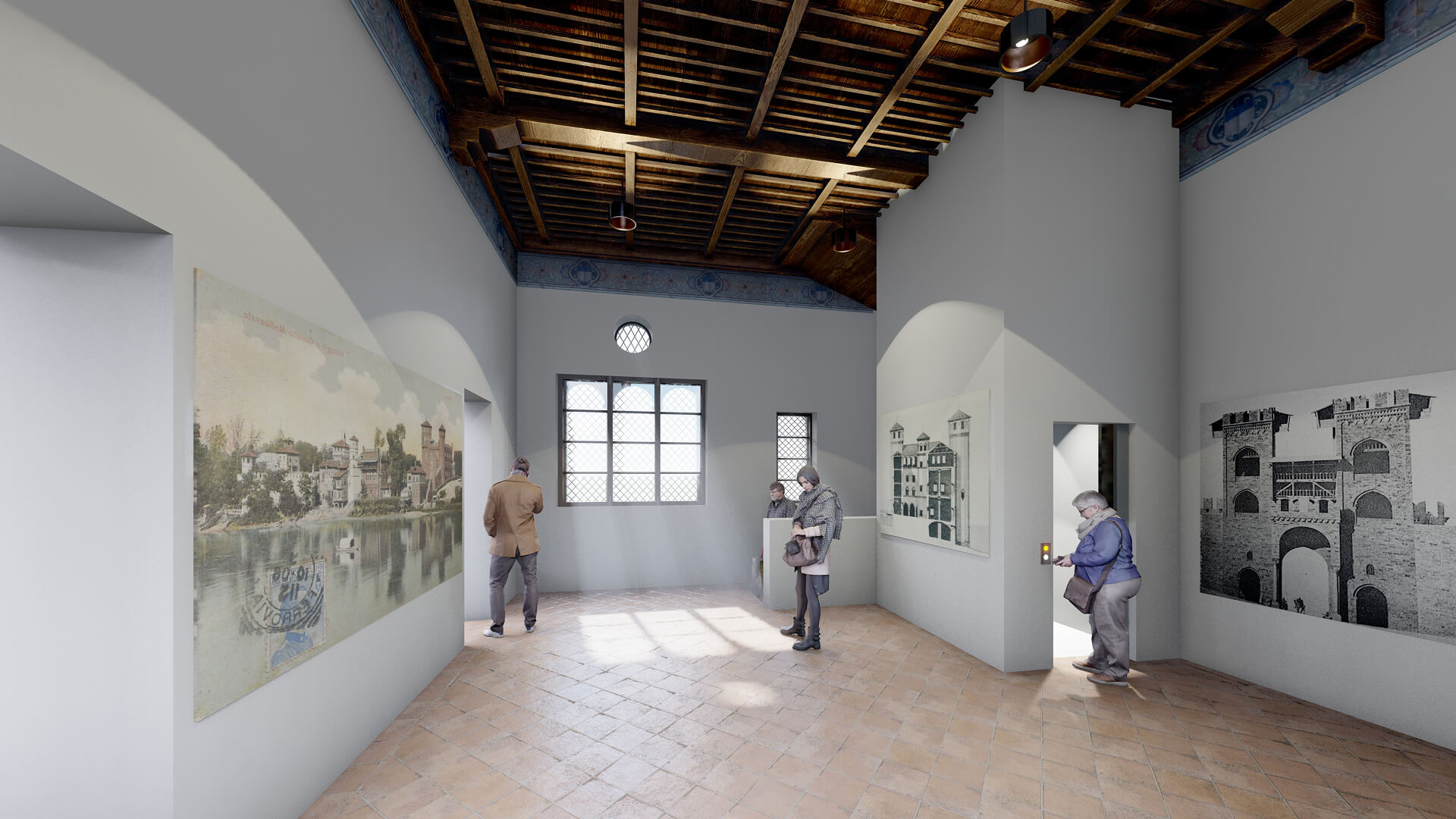
Restored interior with terracotta flooring, plastered walls, and a wooden ceiling with exposed beams and planks and a decorative perimeter band, used as an exhibition space within a renovated historic building. The walls are hung with historical prints and reproductions of the building and its urban context, illuminated by natural light from a metal grated window. The presence of visitors and information displays suggests the space is intended as a museum, where the contemporary layout complements the original architectural elements, which have been preserved and enhanced.